THE SUMMER KITCHEN, PAST AND PRESENT

IMG_3269It’s that time of year when I am bursting with energy!  I have so many ideas for the garden, for the outbuildings, and for this and that, that there are never enough hours in the day nor enough hands to help. I have far too many projects on the go in my mind.  I want to be outside working on the vegetable garden, planting, sowing, and weeding.  I mowed the lawns for the first time this week, just a gentle little haircut but they look so much better.  I turned the mower off with just the smallest part left to cut, so I could hear what Mr H was saying to me as he passed, then I turned the key to get going again and nothing; the motor was silent, not even a cough or splutter.  We pushed it back under cover in the barn and now there is another job I have to do – to phone the local Gamm Vert (garden and farming supply store) and ask them to come out and have a look at it.  The annoying thing is they had only just returned it from it’s winter service with its blades sharpened, a new spark plug and raring to go!

Amongst my many projects is the summer kitchen and for this I would welcome your advice.

IMG_1840

The summer kitchen was one of the things I fell in love with when I first saw the house.  It is a small little outbuilding dating from 1800, the same age as the main house.  It sits just a little way down the garden and used to be the original laundry.  It has two ancient stone troughs outside and in the summer the wisteria frames one wall and the climbing roses trail up another.  There are self-seeded hollyhocks growing in the corners and, just to make it perfect, an abundance of little wild strawberries grow outside the door. It couldn’t be a more perfect place to relax on warm sunny days.

IMG_1796 IMG_1855

The family who lived here before us bought the house in the 1930’s.  They were from Paris; Monsieur was French and Madame was British, and this was to be their summer residence.  Alas, WWII broke out and they moved here permanently with their children as it was much safer than living in the capital. Monsieur did a lot of work for the French and British governments and the street on which the house stands is now named after him.  With the house, we purchased a couple of items of furniture, big heavy items that were difficult to move. One of these items was a desk; the desk at which so much of the important work that merited the naming of the street was written.  Mr H uses this very same desk today.  During the war years Monsieur spent much of his time away in London and the running of the house was left to Madame, she turned all of the land into kitchen gardens and orchards.

We actually bought the house from their grandson, now in his 60’s and also based in Paris.  He told us he can remember, as a child, his grandmother washing clothes in the summer kitchen every Monday.  When one looks closer at the little old building it is easy to see that it was indeed the laundry.  The vast well is right outside.  Inside there is the original lead pipework and huge wheel that drew the water up.  The wheel is no longer in use.  There is also an equally archaic tank which holds the water as it is drawn from the well.  The original electrics are still in place and were indeed being used when we bought the house; these were not even earthed, so we had the wiring completely replaced, with new sockets, new switches, new parts – all to be on the safe side!!!  However, the system is still the same; turn it on and wait for the pressure to build up in the tank, at which point you can then draw water.  This fabulous old system still feeds outdoor taps and a network of irrigation points for the garden.

IMG_1879 IMG_1878 IMG_1876

There is also a large open fireplace which was completely rebuilt a decade or so ago and which produces plenty of heat; of course this would have been vital for heating the water for washing clothes.  When it was rebuilt it was done so very much with outdoor summer cooking in mind, and was used every summer by the previous owners.  We did exactly the same last summer when we arrived while rebuilding the kitchen – it was very novel, spiders and all, though a tad inconvenient when the heavens opened!

IMG_0196

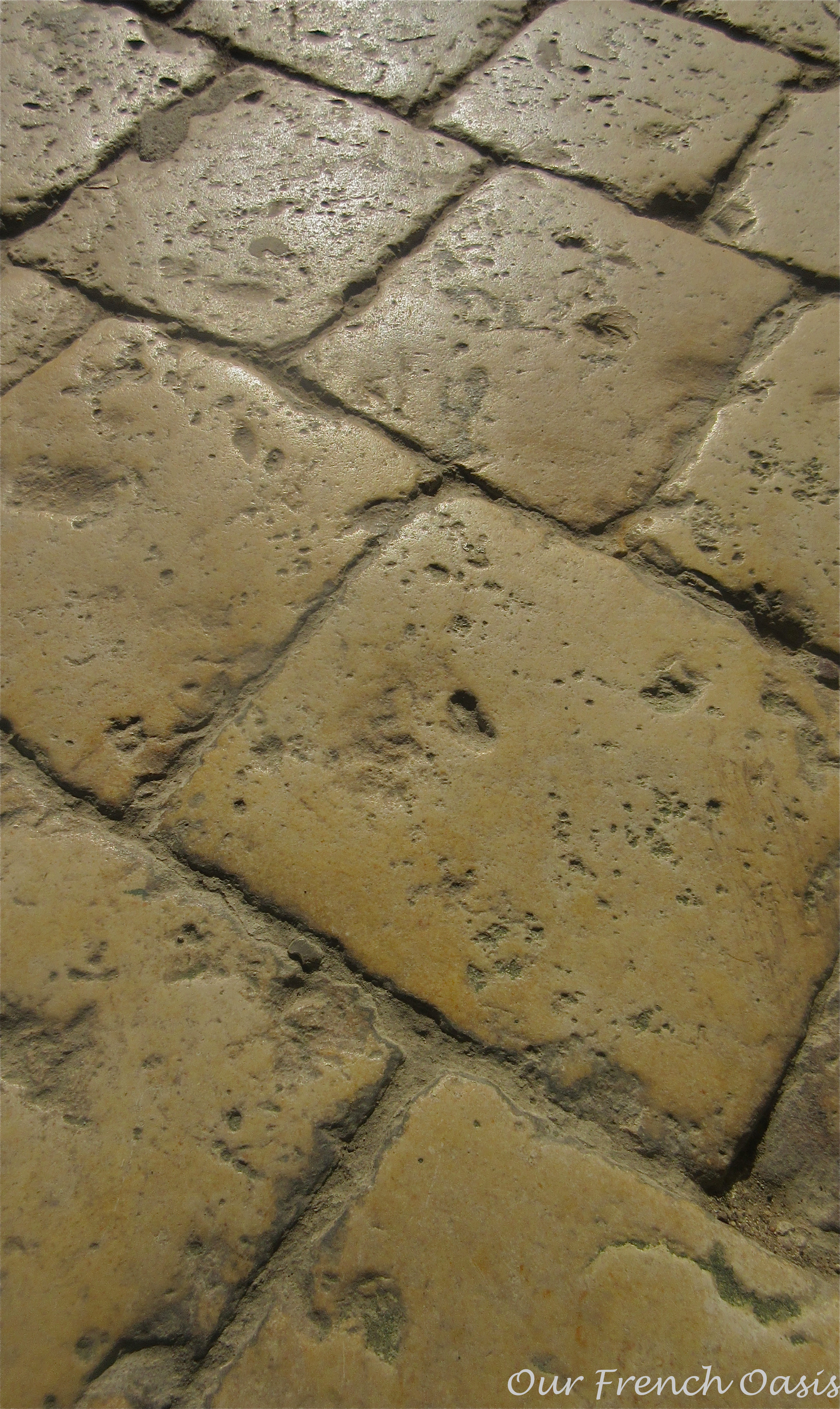
The old cobbles on the floor are the original stones, over 200 years old, they are utterly beautiful, worn smooth and polished from centuries of use.
IMG_1886

The roof timbers have all been replaced but the builders kept the original style.  As we now have safe wiring and electrics in place I am on the hunt for a vintage, very simple chandelier to hang from the middle section.  Nothing elaborate or fancy, but we do need lighting, and I think this would be the most effective.

IMG_1883

The ceiling, as you can see, has at some stage been insulated.  We need to cover this, but we are still not sure what with. We don’t want to add modern plasterboard or dry wall; it would look out of place. But we do need to do something to cover up the ugly insulation and to hold it in situ, and this is where I would love to hear your thoughts on just what to use; it has to be simple and in keeping with the building.  Likewise with the walls, would you paint or leave totally untouched?  At the moment my thoughts are to give the parts that are rough plastered a simple whitewash and leave the exposed stonework.  I would really welcome any comments you might have.

I hope in a couple of months I can share with you the finished summer kitchen, still keeping it’s old charm but very quietly tidied up.

IMG_1801

WHERE THE ROAD TAKES US

IMG_1500

When I was little there was nothing I loved more than exploring around the family farm of my childhood; on my pony, far off the beaten track, it didn’t really matter where I went.  But an unknown lane or a tiny path I had not previously seen meant one thing and one thing only to my inquisitive mind; where would I end up? And when my grandparents came to stay, they would always take my sister and I out for a drive in my grandfather’s pride and joy, his beautiful vintage Rover. Back in those days in England, it was the era of the Sunday afternoon drive, a bone of contention for anyone local and in a hurry for Sunday afternoon drivers slowly cruised along, always looking this way and that with little regard for other traffic. We would join this group playing our favourite game, ‘Left or Right’; at each junction we came to we took it in turns to call which way to go and my grandfather would duly oblige. Frequently we had no idea where we would end up but that was what made it so special, not knowing what we would come across around the next corner.

IMG_1566

Earlier this week, my husband and I did just the same one morning. Having deliberately cleared our desks the night before, we quickly grabbed a cup of coffee and our cameras and jumped in the car on a little exploratory trip after dropping the children off at school. We truly didn’t know where we were going as we headed off into the country, beetling down tiny narrow lanes we had never driven before. All we knew was that the sky was the most perfect blue, the sun was shining and it was a beautiful early spring day; this post is about some of the places we discovered all within half an hour of our house!

IMG_1425

IMG_3031

The roads got smaller and we found tiny hamlets we never knew existed; we came upon villages that we had previously seen signposted but we had never visited.

IMG_3025

IMG_3067

IMG_3062

IMG_1558

On our travels, we came across the most fascinating sign below, proudly announcing the entrance to a village without pesticides. We had never seen such a sign and it more than peaked our interest. As we’re really not fond of the use of pesticides and chemicals ourselves we wanted to know more. Now, what many of you may not know is that every town and village in France has a Mayor (or Mayoress), even if sometimes the Mayor is in charge of two small villages close together. And in each village, the local Mairie will be open for a few hours a day; even if the Mayor himself is not there, the Mayor’s assistant will be, and they are always a fountain of all knowledge. So, having seen this sign, we found the village’s Mairie and went inside to find out exactly what this meant.

IMG_3086

It turned out that since 2007 every community in the Poitou-Charentes region has had an invitation to become part of a movement called ‘Terre Saine’ – a movement dedicated to the voluntary removal of as many pesticides in the countryside as possible. We cannot wait to return in summer for we know the hedgerows will be full of tiny wild flowers, the trees will be covered in leaves, and the blackberries growing wild will be free of chemicals.  Armed with this new found knowledge we continued our little adventure,

IMG_1442

we spied a ruin in the distance which led us even deeper into the unknown as we tried to find it.

IMG_1483

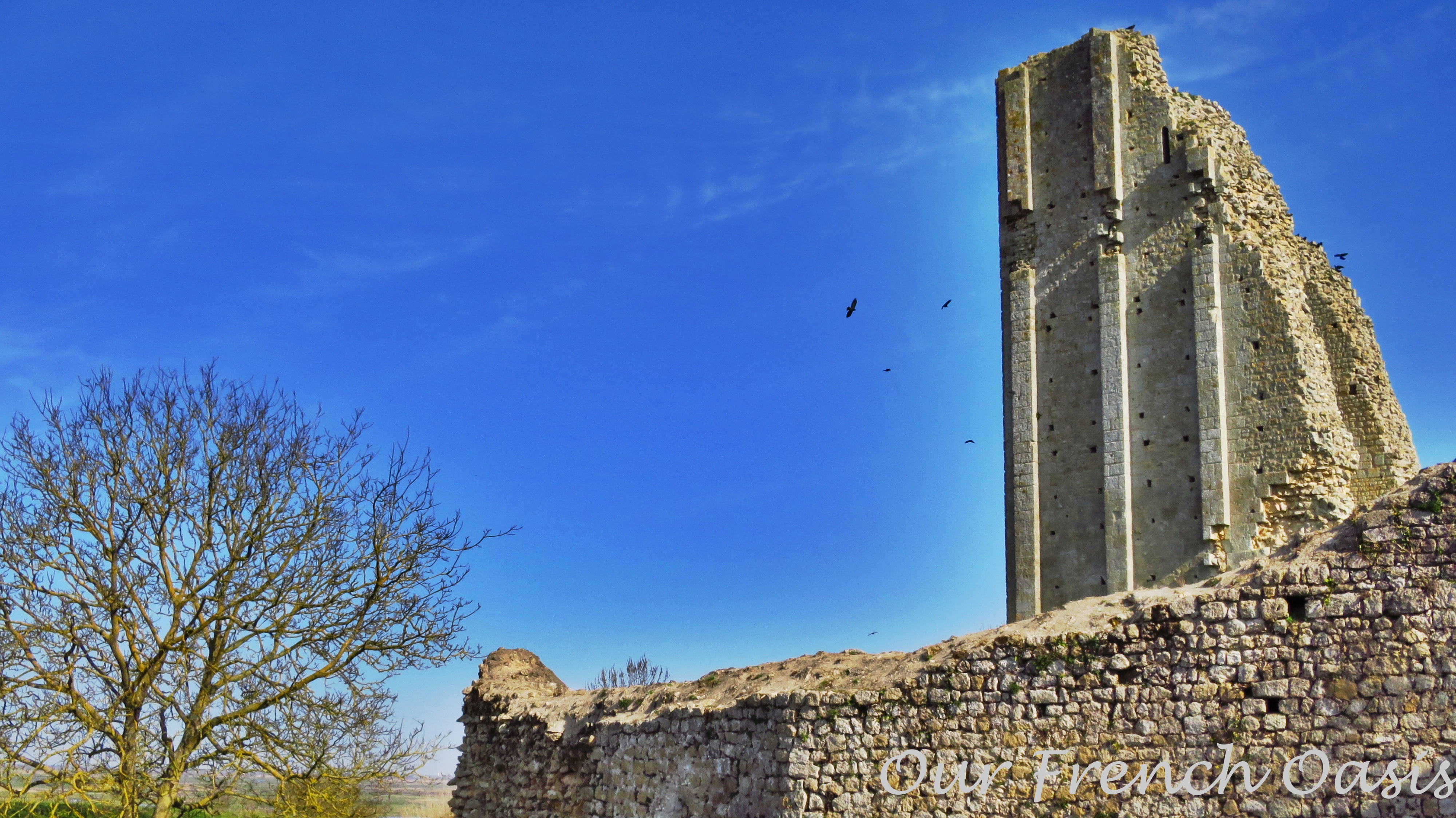
When we finally tracked down the crumbling edifice we found a small information board that let us know that this was ‘La Tour de Broue’. The tower pictured is all that is left of an ancient 11th century fort, situated 27 meters high on a hill that once had the Golfe de Brouage lapping saltwater at its feet each high tide. Designed to give protection and strength to the workers in the fledgling salt industry of that time, it was abandoned in the 18th century as the sea retreated, forming the final part of the vast complex of marais – the marshlands that are a part of the Charente-Maritime’s rich history.  Today only a scattering of ravens haunt it’s lonely ruins, a grim reminder perhaps of when death and desolation was part and parcel for the inhabitants of this rough but stunning countryside.

HDR_3079

I hope you have enjoyed exploring with me and have a fabulous week.

THE GARDEN AWAKENS

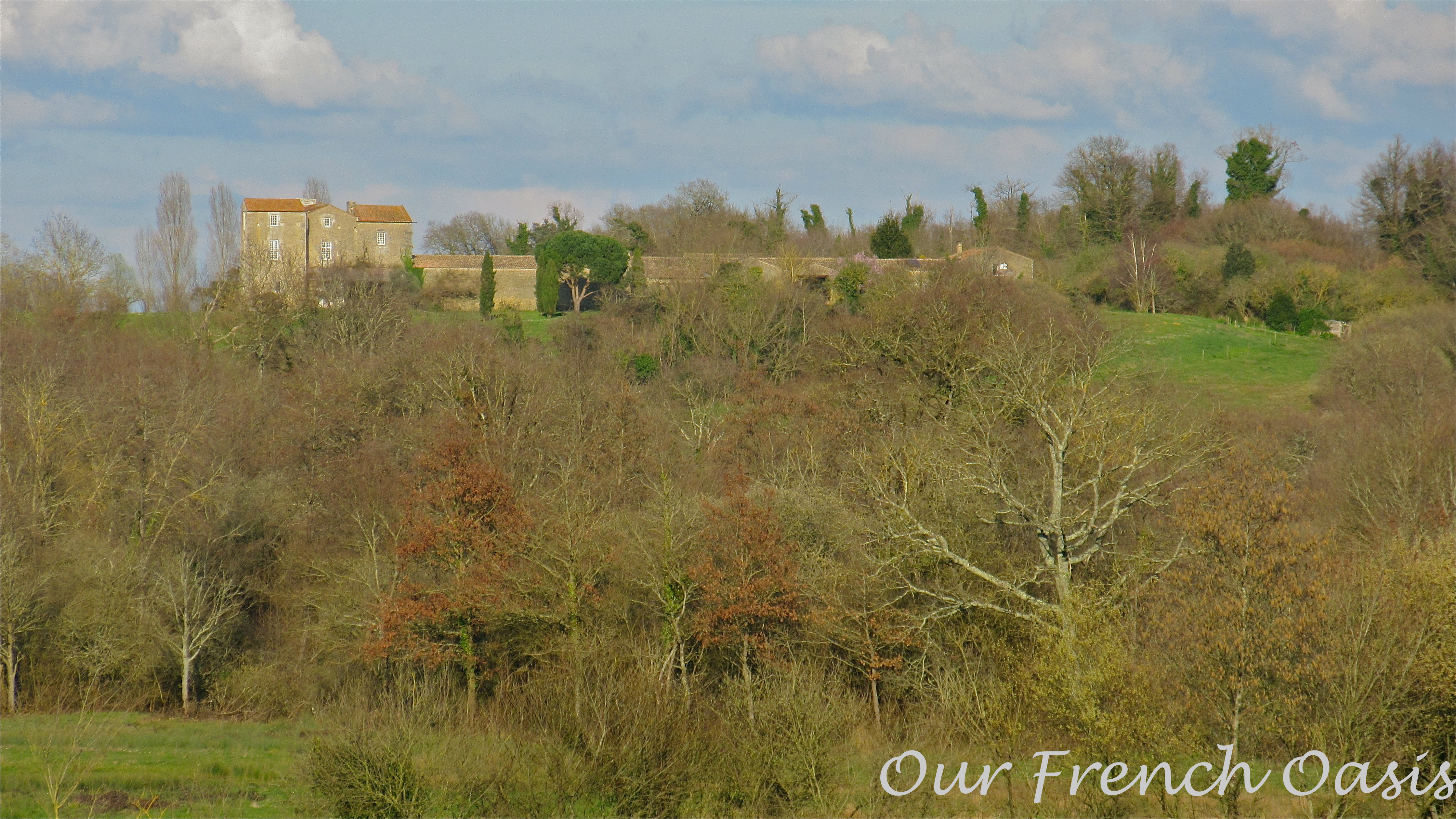
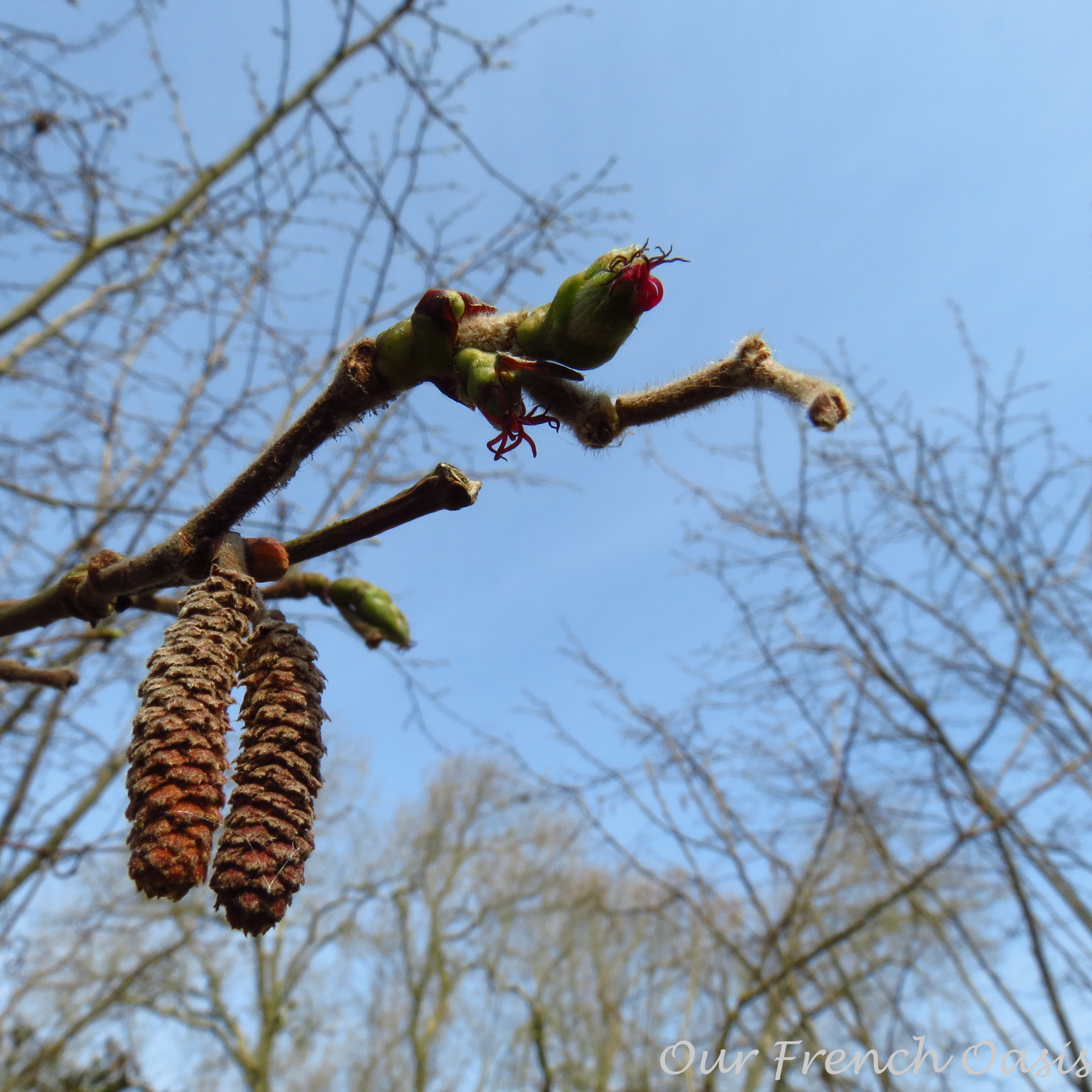
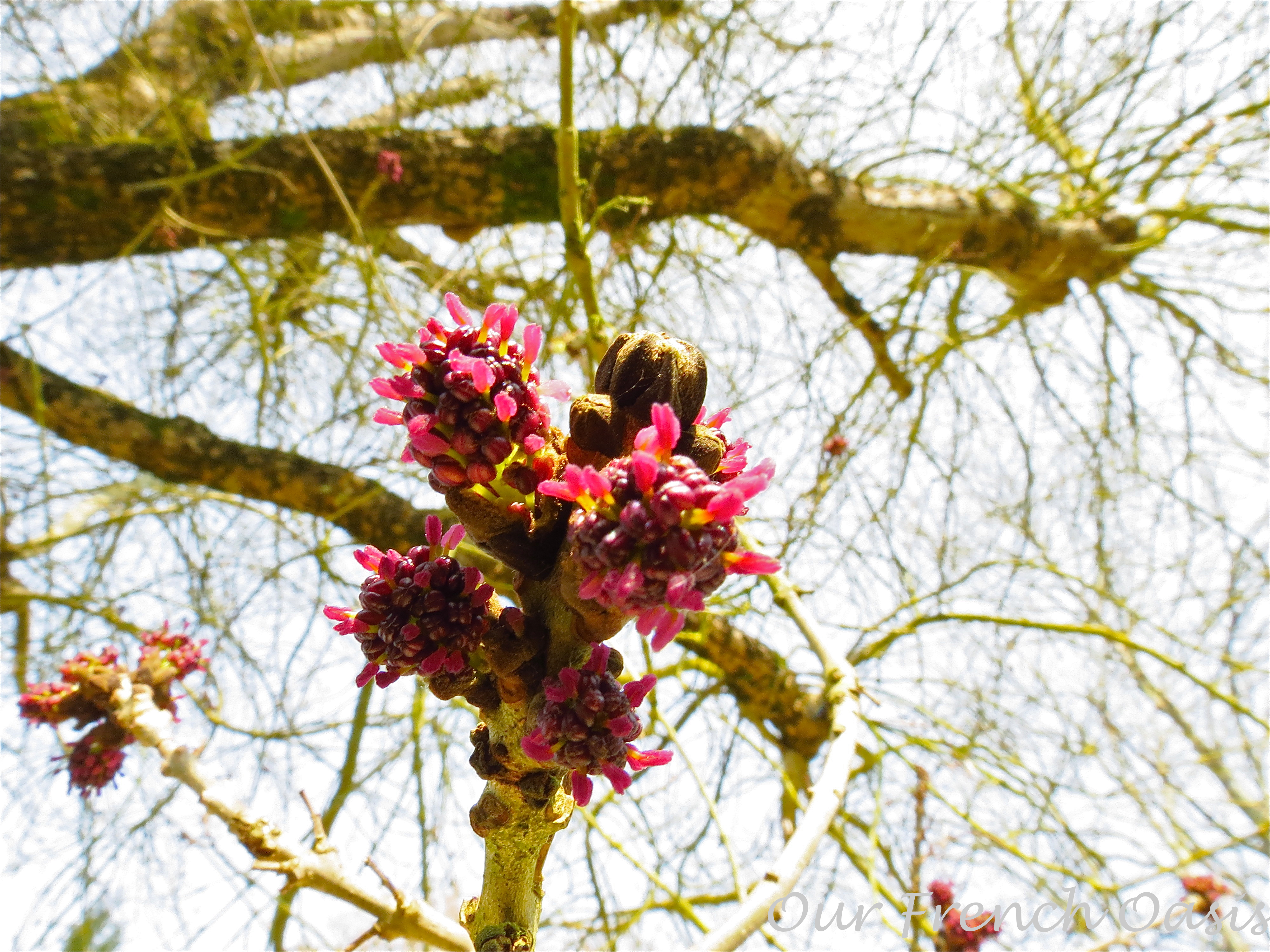
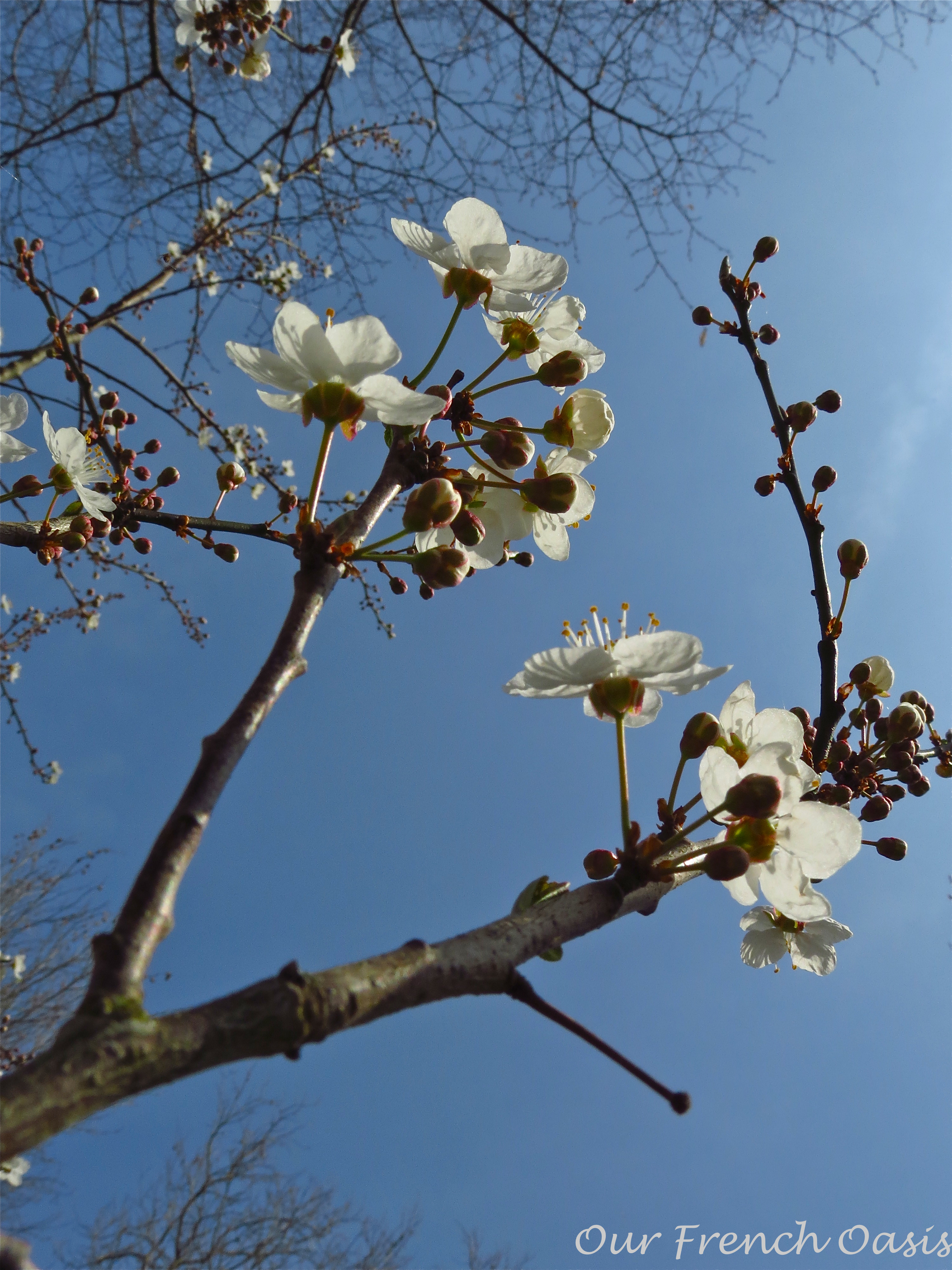
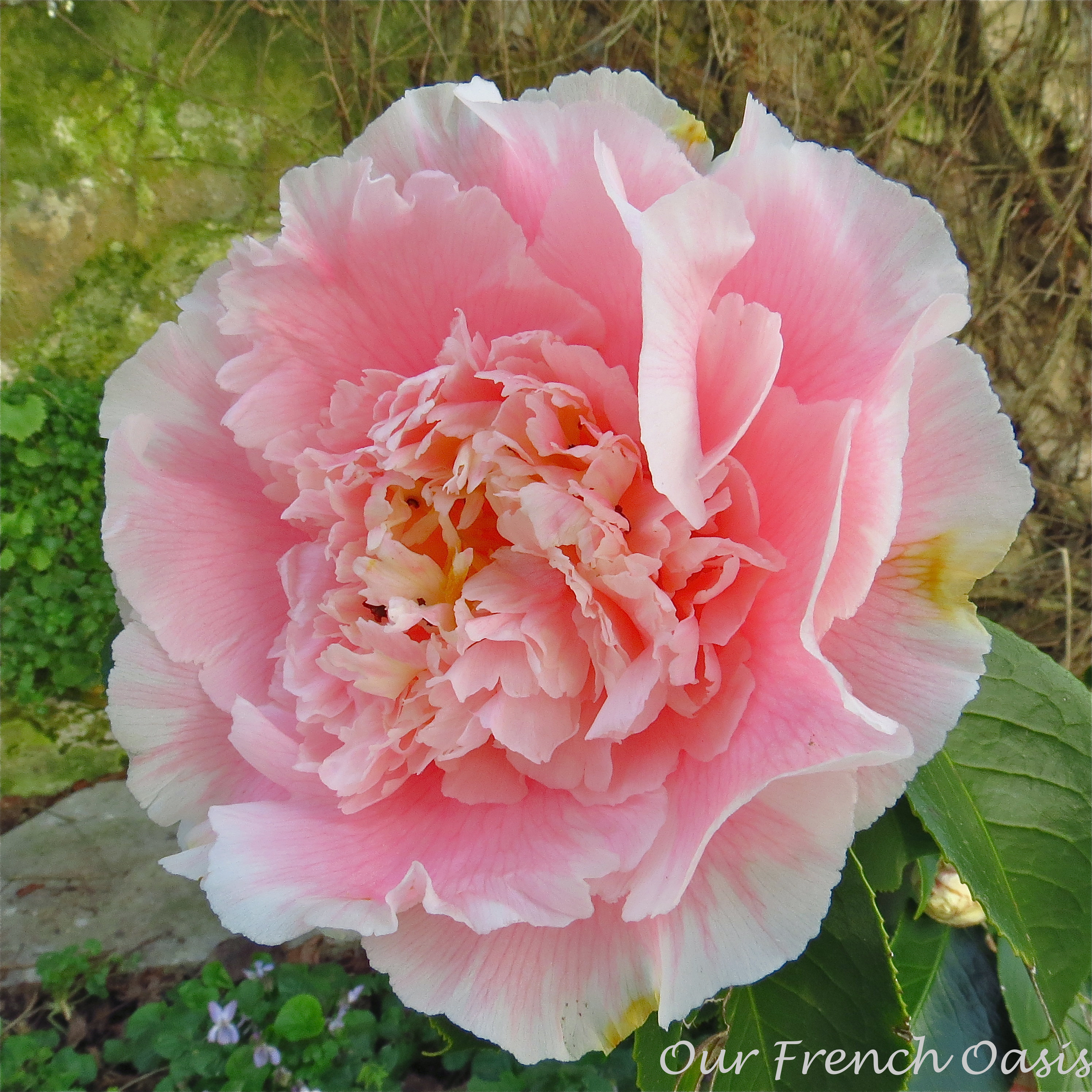
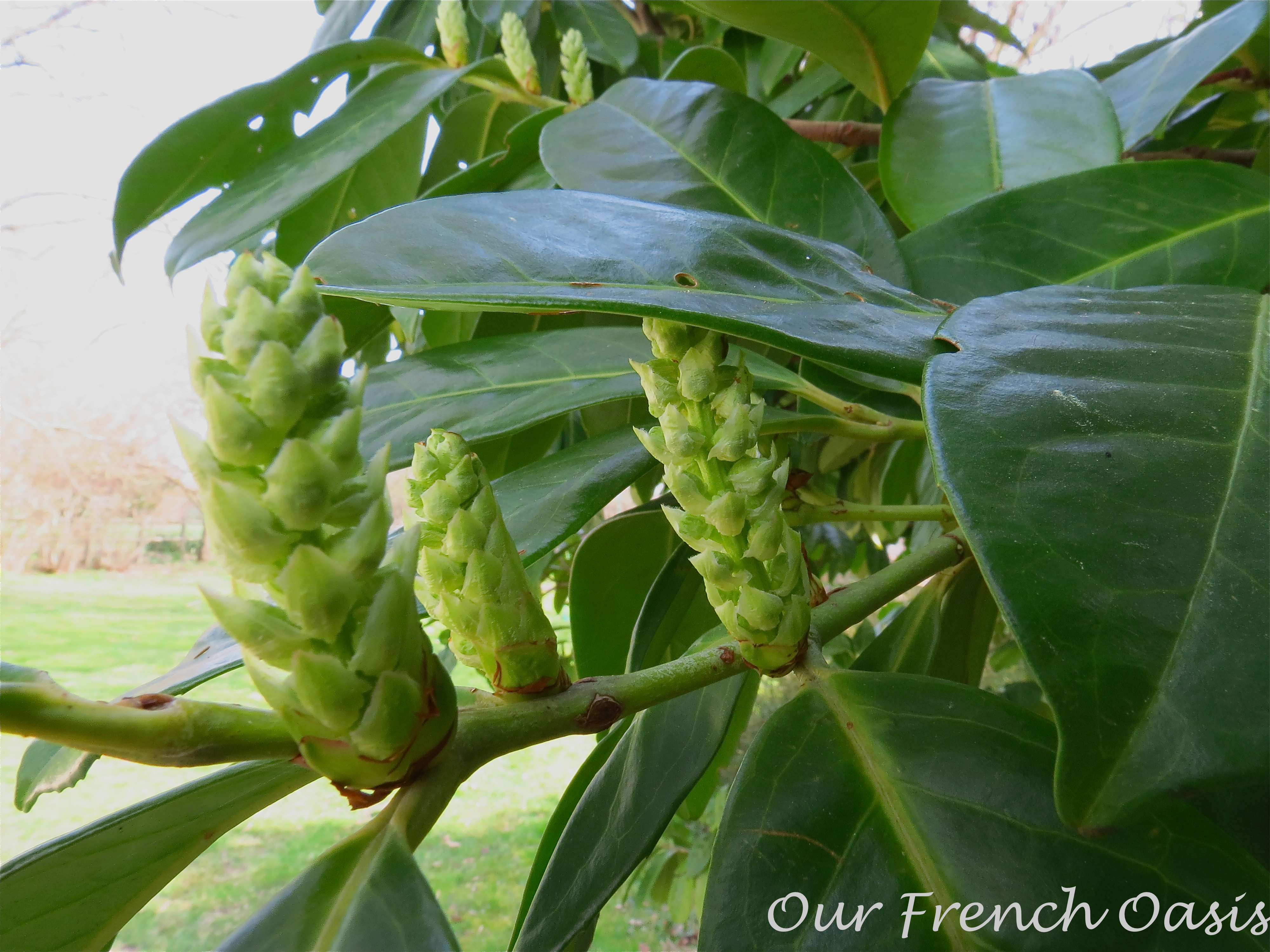
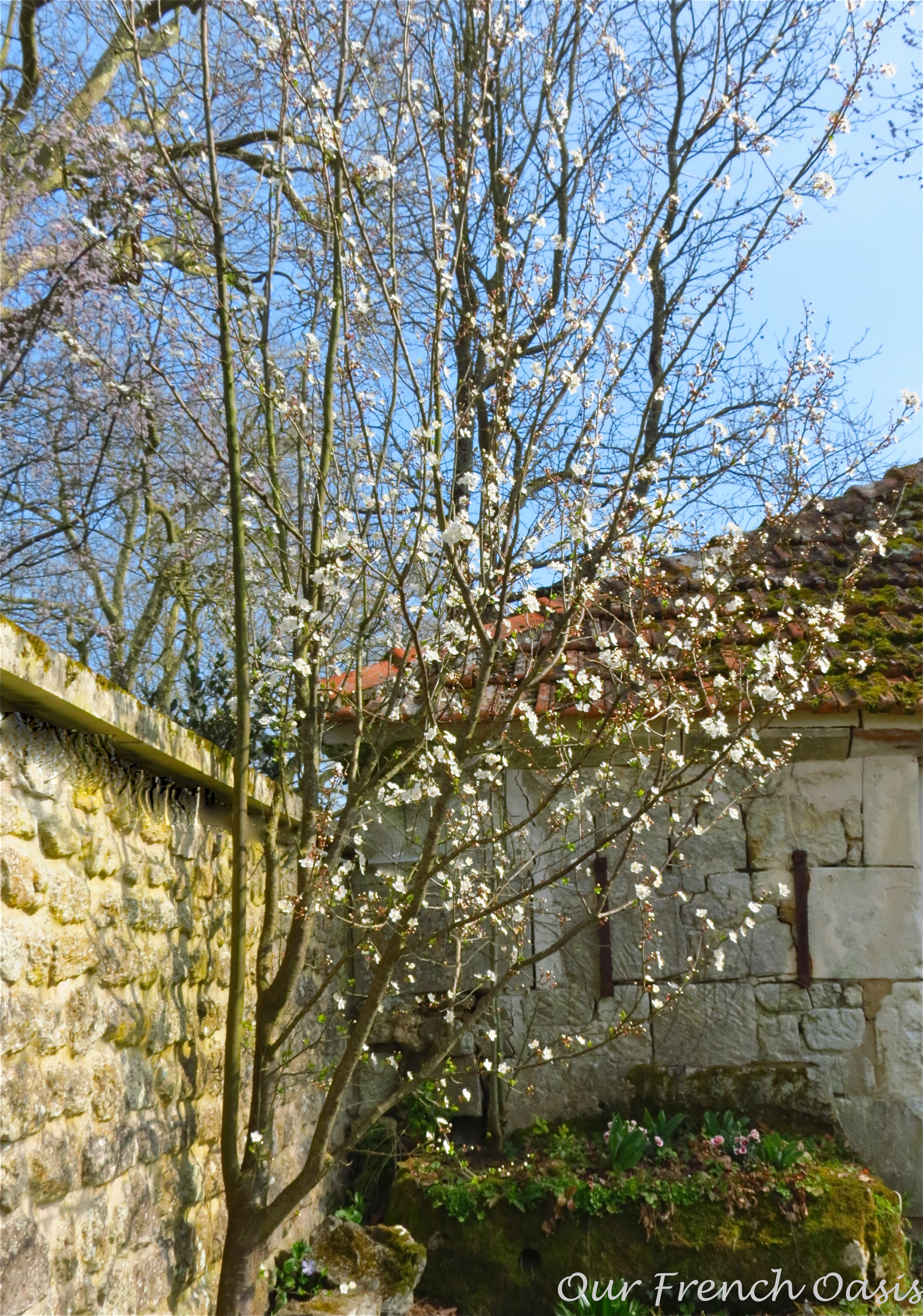
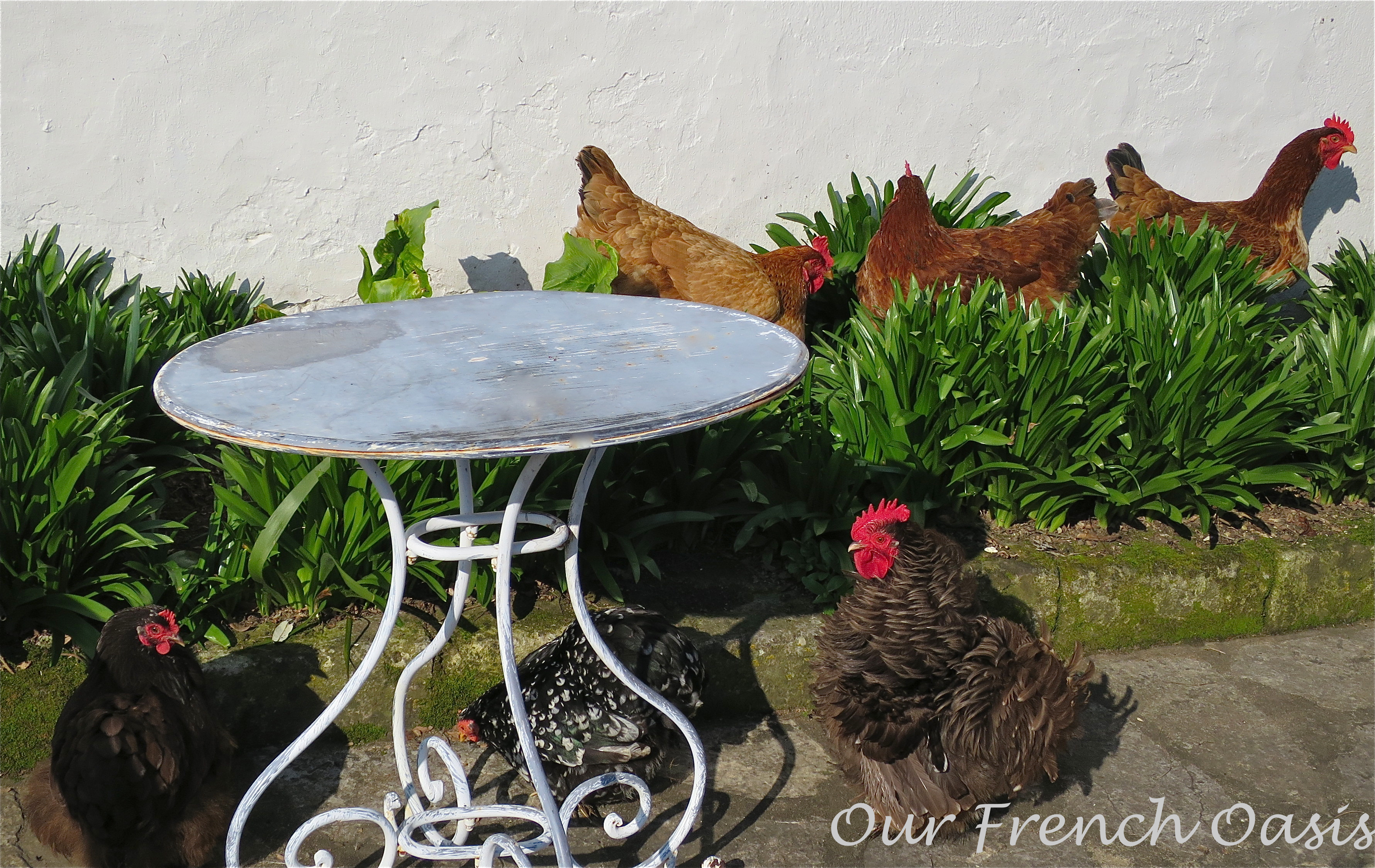
IMG_3803 Suddenly spring is upon us; all thoughts of winter, snow and skiing have been shelved for another year, and our attention has turned to the garden.  Everywhere I turn new life is emerging. It’s not an instant change, rather it’s as if the garden has been hibernating all winter and slowly, like a child, it is waking up, opening one eye, taking a cautious peak to see if it is time to get up and then slowly stretching; and although not quite fully awake it has definitely decided it is safe to get out of bed.  The cobb trees, however, seem to be a little blurry eyed still…. IMG_3807 The ash, not fully awake but so close…. IMG_3811 And the first real blossom to appear in the garden was that of the plum trees…. IMG_3787IMG_3798   Whatever the weather, the camellias are one of the first flowering spring shrubs…. IMG_3815 And then there is the evergreen laurel which has provided such welcome foliage all winter…. IMG_3810 When I step outside at dawn now, nature’s orchestra is in full flow; first light is always the loudest time and everything has a certain spring in its step. The first lizards have appeared, scuttling across the old terra-cotta tiles of the summer kitchen and insect life has suddenly multiplied. IMG_3785 The chickens follow us everywhere, and if we are in the house they love nothing better than to nose around outside the kitchen door. IMG_2838 Despite an abundance of fruit trees, grape-vines and various currant bushes, the one thing missing when we bought the house was a proper vegetable garden. This week we have started to change that and the children are also keen to each have their own little area. One evening over supper we asked them what they wanted to grow; the smallest quickly replied strawberries and broccoli, the second smallest suggested watermelons and lemons, and the discussion quickly turned into a friendly argument about what one could grow, and what one could not grow, in SW France. The teenagers snorted with laughter at their younger siblings.
There is still plenty of work before the first seeds can be sown, but there’s never any fear of being lonely!  I hope over the coming weeks and months we will be able to bring you lots of photos as the vegetable garden develops and produces and we’ll see just what the youngest members of the family actually end up growing!

IMG_1367

Alas though, March is a fickle month and I suspect that no sooner have we hung up our woolen hats and thick scarfs than we’ll be getting them out again!

This post is linked up to the How Does Your Garden Grow weekly blog link run by Mammasaurus.

hdygg-badge


OUR FRENCH VILLAGE BAKERY

IMG_2515

It’s not really something you’d expect to happen in deepest rural France – but then there aren’t too many people with the same interests as my husband, so when a casual exchange about life stories with the baker leads to a demonstration of fish photographs and then an invitation to see the oven, we can’t turn it down.  You see – anything can happen when one fisherman meets another!  And this sparked the beginnings of an idea – over the next few months I want to share with you stories about the local artisans we meet in France and what their jobs really involve – so we start with the life of our village baker.

Truthfully, we’d been wondering about the baker, David Gaillardon, for months. We had lots of questions that needed definitive answers.  How did he survive ? What time did he have to get up to produce the wonderful bread and other goodies we saw each day in the window of our tiny local boulangerie? Has the wonderful tradition of french baking succumbed to the deep-freeze?

IMG_2512


We’ll start at the beginning. There is a bakery in our village.   Most reasonable sized villages have one.  Towns have one on each street.  Bread is a staple of french living and has been for centuries, a staple with its roots entrenched in the mists of time when if there was nothing else to eat, then there was always bread and not just cake, as Marie Antoinette tried to explain before she lost her head in 1793.  Bread and patisserie is a constant of French life and covers a broad subject involving a full spectrum of edible delicacies ranging from the humble croissant (an art in itself) to the magnificent chocolate log of Christmas (the amazing Bûche de Noël).  In between are sundry tartes, gateaux and petits fours, and there is also the use of the oven for cooking the village’s sunday roasts in some far-flung locations. La boulangerie is a magnificent mix of flavors, smells and typical French ingenuity.  And truthfully, no matter how good the food at a table, the French will always have bread at it too.

So, the morning of our visit arrives, and we find ourselves outside the small door of the shop just as the sun is rising, and entering the shop David swings aside a section of the counter and leads us to the dim and dusty warren behind.  There is flour everywhere.  There is a small kitchen behind the shop, then a prep room with a long counter and a vast array of knives and chopping boards, and then the oven in its own large space, jostling for room with a huge mixing bowl and two 6’ high proving and chilling cupboards.  Along one side of the room is a big long machine that seems to be left over from a carpet factory – it turns out it rolls the baguettes into shape. There is flour in here too – lots of it – everywhere.  It is the mark of a man who works at high speed for small concentrated lengths of time – for even as we ask questions and take photographs, David is a blur of movement, moving between the oven, the proving cupboards, the shop (each time the door-bell tinkles way out the front), the rolling machine and the bread baskets. While he works Mr H and David talk about fishing and electricity consumption, and I throw in questions more suitable to the surroundings. In a very short space of time we have plenty of answers and many more questions.

IMG_2377 IMG_2388

There are some simple facts we learn quickly. David has been a baker since he was sixteen and he hails from a coastal town a few miles to the south called La Palmyre. In his small, dusty bakery, he single-handedly produces between 300 and 400 loaves of bread each day, AND the patisserie we see out in the shop. I am in awe. I know how much effort a single loaf of bread makes, even with a bread machine, but to make that many ??

IMG_2376

It turns out that of course there is a regime. A method to the madness, and behind it all, a story.  David’s day really starts at about midday.  This is when he combines the four ingredients, salt, flour, yeast and water, needed for his bread – his dough.  In fact, there are two doughs – one for the white bread typified by the traditional baguette, and the dough needed for the pain de tradition, which is not quite the same thing.  David explains that the older generation of customers prefer the bread of their youth, the white crusty baguette, while many of his younger customers have come to like the breads he makes with a flour in which the miller leaves husk and grain in – a minute quantity – but enough to give a difference to the dough and the resulting loaves. This is the pain de tradition. There are also some cereal loaves, and the very different gross pain, a huge mountain of a white loaf with a half-inch thick burn crust that is cut into pieces and bought by weight.  All told, there are normally nine different breads on the shelves each day.

IMG_3630

In simple terms the dough is then divided into the required quantities and then has its first proving.  During the afternoon, at various times, this dough is then shaped in the rolling machine and then proved again until needed.  The two huge proving cupboards both warm and chill for storage.  At odd times during the latter part of the day, David also attends to the requirements of the patisserie section of his shop, making pastry, rolling croissants and pain au chocolate, making flans and tartes, cutting fruits, shredding chocolate and mixing whatever else he decides to bake that day – biscuits, galettes and eclairs all feature on his shop shelves.  The basic premise is that when David leaves the shop by nightfall, he has done everything for the next day and final part of the routine.   Each morning he arrives at 5.00am, goes through to the oven, already hot and ready for use thanks to the automatic timer and simply rolls the first 10’ long trays of proved loaves into the furnace and starts all over again.  By 6.00am, the shop door is alight and the first customers appear.   He bakes bread three times each day as is traditional in France, producing fresh baguettes for each of the three main meals, breakfast, lunch and dinner, so that the bread, containing absolutely no preservatives is always fresh.

IMG_3590

IMG_3603

All of this information is imparted as David works with his precious dough. As is typical of someone who works with an established routine, his movements are economical, his handling of materials and tools practiced, and his time is a steady pace of perfectly executed routines. As one shelf of loaves appear from the oven, another underneath is being readied to go in at another level. David explains succinctly that the oven he has now is only 4 years-old, a substantial 37,000 euro investment that replaced a cast-iron monstrosity that he inherited when he bought the business seven years ago.  The old one had to be broken into pieces in situ during the exchange to get it out of the door and in life it used 500 gallons of heating fuel a week.  The new electric oven sits proudly in a much smaller footprint, replete with a touch pad of blinking lights and buzzing alarms, its three bread ovens and its patisserie oven aglow with heat. David’s fingers work at lightening speed, setting times, heat and alarms without hesitation.  The whole experience is akin to watching a concert pianist work with play-dough.

IMG_2383

I ask a few more pertinent questions in between the men’s fishing and hunting conversation. A strange fact emerges – David does not live in our village.  The building we assumed was both bakery and home is just a bakery below and someone else’s home above. David and his young wife, and the three children we see at weekends scuttling in and out of the shop, actually live in another village four miles away. His wife is a nurse.  They have been making bread locally for eight years.  It then turns out that for 12 years before that, David taught the art of baking at France’s national bakery institute, and as he explains how his flours, doughs and oven-times all work together I realize we are talking with a master craftsman.  This is reinforced when we find out that the friend he holidays with is the president of the national baking foundation.  This snippet of information is followed by a conversation which involves discussion of air, kneading, yeast, temperature, flour mixes and the vagaries of different forms of heating.  I am amazed at the breadth of baking experience we are lucky enough to have in our little village.

IMG_3581

IMG_2372

As we leave, I spy a sack of thirteen huge loaves in the corner. They are something we do not see in the shop and I ask where they are going.

“Ah,” says David with a grin. “They’re for the old people’s home – they like the traditional white bread, but not the crust, so it is easier to chew, I make theirs specially for them” I am amazed for the second time how lucky we are to have not just a craftsman, but such a gentleman in our village.

AllAboutFranceBadge

http://www.loumessugo.com/en/blog/entry/all-about-france-link-up


THE MAD HATTERS’ TEA PARTY

HDR_1993 2The photo that started it all

It’s a dismal rainy afternoon in South West France.  The children are on their winter break for two weeks and it’s raining.  What is one to do ? Make cupcakes of course!  So, with the two youngest girls, we baked, we iced, we giggled, spoons were licked and a fine mess was made –  baking with the children is always wonderfully sticky fun.

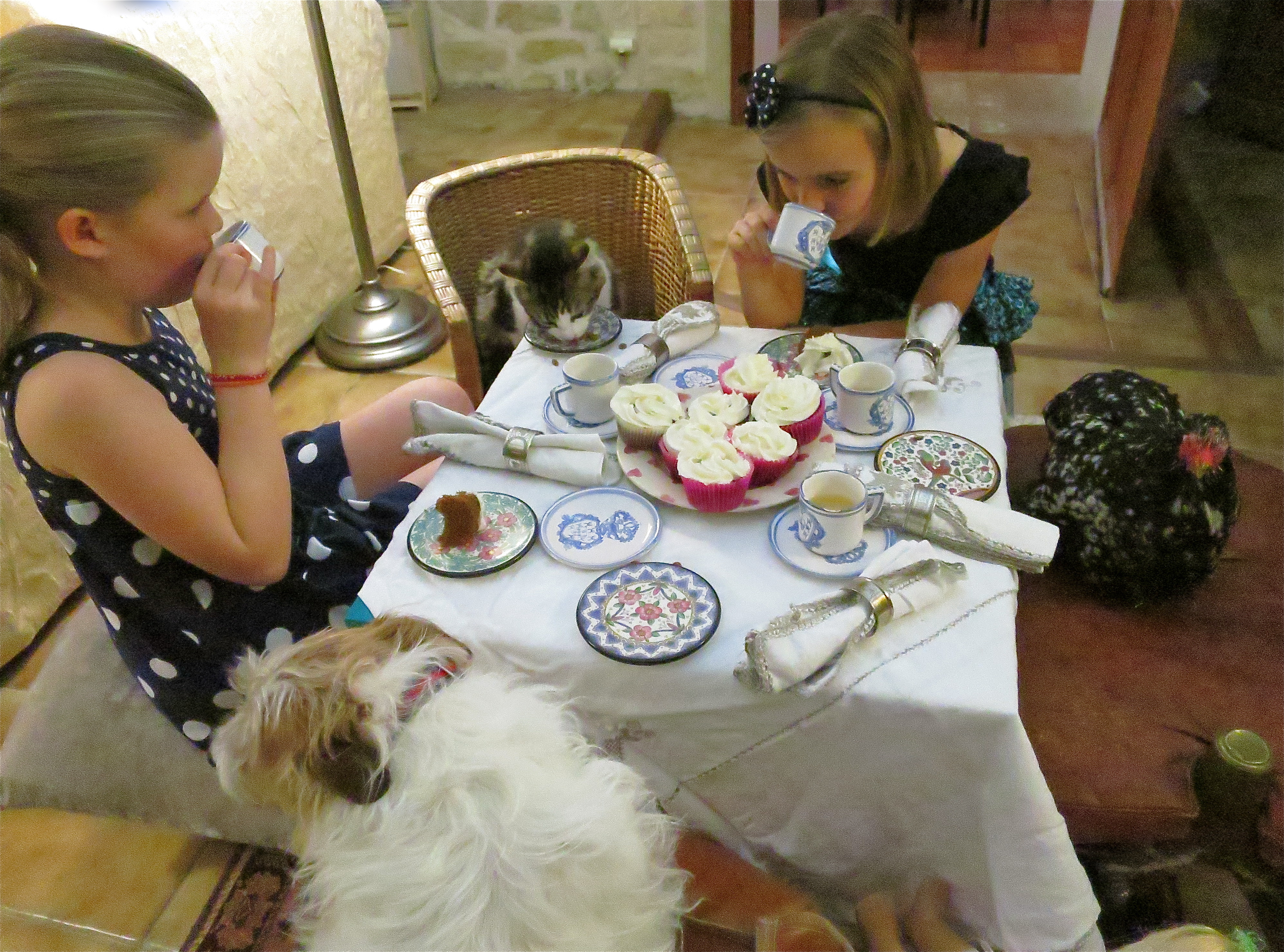
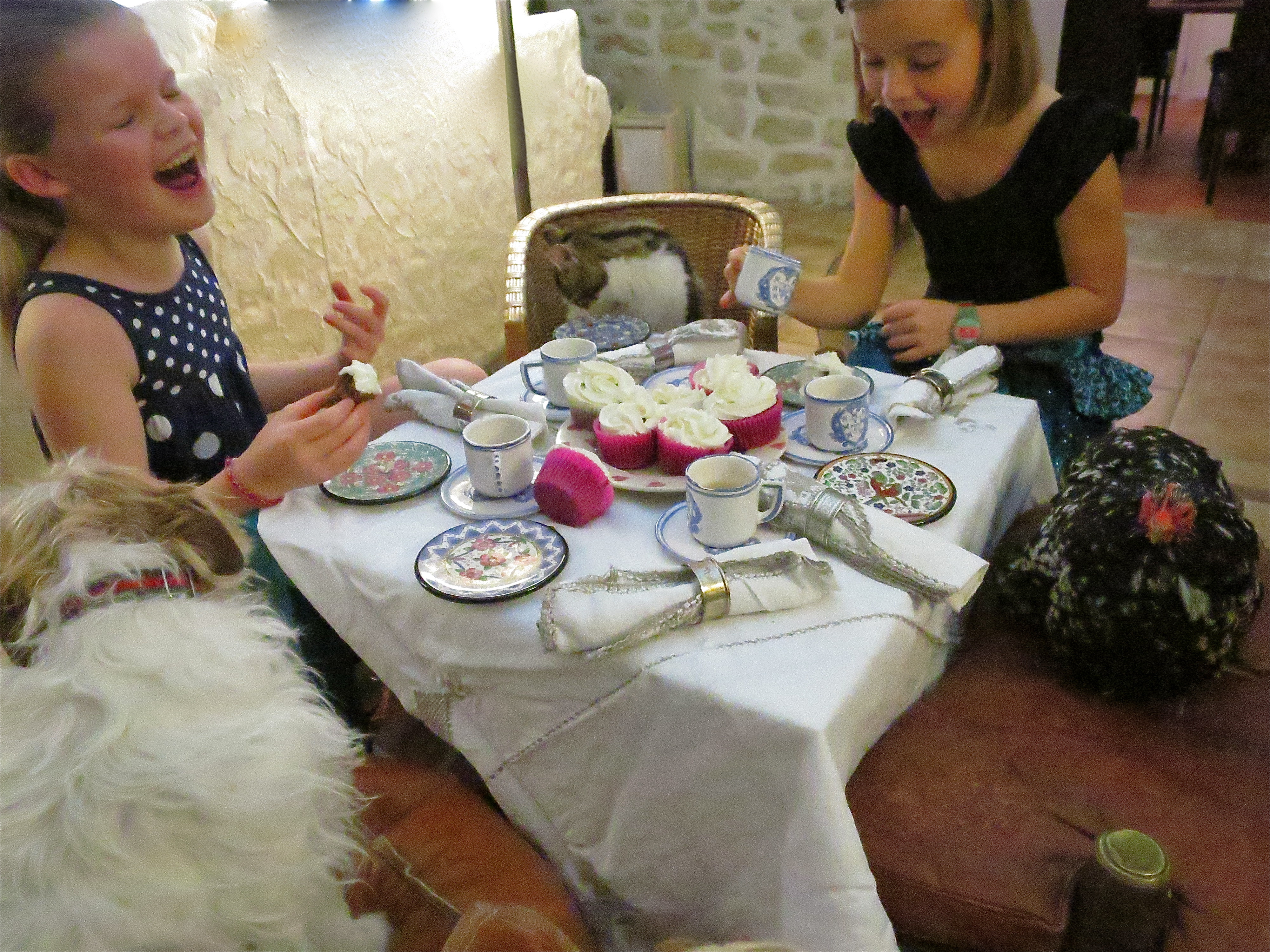
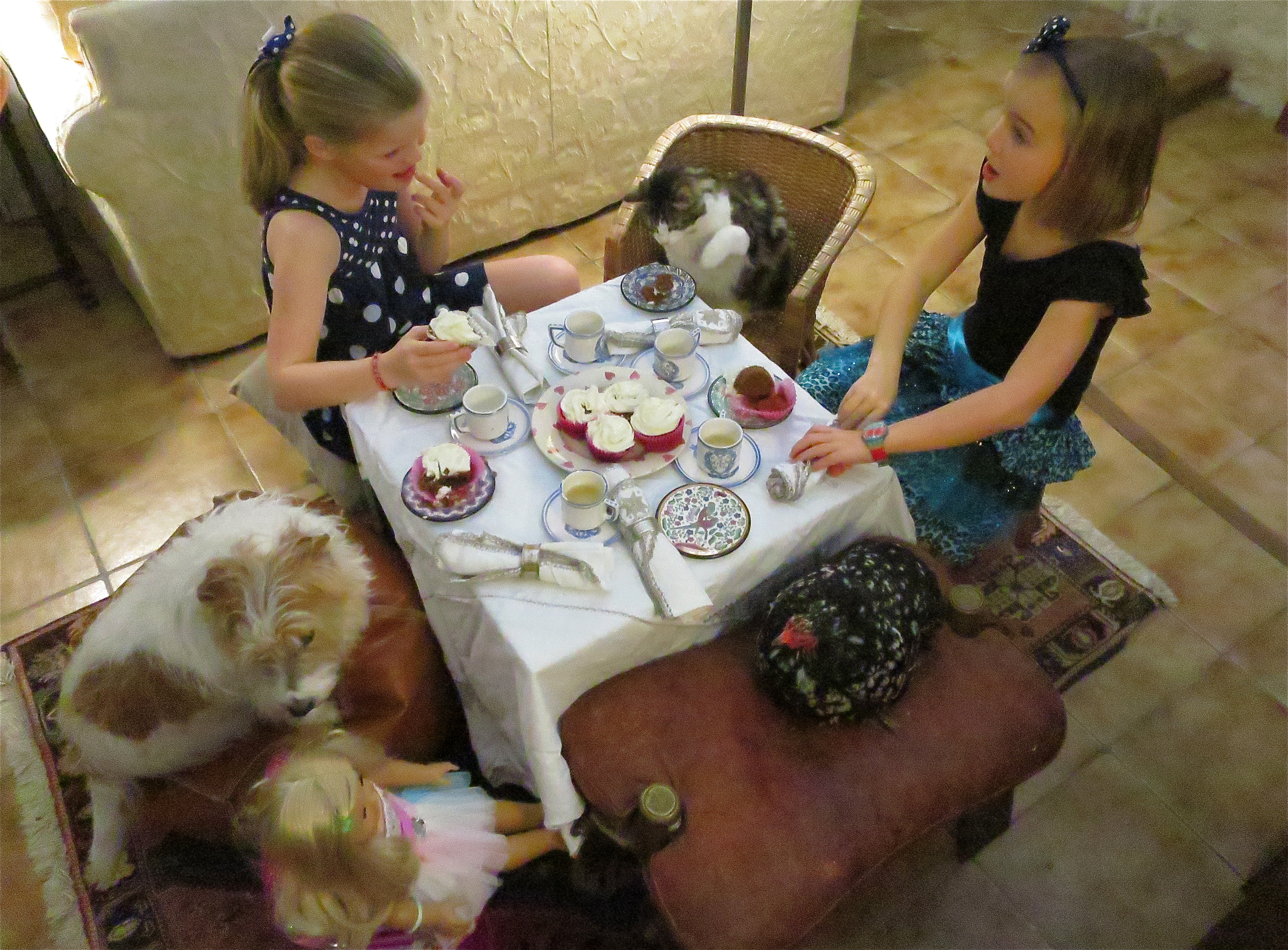
The girls then said they were going to have a tea party.  I thought this was a great Idea.  So they dressed up in their party clothes, dragged in a small table from the garage, found the low stools and chairs, and then took out some real china and silver napkin rings. I just knew this was going to be one heck of a tea party!

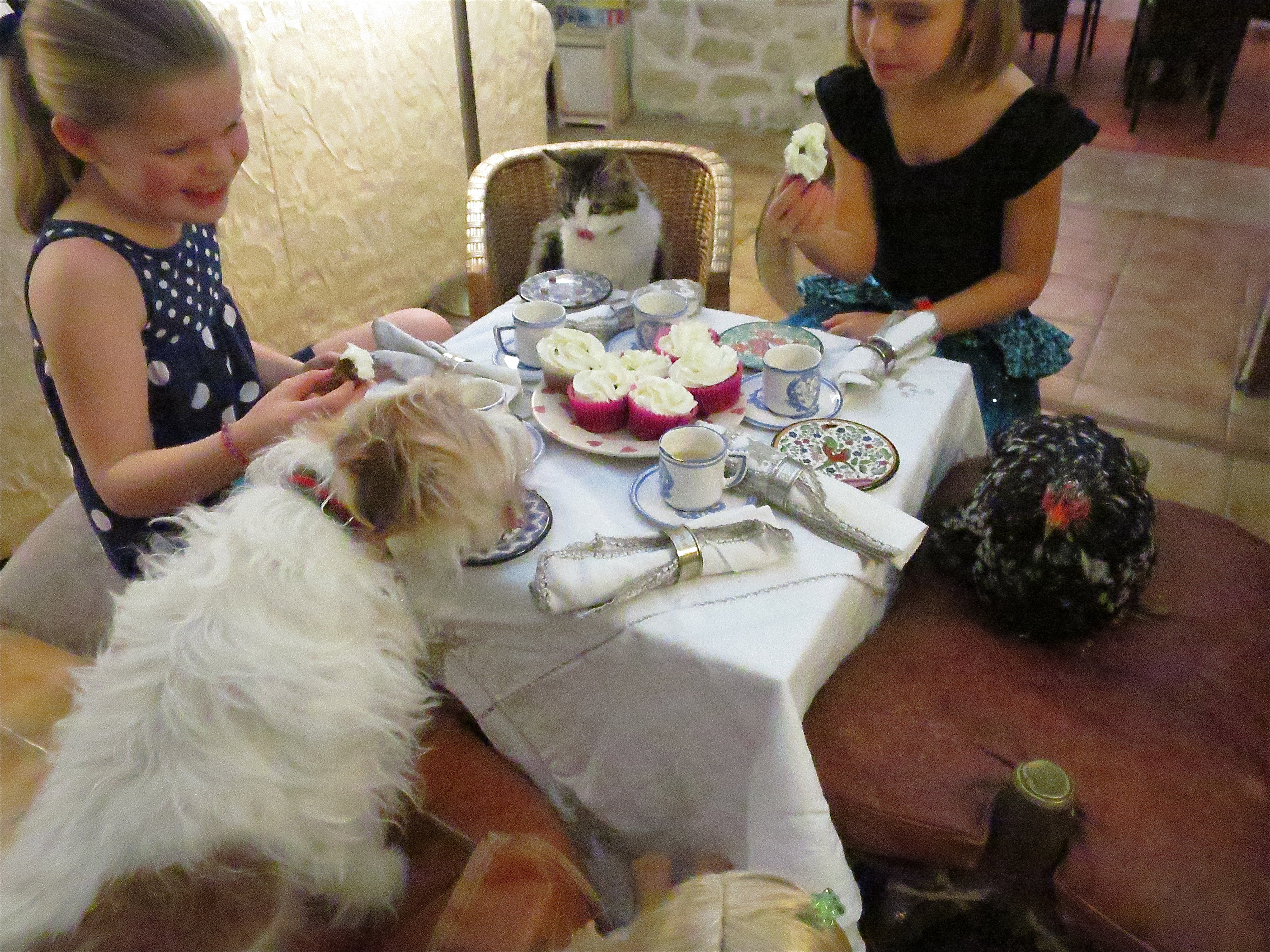
However, the number of place-settings confused me at first, until I realized that an invite had gone out to one of the American Girl dolls. This was followed by much giggling and whispering, and then I saw Bentley, our dear sweet long-suffering Jack Russell, offered a seat.  Nothing really too unusual here I thought, and carried on with my paper-work.

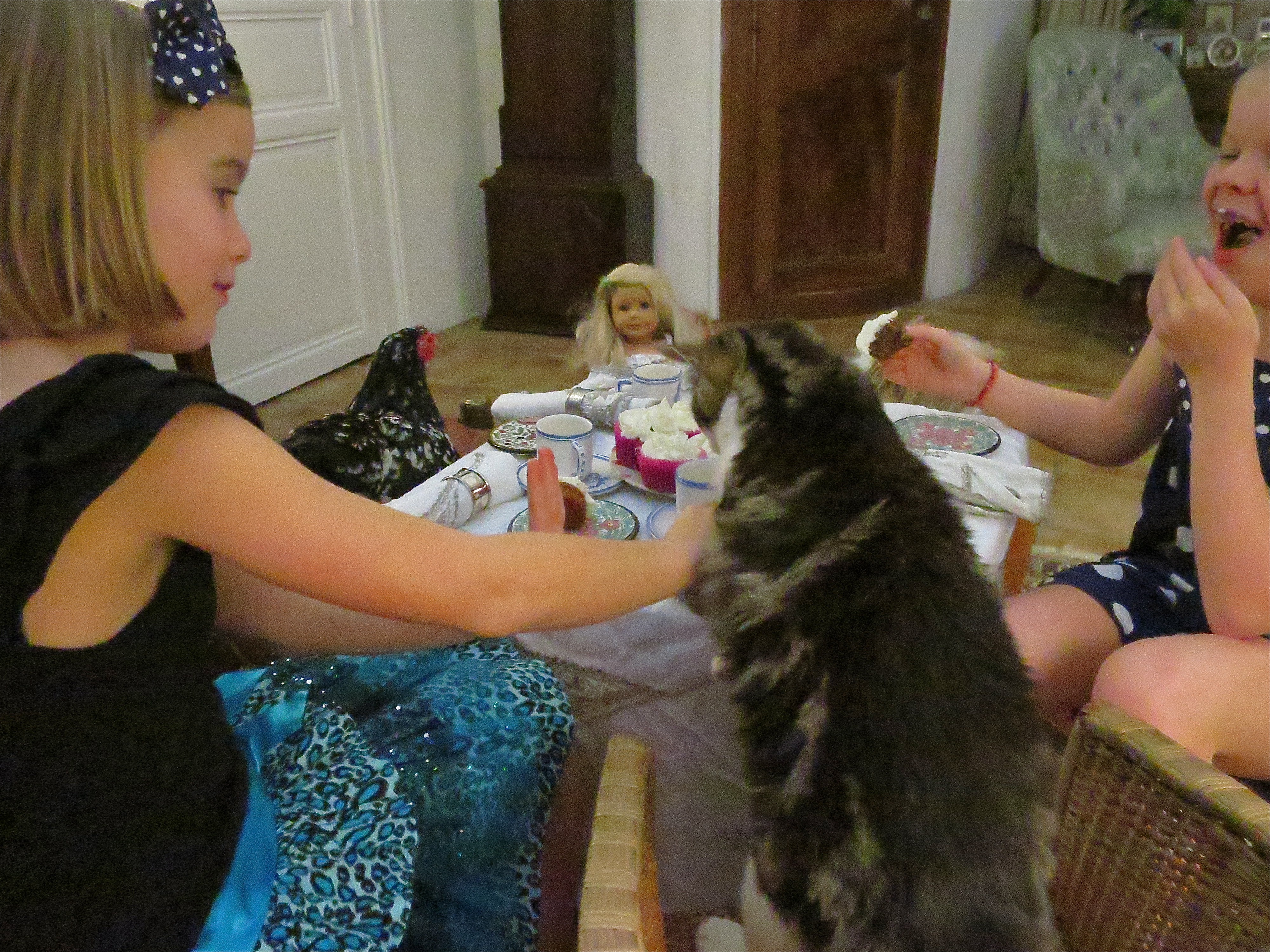
However, out of the corner of my eye I then saw Rory, one of our six month old kittens, had joined in the fun. This now peaked my interest and I furtively started to watch a little more closely, un-noticed, in the background.  The giggling continued unabated.

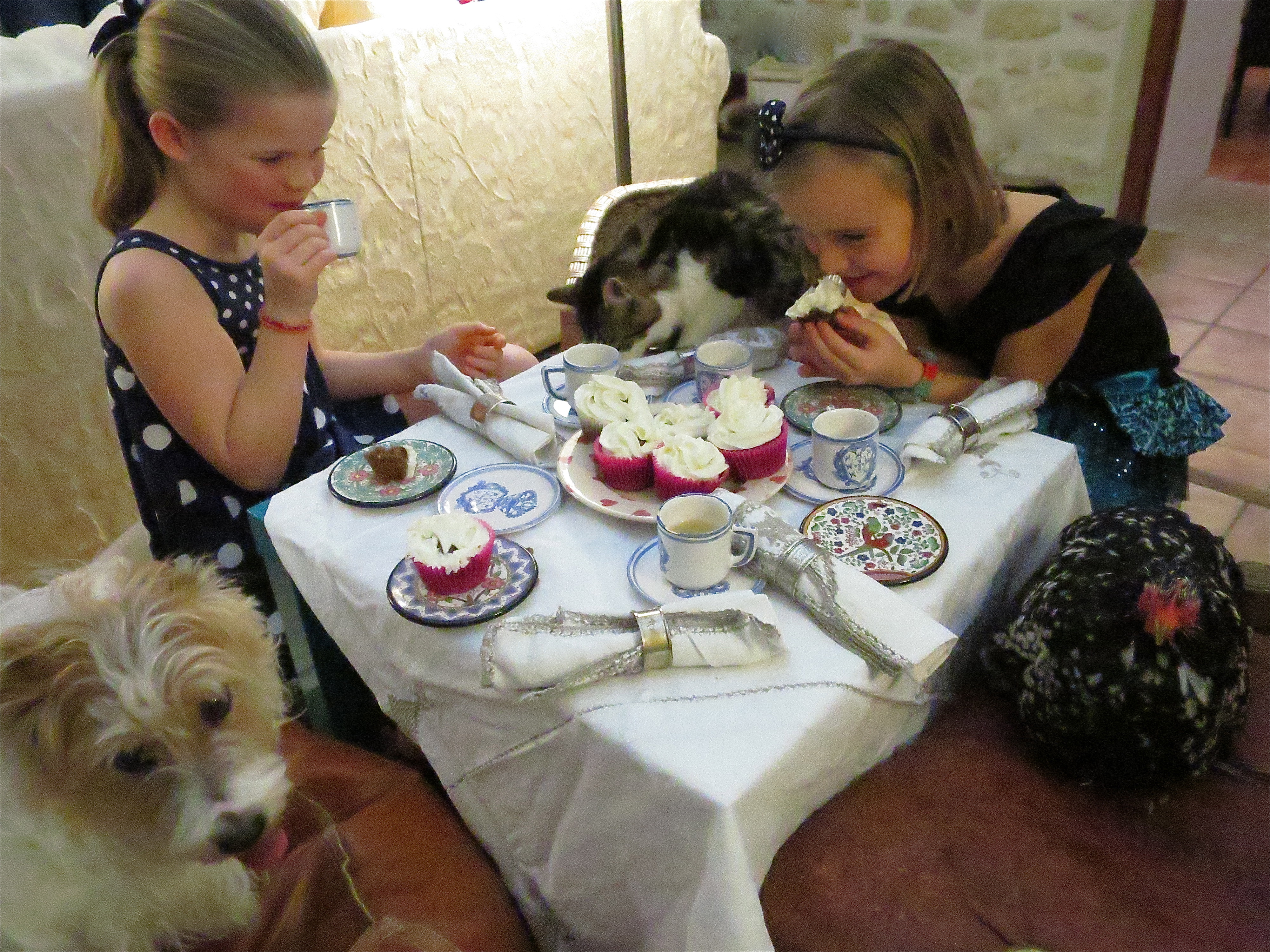
Our youngest then left on the pretext of going to the bathroom, but she had that wicked glint in her eye and I knew something was up!  She returned carrying Eleanor, the friendliest of our Pekim Bantam hens; yes Eleanor was coming to the tea party!  Now I’d forgotten all about the paper-work, I grabbed my phone (no time to look for the camera) and started snapping away….this was hilarious !

IMG_2131Rory wasn’t sure – what was that icky-sticky stuff on the table ? Bentley started to have a meaningful conversation with Elizabeth, the American Girl doll.


IMG_1983More tea anyone? Bentley looked perturbed that his plate was empty. 

IMG_2034Rory thought he might just get the last of the crumbs as he enjoyed the rest of ‘whatever it was’ so much.  Bentley on the other hand, now has something ON his plate but cannot quite understand that he is going to be allowed to eat off the table, that’s a definite NO normally; and Eleanor, well she’s just sitting, wondering what on earth is happening….

IMG_1964Rory really wanted more – and then some more. Who knew cats liked cake?

IMG_2010Well, as soon as Rory licked his lips (yum, that butter cream icing is just too good!),  Bentley decided the temptation was too much, and no one was going to stop him from having just a sneaky little taste….

IMG_2004and all the time Eleanor just sat there, unruffled by the chaos and laughter….

What a fun afternoon; there is one thing for sure – our household is never dull – but this certainly beats electronics and television on a rainy afternoon. Of course, Mr H thought it was all totally normal when he walked through the door, but then he is slightly barmy himself – I can see where the girls get it from now.


CUPCAKES AND KISSES

IMG_1286

Cupcakes and kisses, flowers and chocolates, you would be forgiven for thinking I am a hopeless romantic, that February 14th is one of my favourite days of the year – alas no, it’s not me but our two youngest daughters aged 8 and 10 who are obsessed with Valentine’s Day!

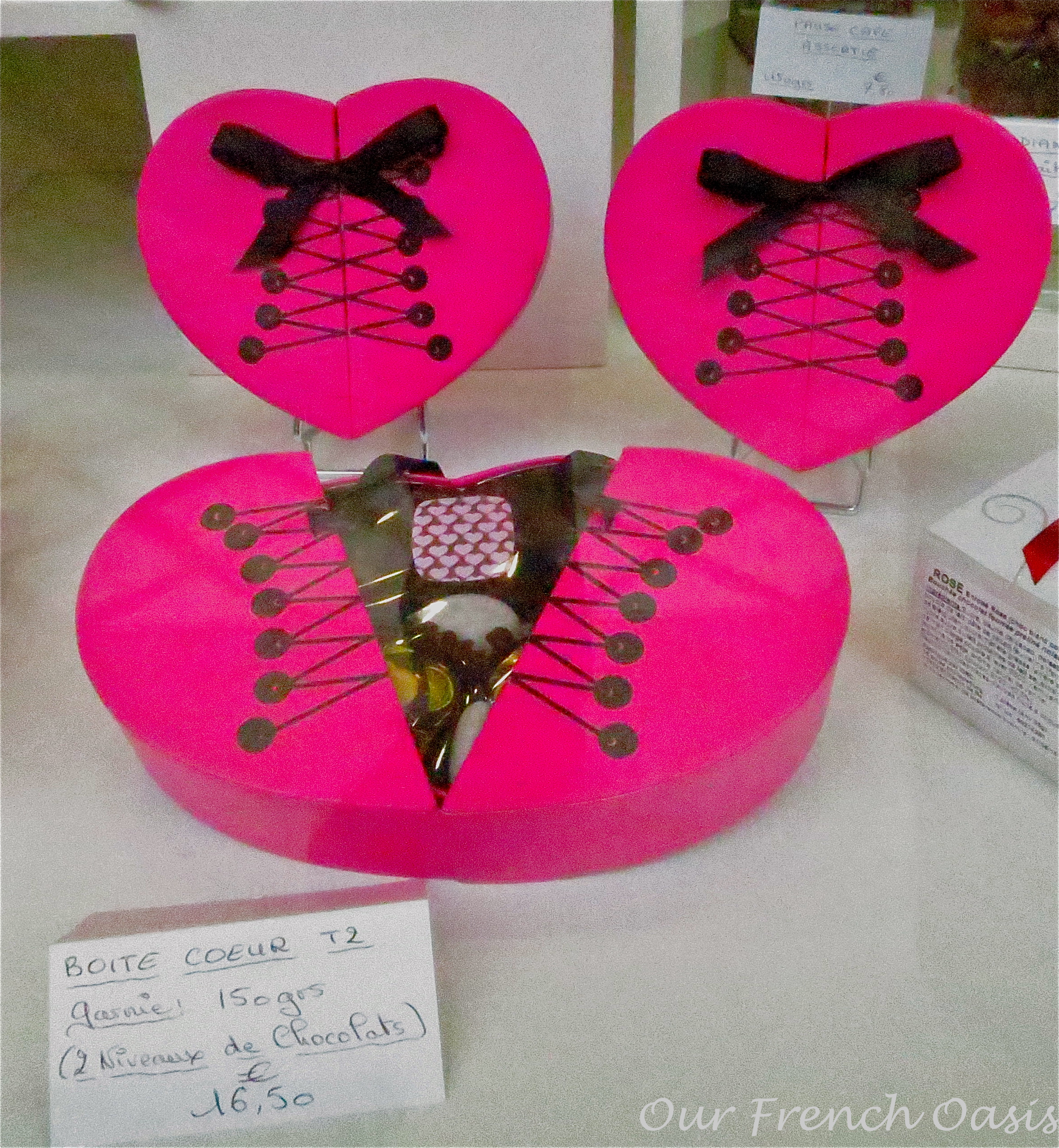
Browsing in shops in La Rochelle this week there was very little evidence of Valentine’s Day.  Just a glimpse here and there of a red heart, a little reminder delivered with understated elegance.

The chocolatier offered exquisitely presented chocolates

IMG_0633 copy

sometimes with a hint of passion

IMG_1201

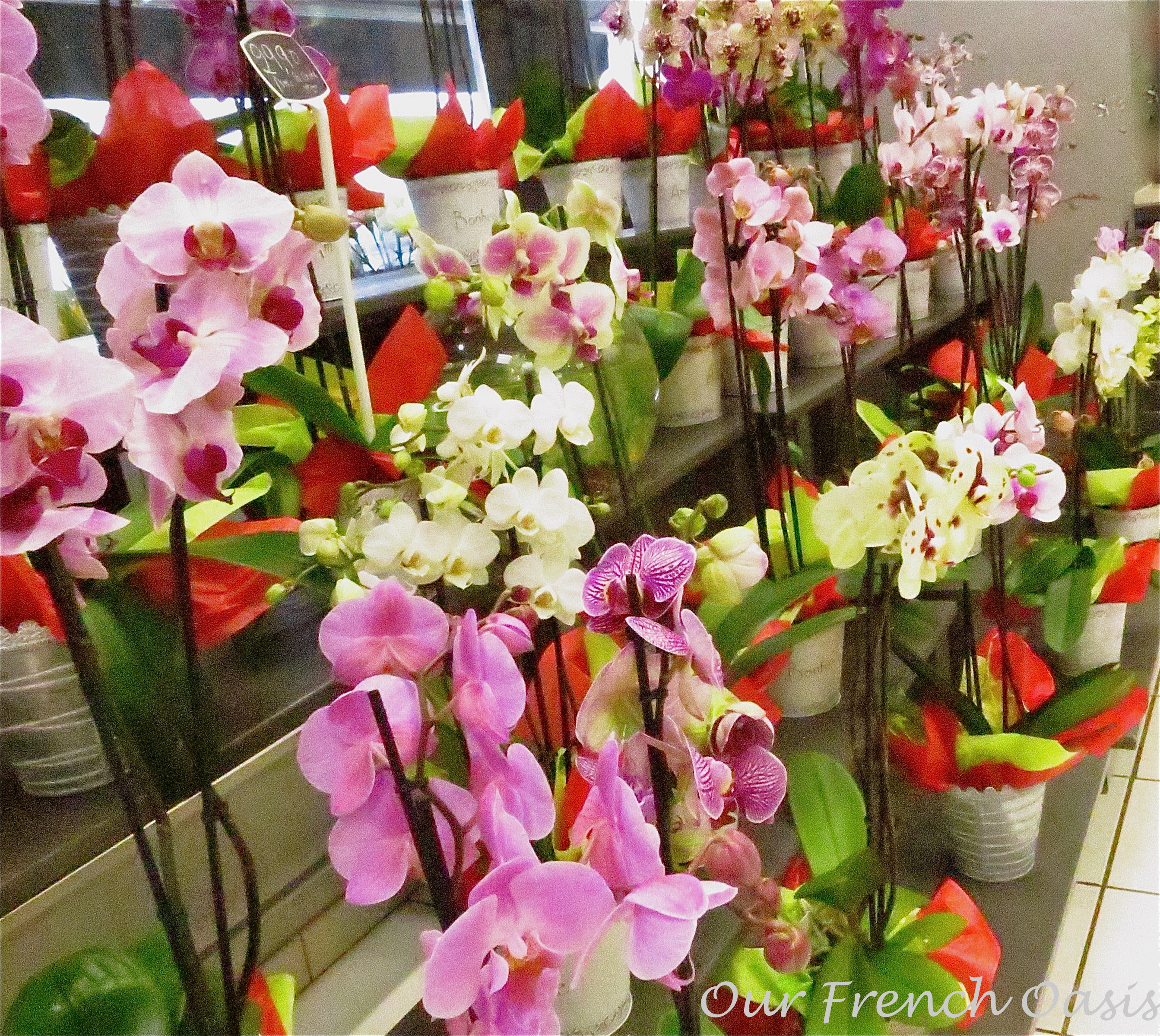
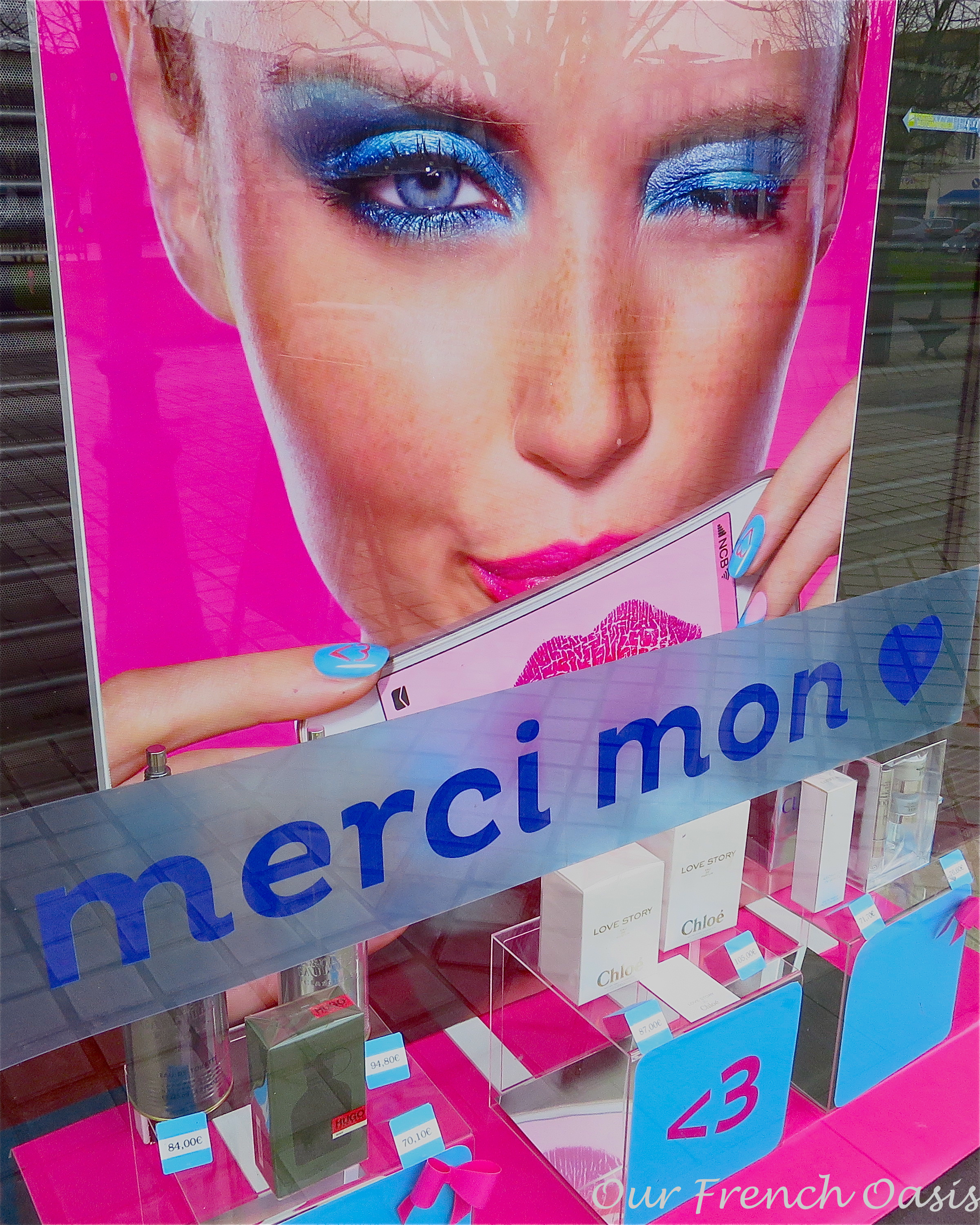
The Florist, the Parfumerie – so simple, so chic, so French.

IMG_1197 IMG_1192 IMG_1212

Our 14 year old is currently making stunning little figurines with oven-bake modeling clay and I borrowed some of the red and sat and made kisses and hearts, lots of them, it was strangely therapeutic!  I put them in a little box which I covered and decorated and the next day they went in the mail to our eldest daughter at University in the UK.  I told her a little package was on it’s way and she must not open it until Saturday, “but why not until Saturday Mama? I don’t understand” she said.  We message and send a long line of kisses everyday but I just wanted her to feel extra special, to have a few extra kisses.

IMG_1156

On the subject of kisses, how it tugs at the heart-strings when our little ones don’t really want to go to school, don’t want to leave us for a few hours, what do you do?  Sometimes I blow them a couple of extra kisses, they catch them, it’s a routine we know well. I tell them to pop them in their pockets for later, so that when they feel a little low, a little insecure, they have those extra kisses warming their pockets – they can take them out and use them when they need to.

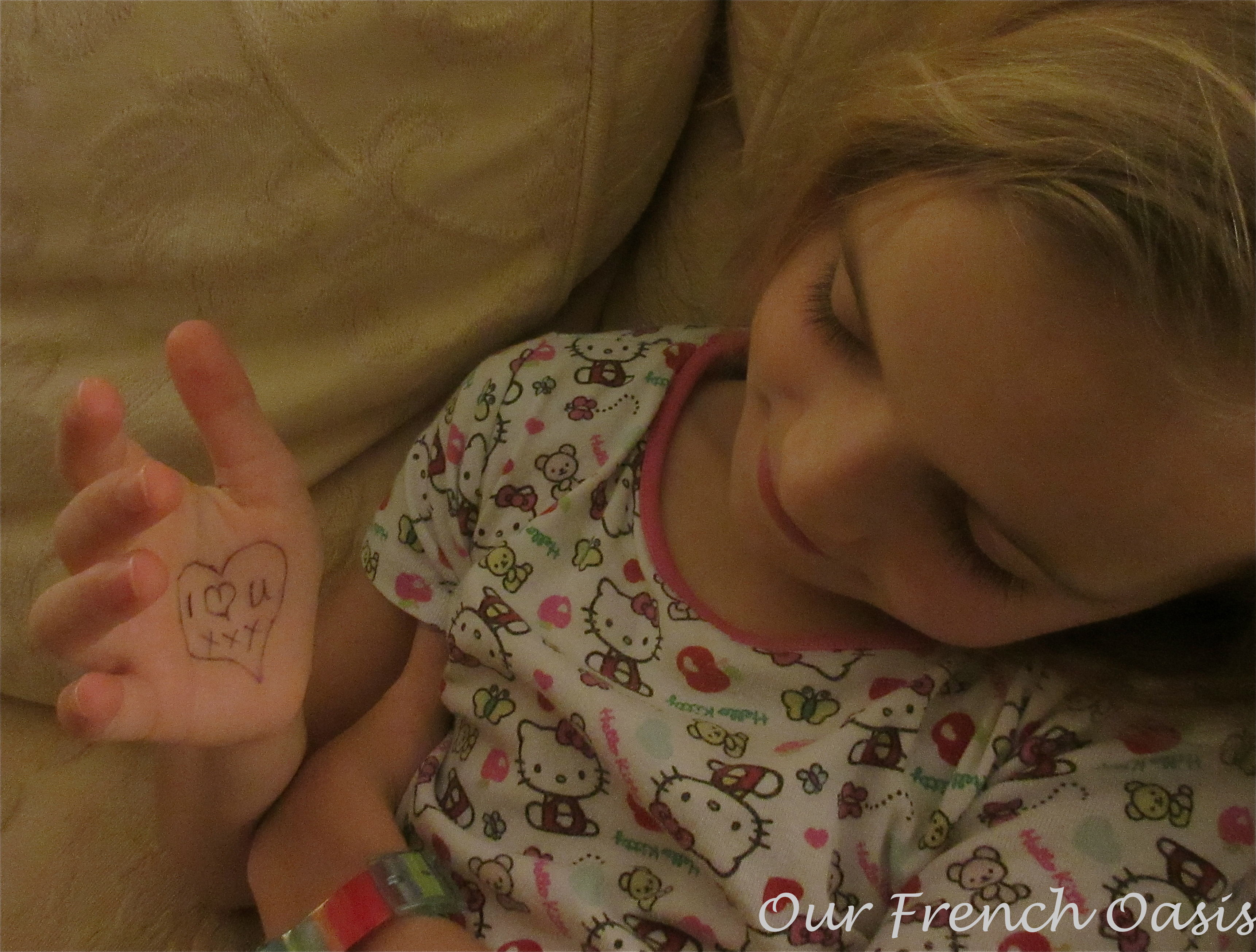
Sometimes, I write a little message in the palm of their hands, whilst they are struggling with something at school sitting at their desks they can take a little look, knowing I am thinking of them, knowing they are not alone – feeling loved always.

IMG_0649

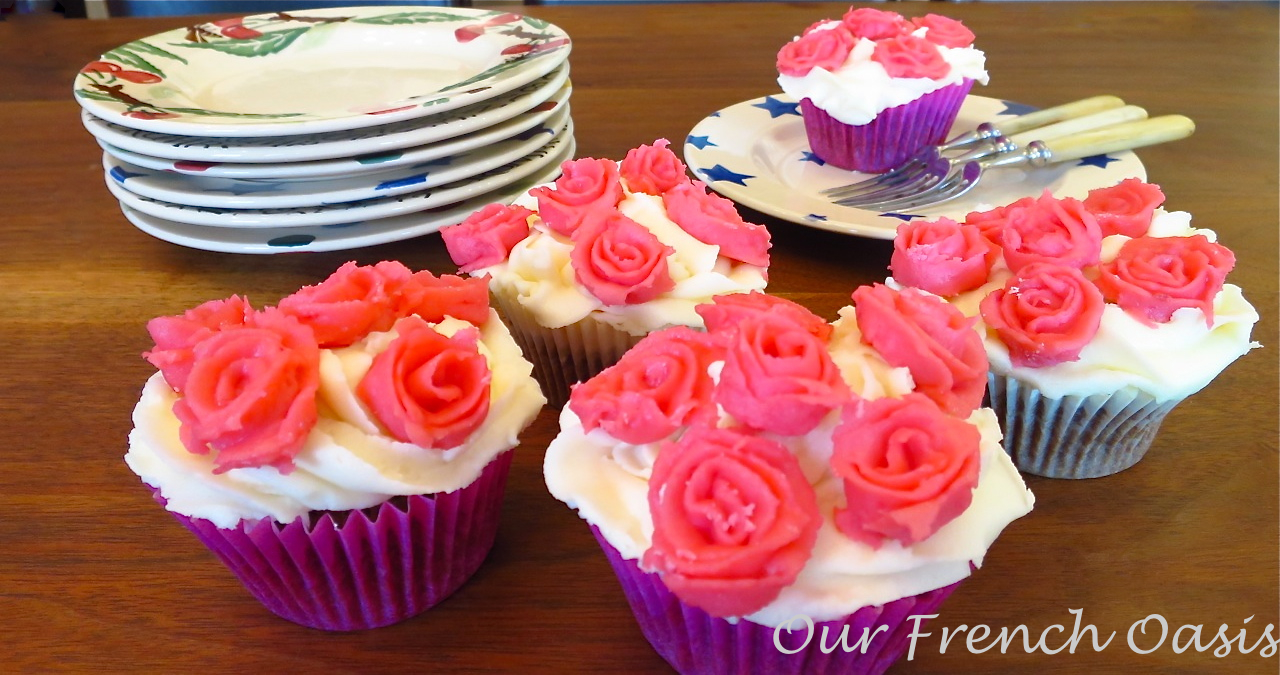
Do we ever need an excuse to eat cake?  Probably not but this was an excuse to be a little more creative than usual.  This is my standard cake recipe, I use it regularly whenever I make cupcakes or cakes.  I always use spelt flour, we love the slightly nutty flavor it gives, but this recipe works just as well with plain or wholewheat flour.  The cakes are a very light and fluffy sponge, not heavy at all as is sometimes the case with wholewheat flours.  I don’t normally spend hours piping icing onto my cupcakes, they don’t usually last long enough to warrant such effort and to be honest they taste so much nicer without the extra sugar!  However, these are special occasion cupcakes, I colored the butter icing with a little juice from some defrosted frozen raspberries and it produced a fabulous color without any artificial chemicals and gave the icing just the smallest hint of raspberry.

IMG_1280

6ozs/170g butter, softened

4ozs/125g sugar

6ozs/170g wholewheat spelt flour

1 teaspoon baking powder

4 eggs

3 tablespoons cocoa powder and 3 tablespoons water

(if using Spelt flour or Wholewheat flour I add  1 tablespoon milk)

Ok, so this is where I break all the baking rules.  I put all the ingredients together in the mixer and beat on the lowest setting until everything is combined.  Then I beat at top speed for about 30 seconds until the color changes and is lighter.  You will just have to trust me on this one, I have been using this recipe, which is my own for many years and it always works, the cakes are mouth wateringly light.  Place in cupcake holders and bake at 180C/350F for 12 – 15 minutes.

For a classic Buttercream Icing

5ozs/140g butter, softened

10ozs/280g Icing sugar

1- 2 tablespoons warm water

a few drops of vanilla essence

For the Pink Icing, I replaced the vanilla essence with the juice and pulp of a handful of frozen raspberries.  I let them get really soft and then pushed them through a sieve straight into the icing mixture.

I then used a standard icing nozzle for the vanilla icing and a petal tip nozzle for the roses.

A little decadent but worth every second to see the smile on my children’s faces

X   X   X

IMG_1241

FROSTY WINTER WALK

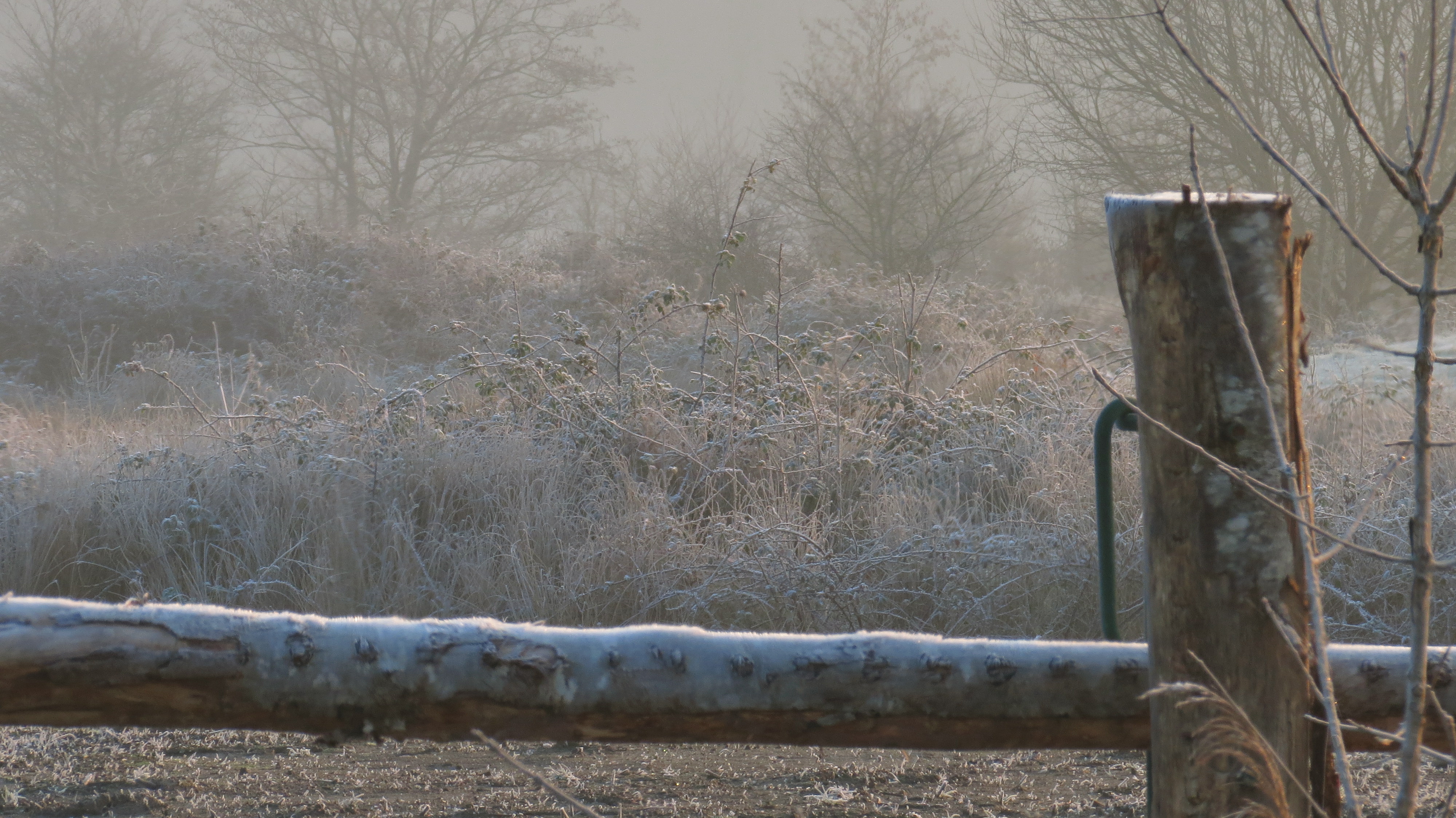
IMG_3130

The current cold spell has us all in it’s frosty grip.  It can be really hard to leave the warmth of a good fire and get all dressed up to go out walking; even Bentley, usually keen for a walk no matter what, looks outside the door and tries to slope back in to the flames.  However, once I get out there and have been walking for a while, my contradictory self comes into play and I don’t want to go back home!

IMG_3132

Anyone who has been following my blog to date will know that we have fallen in love with the marais on the edge of our village, an area consisting of thousands of acres of coastal freshwater marshes and ancient salt workings.  It is a permanently changing landscape that never fails to disappoint.  An absolute haven for wildlife, especially birds, and home to several endangered species.  Even though man has worked the land and water here for thousands of years, there remains little vestige of feudal servitude – instead, there is just an overpowering sense of peace and enchantment.

IMG_3109

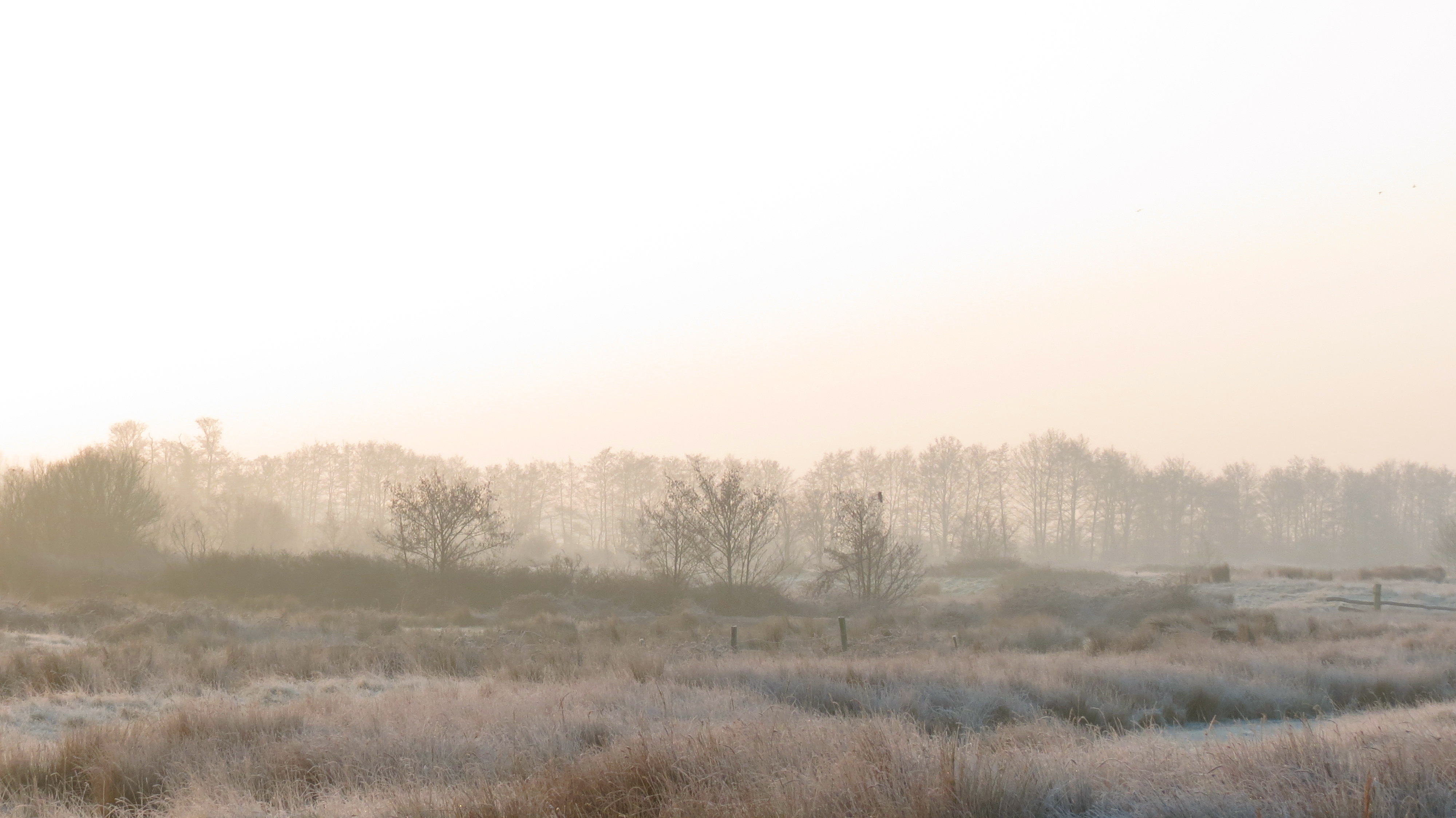
It is needless to say, one of our favourite dog-walks.  At this time of year the natural canals and lakes are full to the brim, and on a cold clear frosty morning as the sun is rising, the light is absolutely magical.

IMG_3123Soon, no doubt, the shrubs and trees will be bursting into life and the marais will change again, but for the time being I will leave you with a few more photos of winter here in the marshes.

IMG_3127

IMG_3125

IMG_3110

IMG_0811

GET THE CHILDREN INVOLVED

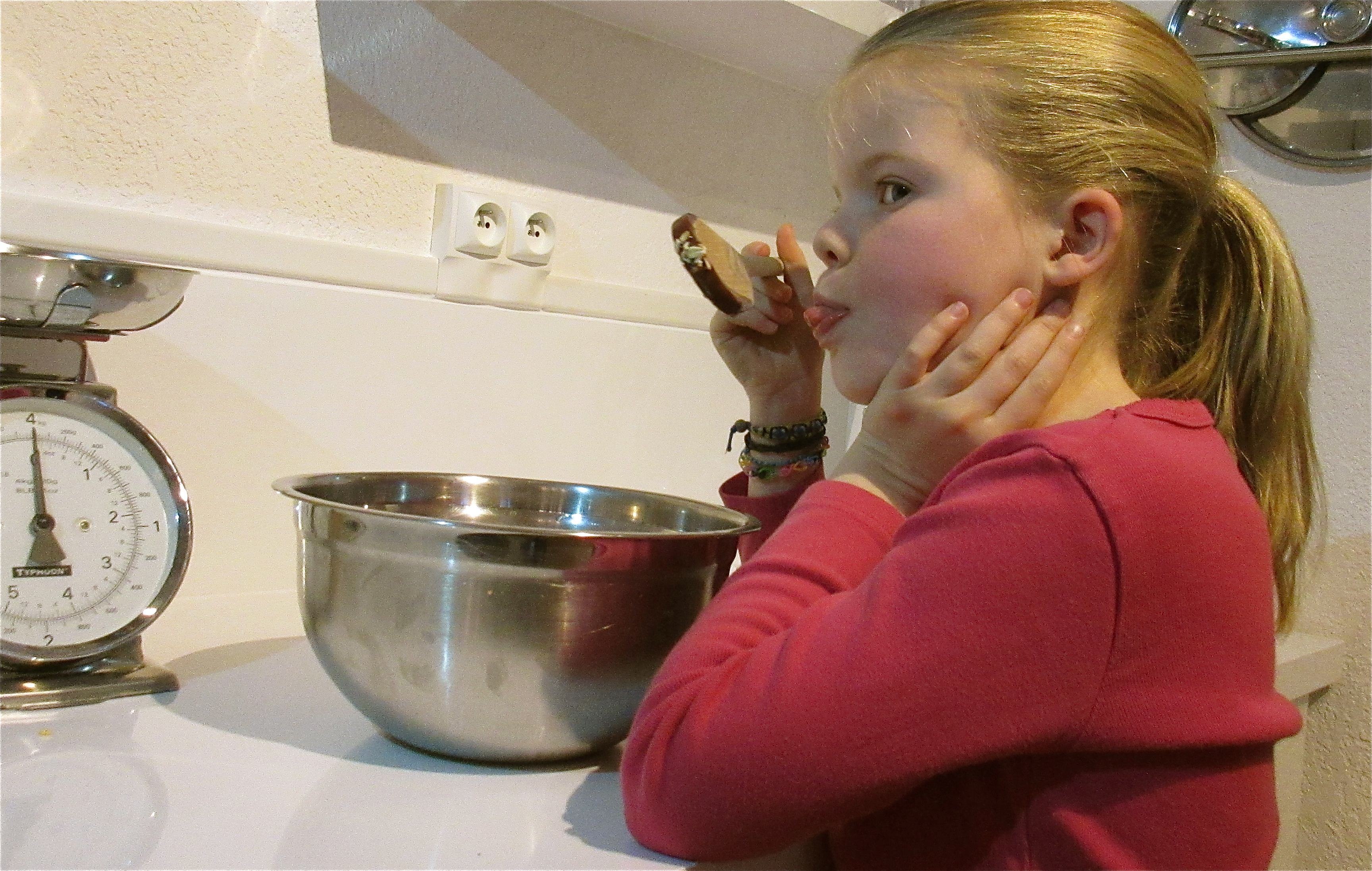
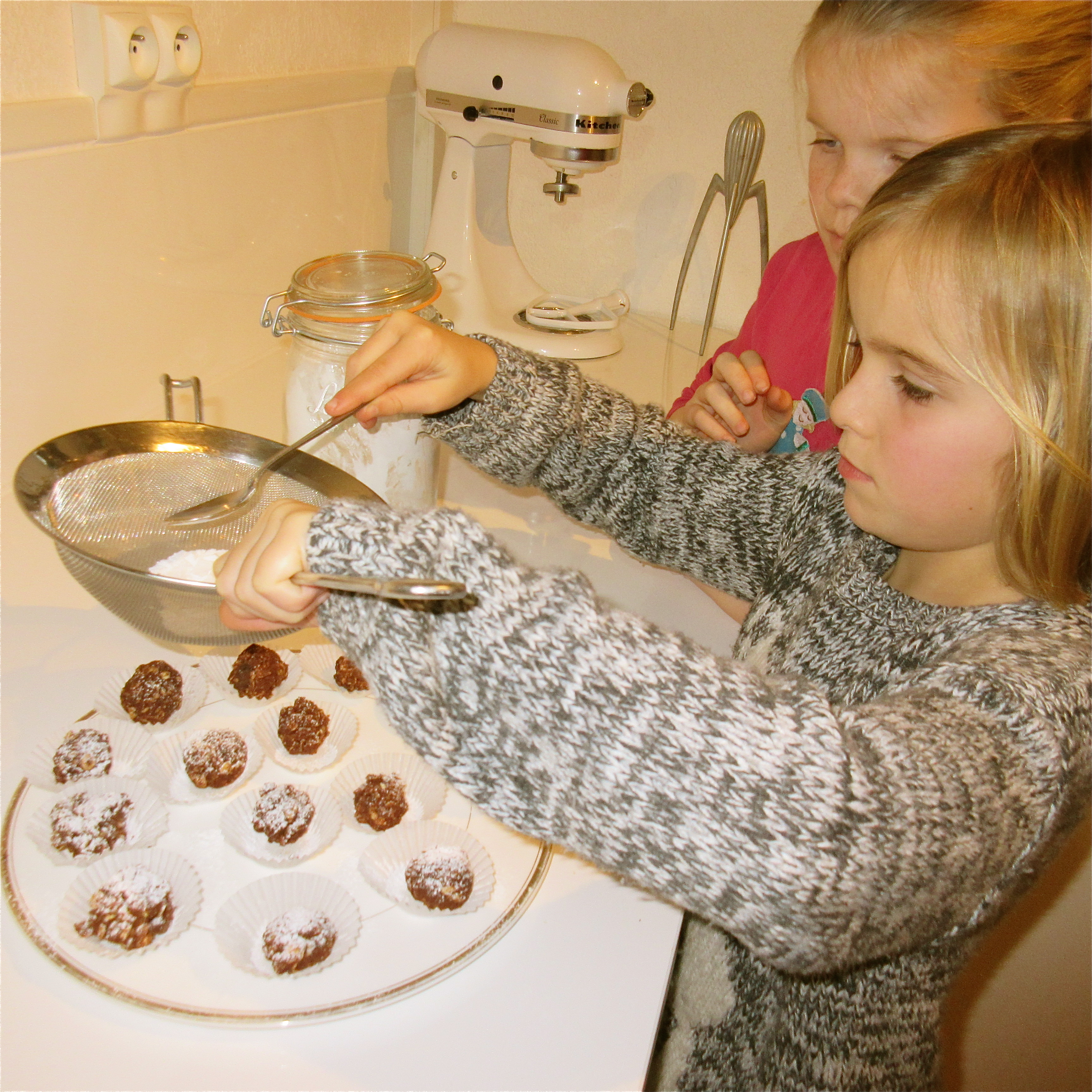
So this afternoon I have a recipe that is perfect for children to make.  Our two youngest girls made these fabulous little Muesli balls at the weekend with a little supervision and today they made them all by themselves. Hmmm – I think she thought I wasn’t watching! IMG_0432

1 Orange, Mandarin or Clementine

4ozs/100g Muesli

100g chocolate melted

a little icing sugar for sifting

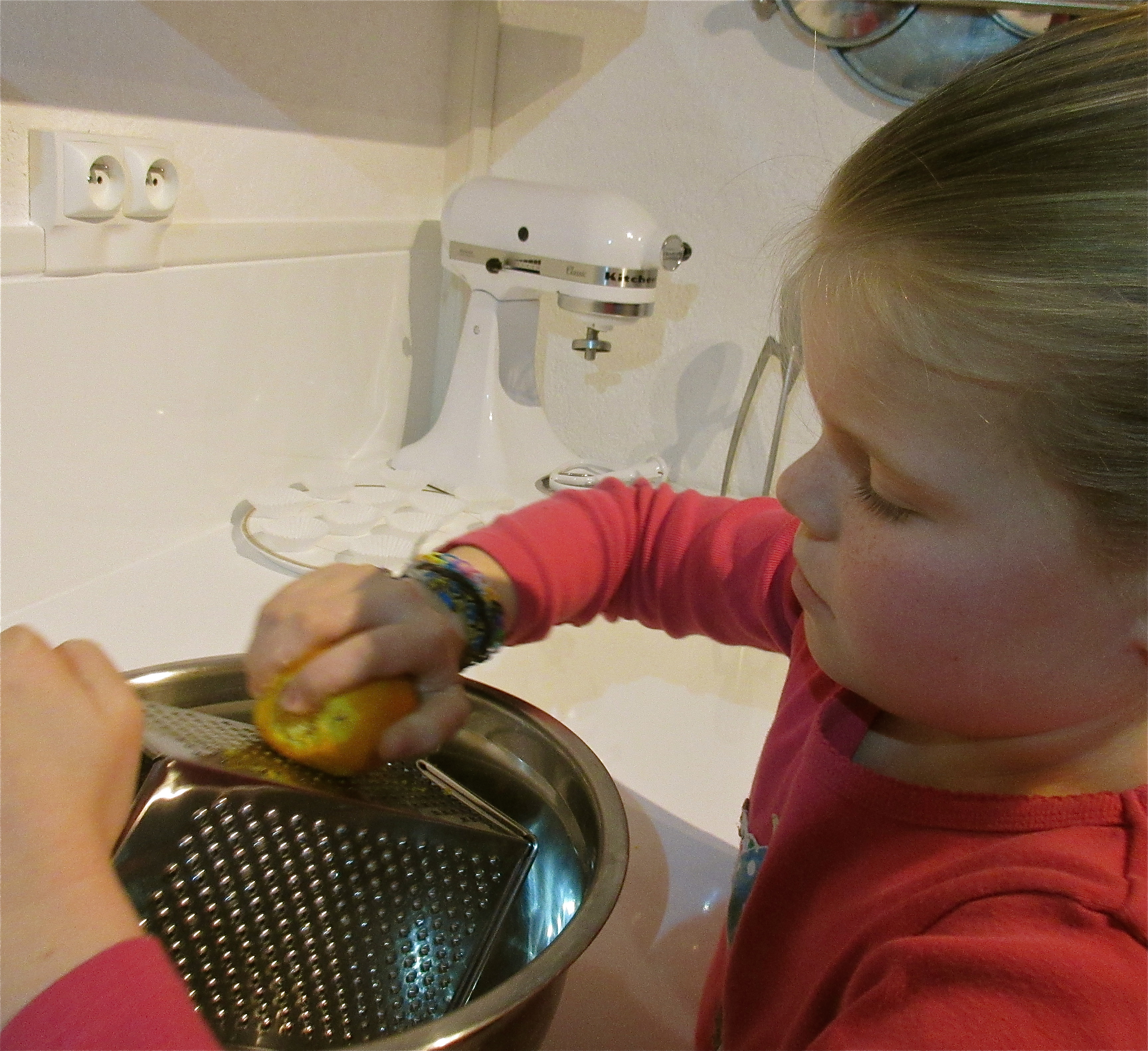
Finely grate the peel of the orange or mandarin or clementine (whichever you have to hand) into a bowl and then squeeze in the juice.

IMG_0411 IMG_0418

Add the Muesli.

IMG_0422

Pour in the melted chocolate.

IMG_0424

Stir the mixture well, then shape into balls each about the size of a walnut and put them into baking cases.

IMG_0436 IMG_0454

Sift over a little icing sugar.

IMG_0462

Leave in the fridge for at least half an hour before eating.

IMG_0472

I love that my children are learning to cook from a young age and take an interest in what they are eating.  These are so delicious for adults and children alike.  The orange gives them a wonderful flavor and the darker the chocolate the more grown up they become.  We used 70% cocoa chocolate and I could serve these after dinner to a group of adults – the only bad thing is they don’t last long – but then they are so easy to make I’ll just have to ask them to make another batch…..