THE WORLD REMEMBERS…


IMG_2408

I had so many good intentions yesterday. I planned to start my Christmas shopping, harvest the olives, make salsa with the mass of chillis we still have growing, freeze the aubergines and do a countless other things; the list was endless. But none of it got accomplished, not one thing. I have been thinking a lot about the First World War, as today is Armistice Day, which is a public holiday here in France. In every town and village there are war-memorials and today the local people will gather about them, flowers will be laid, and we will all remember someone who is no longer with us; for we all have grandparents or relations who were affected by WWI. Church services will be held and church bells will ring. I think as one gets older one thinks more about these things. As a result, I wanted to write a post today thinking of all those people who fought for us and who gave up their lives for us, so that we could all live the lives we lead today.

IMG_2493

My grandfather was in the 5th Battalion of the Royal Welch Fusiliers; he was in the trenches at Ypres, and he was one of the lucky ones as he survived. In fact he lived until he was 91 years old. He was one of the most incredible people I have ever known and it was whilst thinking about him and Armistice Day that I got so distracted. I have a small leather suitcase of his in which he kept all of his past momentos, many of them are from that dreadful war.  Occasionally I open up this case and when I do I am engrossed for hours, scattering papers all over the table. Yesterday was one of those days. However, this time everything was a little different as the children joined me when they arrived home from school after being collected by Roddy (he volunteered as he saw I was engrossed in memories), and they too are fascinated by the treasures in this little case. Everything is so carefully preserved. And although in 1918 the war may have finished in Europe, it hadn’t finished for my grandfather, as he then went out to Palestine where he continued fighting until the end of 1919. There is so much history in this one little valise, it’s full of the many things he carried with him 100 years ago, like this map – I presume he carried this into the battle-zone.

IMG_2504

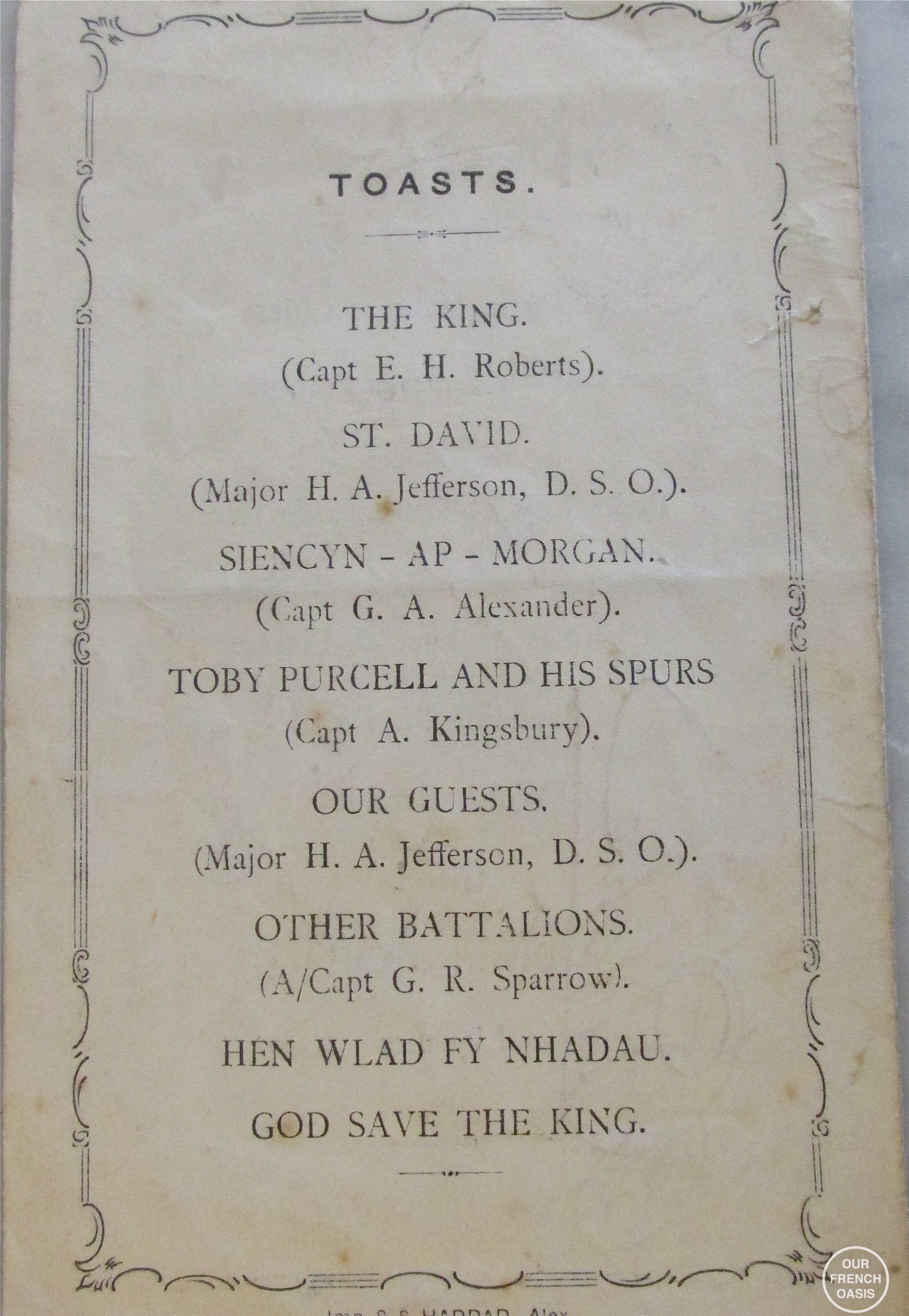
This dinner menu was, I assume, signed by everyone at his table at a Regimental function in Egypt.

IMG_2506IMG_2508IMG_2510

Throughout the war he kept a diary, and the end result is a collection of small beautiful leather-bound books. Virtually every day he wrote entries, usually in pencil, and in impossibly small hand-writing…. it is oh-so-difficult to read; but it tells his life, and how he felt at the worst of moments. Nearly all the notes are about letters received or sent and of course about my Grandmother to whom he was engaged at the time, always referred to as “her”. It really makes one understand the importance of communication, the news from home and the letters written and received; they are so obviously the logical constraints that kept him sane at times.

IMG_2511

Here are a couple of excerpts from October 1917.

Thursday 4
No letter from her – no anything – why doesn’t she write if she’s fed up – how I miss her & want her & love her – didn’t write to anybody – nothing matters a damn at present – boots from Mater

Friday 5
Letter from the Mater. Express letter from her – + another one at night – so my ache went away & I wrote a long one to her – & now everything is bon again – am just one big grin, outside & in

Amongst the many things in this treasure-trove of a suitcase is an original newspaper. It is the Liverpool Echo, dated Monday, November 11th, 1918. With very great care, for the paper is very nearly a century old, I read the headlines, I opened it up and read the articles; I was totally engrossed and I have to admit I had a huge lump in my throat.

IMG_2500IMG_2498

Tucked away in a small leather purse is one of the most important mementos. Carefully wrapped in a piece of the original, bloody bandage, is a scrap of battered metal, the size of half a finger-nail. It is the piece of shrapnel that sent my Grandfather home for a spell of surgery and convalescence at some stage, and accompanying it is the small print of the x-ray and the letter that was needed to accommodate his passage. I find the whole thing a bit horrifying, but the children and Roddy think it is fascinating; and Roddy, being a man, said he would have done exactly the same.

But, there is another story, too; another war, and this time it is WWII. Our house here in France was bought in 1936 by a Parisian and his English wife as their summer residence. He was a physicist and when WWII broke out he was working on a specialist piece of equipment; he crossed the Channel on a fishing boat and arrived in London with the completed piece just 6 weeks before the Germans reached Paris,  and it is indeed true that without his work the allies would almost certainly have not won the Battle of Britain, and in all likelihood would not have won the war. During the years he spent abroad his wife moved south to the house and lived in it permanently with their children for the duration of the war; at the time the property had 15 hectares of agricultural land on which she grew vegetables and fruits, most of which probably supplemented the larders of the entire village. Old people we have met here talk of her ploughing the land with oxen, and having a store full of fruit. After the war the whole affair was developed into a full-time business, as there was so much produce.

A few years later the street on which our house sits was named after ‘our’ scientist, and when we bought the house we inherited with it the very desk at which he worked. It is a desk that helped make history, and it is the desk where Roddy now sits and works today. It’s nothing fancy really, but that desk has an incredible story to tell.

IMG_2514

I am sharing this with you, lest we forget. To everyone who has fought in defence of our countries – whether it be a century ago or today, in modern warfare –  I have the utmost admiration and respect for you all. We all do.

ISLAND HOPPING


IMG_2318


October 30th 2015

We are nearing the end of the children’s 2-week autumn holiday, although to be honest it feels more like summer. Gigi and I were up early and driving over the bridge to the Île d’Oléron (a bridge that is nearly 3kms long, I might add) for her tennis lesson whilst the rest of her siblings were still lounging about in their pyjamas at home. But by the time we returned a couple of hours later it was a very different scene; everyone was ready and waiting, organised as any large family can be, for the expedition we had planned the night before. We were headed to another island, the Île d’Aix. Only this island doesn’t have a bridge, but a ferry, AND it’s a ferry that doesn’t run very often at this time of year, so we couldn’t be late; if we were the trip would simply be abandoned, and with that threat hanging over them there was nothing better to get children out of the door in a timely fashion.

Confusion reigned at the ferry-terminal as the ticket-office was closed. A handful of us stood by the little sad building  looking somewhat lost as the ferry drew up alongside the quay, but when we saw the other hundred or so people on the quay start to surge towards the boat, we followed, edging forward like sheep, blindly following the person in front; and once we got close to the gang-plank it became apparent that we were to pay as we boarded. This, however, was a slow affair, and after another fifteen minutes the captain on the bridge signaled for the crew to allow everyone on board and we cast off and departed, those who had not paid doing so once we were underway at a little kiosk on the open deck!

IMG_2325

It’s only a 20 minute crossing to the Île d’Aix. None of us had ever been to the island before and we really didn’t know what to expect. I was envisioning a ‘chic’ smaller version of the Île de Ré, while Roddy thought it would be more like the Île Madame, virtually unoccupied and remote. However, as we were to see, the Île d’Aix is different again, with its small landmass the setting for some heavy fortifications by Vauban, the renowned 18th century French military engineer, which were then subsequently improved again by Napoléon in order to protect the naval base at Rochefort on the coast of the mainland. Fort Liédot was also used as a prison during the French Revolution, then later again during both the Crimean and First World Wars. The island also has some German fortifications from WWII, something we all felt familiarity with due to our Channel Island connections.

On arrival, one leaves the ferry and climbs a sloping jetty;  you then pass through a fortified gateway and cross a drawbridge and enter the interior of a vast green space where immediately everything steps down a gear from everyday mainland life. A little to the north, a 100 yards away, is the tiny village that is the capital of the island. It really is very very small; there’s a cycle-hire shop, a little tabac selling one or two souvenirs and some postcards and magazines, and then there’s a boulangerie – that’s it on the shopping front! In addition, there are a couple of small unpretentious restaurants and the island’s only hotel, unsurprisingly called the Hotel Napoléon! Oh, and there’s a cinema in an old barn! All of this is within a cluster of houses where most of the Islands 200 permanent residents live, many of them in original long low fishermens cottages. As we walked the little streets, we realised that we’d already seen many locals on the ferry as they passed us pulling hand-carts full of provisions to see them through another week.

IMG_2261

IMG_2276

IMG_2324

IMG_2282

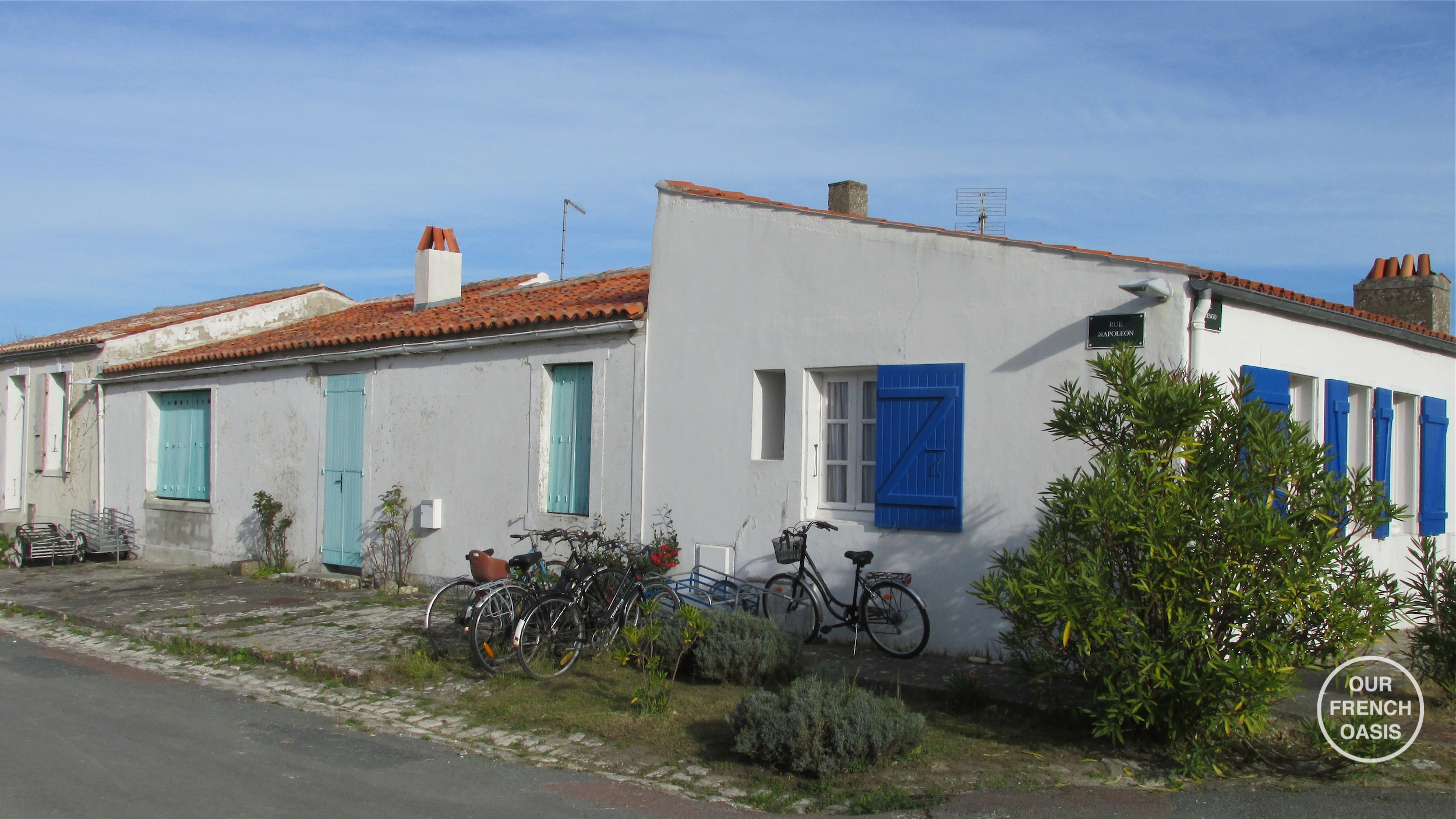
The island is virtually car-free apart from service vehicles, and it’s either pedal-power or foot-power to get around for tourists and sight-seers. After some debate, for it was not a unanimous choice, we decided to opt for the latter mode of transport and set off down a small narrow lane past an impossibly pretty little row of houses.

IMG_2307

IMG_2264

IMG_2267

We really had no idea where we were going. The island is only 3kms long so we knew we would not get lost and by chance we ended up outside Napoléon’s old home, now a museum. The island is well known in the area as the place where Napoléon spent his last days in France from the 12 – 15 July 1815, planning an escape to America. Realizing the impossibility of accomplishing this plan, he wrote a letter to the British Regent and finally surrendered, after which he was exiled to Saint Helena.

IMG_9634

With the sun high in a clear blue sky we opted to skip visiting the museum, much to Roddy’s chagrin, but we had Evie with us and I wasn’t sure she would be allowed inside; it was an excuse I played on heavily as we really wanted to be  exploring outside! We walked on westwards towards the twin lighthouses and the old fortifications, the children running on ahead, climbing the WWII bunkers and playing amongst the spooky old Napoleonic ruins. From here the view was simply breathtaking; out beyond us was the Île d’Oléron, where Gigi and I had been just a couple of hours earlier, and to the north we could see La Rochelle and the bridge spanning the water over to the Île de Ré. To the east lay the tiny Île Madame.

IMG_2287

IMG_9652

IMG_2291

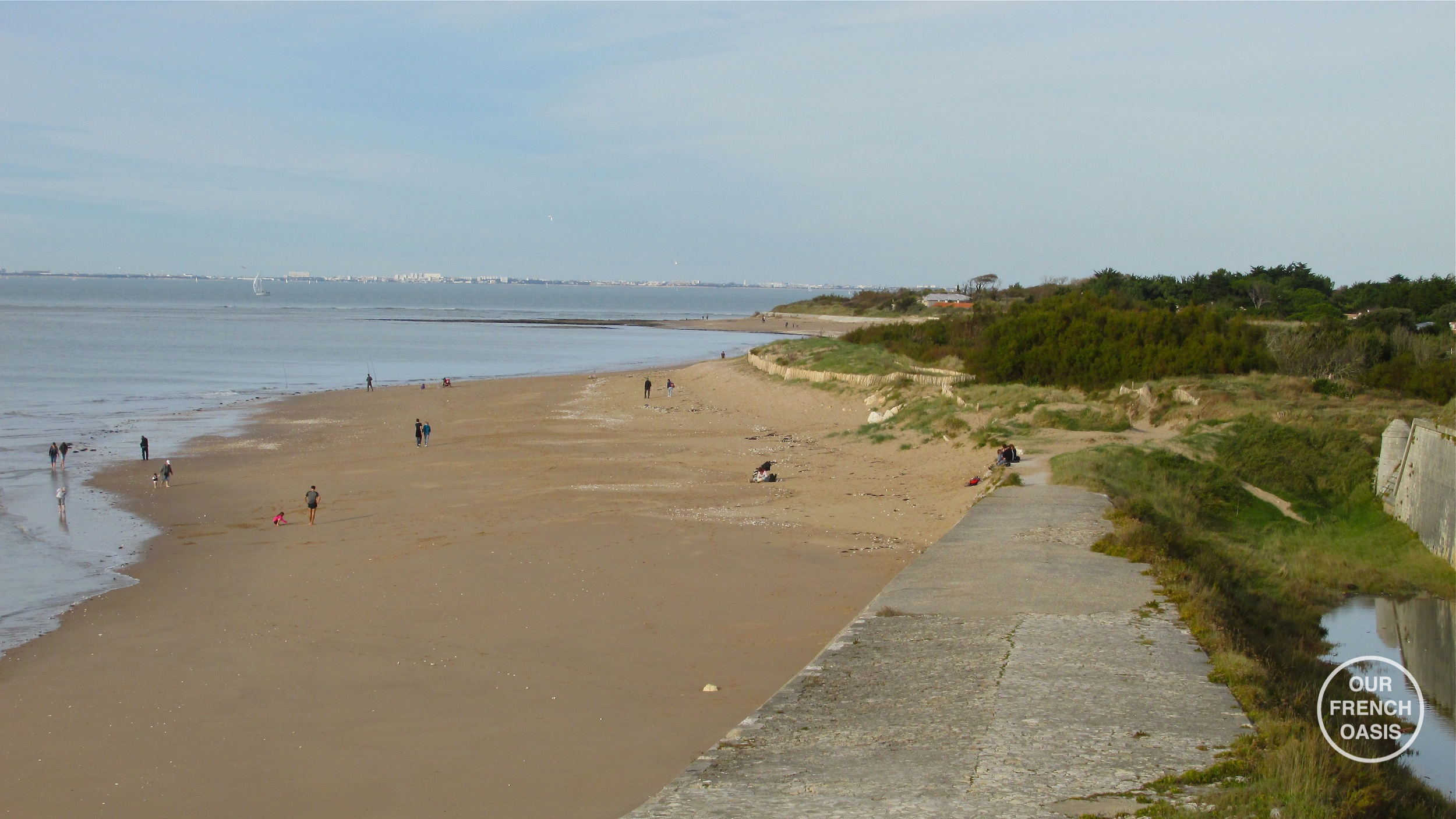
Following a well-trodden but quite deserted grass-path we stumbled upon a most beautiful beach. A handful of people were making the most of the Indian summer, jeans rolled up, socks and shoes left well out of the waters reach, and a couple of toddlers were splashing in the shallows, quite oblivious to the cold water.

IMG_9666

IMG_2289

We collected shells and Roddy stood and chatted to a local fisherman who had three rods out in the small surf, hoping for a bass or a maigre. As we turned to look at Evie who had spied another dog we momentarily forgot about the sea and Millie and Hetty were suddenly left standing with very wet feet and soaking shoes! Laughing at their misfortune we continued down the beach before taking a small track inland.

IMG_2294

IMG_2304

There were a couple more small restaurants, here on the eastern side of the central part of the island; they were all closed now that the main season was over, but as we were parched with thirst we headed back into the little village in search of some water and some afternoon goûter. Jack and the girls wanted ice-cream – of course they wanted ice cream, it was a day out and on days out they always want ice-cream! The boulangerie was closed though, and the tabac/souvenir shop sold no form of liquid or any other type of refreshment. There was nothing to be had at all, the tourist season was over and no one was selling ice-cream to crazy English children at the end of October; never mind that the weather was more reminiscent of summer!

IMG_2306

IMG_2265

Stopping to take photos I spotted this house for sale, I wondered what it would be like inside, and what sort of price tag would be attached to it. We thought it would either be a vastly inflated price on such a small island,  or perhaps very cheap as it’s a place where few people live and there is no commerce!  I’ve since phoned the agent as my curiosity got the better of me; alas, it’s pretty much a bare shell inside and probably twice the price it should be!

IMG_2321

As the sun had dipped low in the sky we made a mad dash back for the ferry as we decided to take the earlier sailing before darkness fell and we all froze. Stopping on the jetty to pat his pockets, Roddy announced that he could’t find the return tickets, which made us all anxious for a while but it didn’t matter anyway, as no one checked for them on board –  it’s just not that sort of place. Of course, thinking about it later, he probably didn’t even get given any actual return tickets in the first place, because you simply have to return at some stage!

We all huddled together on the open deck of the ferry; the Indian summer afternoon had given way to a chilly evening with a stiff breeze, and the girls shared the only available bench wrapped in Roddy’s jacket, Evie curled up asleep buried on Gigi’s lap – warm and snug. We ticked off another island, another fabulous day, and another place we’d discovered on our doorstep. Undoubtedly the real appeal of the Île d’Aix though is the chance to get back to nature; it’s not glamorous, there’s no bling, and in fact it seems almost slightly run down, but it certainly has a haunting quality that it quite unforgettable. We all agreed that the next time we’d go back with our bikes and a picnic!

www.loumessugo.com


AllAboutFranceBadge


A CHILLING HALLOWEEN IN FRANCE

I am fairly certain no one needs any reminding that it is Halloween! Our children have been up since dawn, fine tuning their costumes and trying out face paints. We have carved pumpkins and even bought a costume for Bentley and Evie!

As it’s the weekend and hopefully everyone has a few minutes to spare, time when they can sit down with a cup of coffee or a glass of wine, I thought I would share with you a short story I have written, totally fictional and of course it is set here in France. It may get a little spooky, but it is halloween!  Please share with friends and family and most of all enjoy…Happy Halloween


__________________________


Tim was 13, Katie 11, and little Emma only eight when  la famille Cole moved to the Dordogne in 2006. After many happy years of summer holidays in the area we serendipitously found our longed-for house late one summer’s afternoon from the thwarts of a gaggle of hired canoes. As a late afternoon sun burnt our backs brick-red, we were drifting silently through a small village, under an old stone bridge and then past a bank of nettles and wild rhododendron bushes when a boathouse suddenly poked its bare bones onto a stone jetty, and a blaze of honeysuckle and bramble drifted aimlessly up a broken lawn towards an old maison de maître. Hung haphazardly on a shutter was a faded ‘à vendre’ sign, and within 30 days we had signed a piece of paper and become the proud owners of a 255 year-old piece of history. I still shudder today at the rapacious speed of our venture.

We moved in the summer of 2007, with Simon intending to churn out the last few chapters of his second book from a ground-floor study as a means of providing the financial spine to our new life. His typewriter was a promise of income, the sound of its chattering keys intended to be the hubris of an author fresh to a new full-time career. We left our west London arena with sad hearts, a clutch of friends and relatives promising to visit, and sallied across the Channel with two cars laden to the gills with incidental belongings – the furniture and family jewels went via Pickfords, of course. Unfortunately, moving is a lesson in finance and expenditure that is easily learnt and never forgotten; suffice to say we should have hired a van and done it ourselves, but by late August we were done with the basics of empty boxes, runs to the ‘déchetterie’ with packing-paper and cardboard, and I had blisters from starting the old and bad-tempered French mower which we had inherited.

The house that had once gaped at us like a friendly toothless drunkard had had its hair cut,  and we’d added a lick of fresh paint throughout to mask most of the cracks and a century’s worth of rising damp. Roses from the garden punctuated perfume through the old rooms, and a hot summer and open windows had dried out a decade of lifeless winters. Our cut lawn now led down serenely to the river, and our old neighbour’s wall on one side was ablaze with the fading colours of an ancient wisteria. To the west we had an uninterrupted view to the country and its ever-changing landscape.

We made tentative footsteps into our new life and village, finding the boulangerie and the hours of the intermittent café a delight, and discovered a friendly face at the Marie with answers to most of our questions. It probably helped we all spoke decent french, made the right noises, and knew enough of Dordogne protocol to not put our great big English feet in the wrong puddles. We were also slightly off the typical beaten tourist-track and I suspected we lucky to have fallen on a village with a distinct lack of British accents. The previous Christmas and Easter holidays had also eased the way somewhat; the former had been a bitterly cold sojourn spent huddled around the fire which had generated many high jinks, fuelled with mulled wine and hot chocolate; it had been a fortnight of candle-lit games of charades; the Easter interlude had been an endless feast of treats and a week-long spell of spring sunshine that had spoilt us totally, especially with the smell of fresh apple blossom. We still had a great deal of ground to cover, including meeting many of our immediate neighbours, but we knew it was a matter best not rushed. It would all come good in time.

Simon ended his old career in London from a friend’s couch late that summer, and we started living the life we had all dreamed of, full-time, in September. Our confluence of linguistic knowledge was tested as often as possible on a small but widening group of new acquaintances. The electrician and the plumber suddenly became socialites about the outdoor fire, and the face from the Marie and her husband popped in for apéros once a week. We were glad of any friendship, to be honest, and didn’t care a jot. No one came from London to visit, of course, and due to a malevolent goblin that ate all our internet access, our social media accounts dried up and died in a blur of red wine sunsets and summer fruits. But we’d signed the lease for the life of Monsieur Riley, and we were living it. As autumn approached we quietly congratulated ourselves on our progress, and the contentment we felt at feeling a small part of a new community, even if we did really not know many people.

The last few days before the children began life at new schools passed in a blur of stationery-shopping in the nearest big town, 20 minutes away, and a sense of routine started to make its presence felt, even though the list of things that needed doing at home never seemed to get any shorter. Once school started, I fell into a routine that anyone who has lived in France will be used to. There were early starts for the 30 minute school-bus ride to the town for Tim and Katie, and a mad dash on foot to the small village-school with Emma after breakfast; but it all became the habit we had always dreamt of. No heavy traffic save for the odd tractor, no panic-stricken searching for a parking-space before the school-gates closed; just a quiet huddle of parents around a school gate with traditional morning greetings all round, and then a quiet wander back home via a stop in the warmth of the boulangerie to exchange greetings with Robert and his freckle-faced wife from Marseilles – a young woman called Nadia who was almost as far from her original home as we were from ours.

Clutching a warm baguette I would go through the picket-gate at the end of the lane, past the well and onto the terrace and through the door into the kitchen, normally to find a warm small of coffee and the sound of a type-writer clacking away in the depths of house. I could stand and ponder the tasks ahead for the day, coffee in hand, while gazing down the lawn to the green water and the rise of the oak-studded hills beyond it. We were blessed with an Indian summer that autumn, and the golden weather continued through October. We were still eating figs from our tree tucked away behind the boathouse as the children’s thoughts turned to Halloween.

It was Tim who voiced his opinion first, in a slightly worried fashion.

“Mum,” he started, “no one here knows what Halloween is. What do you think we should do ?”

I eyed him across the kitchen table, a late Saturday breakfast scattered haphazardly across the warm wooden surface. “Hmmm, no one ??” I arched an eyebrow quizzically.

“No one – no one at all. Katie says the same thing about the people in her class too.” and with that he turned to his sister, whose fingers were busy picking the pith out of a naked mandarin.

“He’s right,” she added brightly, “they haven’t a clue what it means here at all.” Katie’s long chestnut hair quivered in her annoyance with the situation.

I turned to Emma, who whilst only eight had the head of a 21 year-old on her shoulders, and she nodded in agreement too, her fine auburn curls twitching in sympathy. In six weeks of school her french had progressed beyond all recognition and she was becoming adept at understanding the gist of all the nuances she was subjected to daily.

She signed and put into words what all three children were thinking. “No treats for us this year, mummy….” and her little face crumpled in sadness at the thought of a London tradition that seemed to be but a bleak memory. My thoughts drifted to the box of costumes in the storage room, found but not opened, containing a treasury of memories and scar-faced delights. Halloween was a strong tradition on Simon’s side of the family, fuelled by a spur of cousins from across the pond in New York.

“Oh dear,” I murmured. “I’m popping down to the Marie this morning to check what the regs are for the new wood-stove,” I added, “so I’ll ask Janine what happens…”

This seemed to slate the immediate thirst for answers, and breakfast ended in a somewhat dull mood, despite the westerly glint of sunshine and the promise of another fine day.

Rushing to the Marie before noon and its weekend closure, I found the office full of weekend queries – tree-felling, boundary-fences, a disputed shooting-right, a sub-committee of old women discussing a Christmas marché, and a lone child pinning a ‘lost cat’ photo to the notice-board. Janine seemed flustered but happy to see me; we pecked each other on each cheek and then I asked what the village did for Halloween.

She looked a little blankly at me for ten seconds, and I explained.

“OH,” she muttered, and then grimaced, “I’m not sure that anyone in the village really does that, I’m not sure I have ever seen anyone giving out treats. I know in town there are people who might be in the mood for it, but I fear there is no one here who knows anything about it. Les Vacances de la Toussaint this year is at the same time, no?” and I nodded, realising that the ancient Festival of the Dead was indeed a coincidence.

“Yes, it is”, I added, in case Janine had not seen the nod. “I’d forgotten that they are all linked.”

This started a query to the meaning of ‘linked’ for Janine and the moment of query passed. I got home to find the children waiting with some interest and my answers to their questions brought a fresh round of dismay.

“Well,’ said Tim, “we’ll just have to do things our way and be inventive!”

“Oh, yes,” piped in Emma, jumping up and down in gathering excitement, “we can dress up anyway and just go round the houses we know and ask anyway – how about we give things to THEM as a treat ??? That way we can explain what we’re doing it for?” and the idea immediately struck us all as a very good one – and a wonderful way to meet some new people.

Katie proposed we took fruit round, Tim suggested sweets, and then Emma chimed in with some home-made biscuits. A typical family parliamentary session then took place, at the end of which Katie and I took down a cookbook each and started looking for something easy to make. Tim sat smouldering at the thought of lost chocolate, but then trumped all of us with a suggestion that made total sense.

“Let’s make some madeleines !” he announced, “at least we know that they know what they are !”, and a plan was hatched.
Halloween fell on a Wednesday that year, towards the end of the Toussaint school break, and all three children definitively reported that Halloween was going to be a non-event for sure. We were too far into the country, away from the mass hysteria of commercialism that the occasion really needed. There were some children from the school in town who did things themselves, but the village seemed a lost island of sanity. We were on our own, and so we started baking. Orange icing, black chocolate chips for eyes, and some other sundries all combined to make a tray or two of quite startling creations, and Emma found some biscuit moulds in her boxes of goodies that turned excess sponge-mix into bats, ghouls and pumpkins.

On Tuesday night the box of Halloween costumes was opened and we all sat by the fire, trying things on, seeing what fitted whom after a year of growth. Even Simon left his den and started to stoke up the ghostly atmosphere. But sometime after 8.20pm, just as the night drew in properly, Emma walked in from the kitchen and announced, “There’s a light out there, in the garden.”

Simon was first to react and he slipped through to the french windows overlooking the lawn. We still hadn’t put the curtains up, so it was easy to see outside into the garden and down to the dark river bank. Sure enough, high on the wall on the east side of the garden was a light. We wondered what on earth it was, and Simon opened a door and went outside for a look. He disappeared into the evening and came back within seconds.

“It’s our neighbours,” he announced. “There’s a tiny window in the top on the wall – it must be a barn next door or something, and they’re just piddling around in there. It is NOT a ghost !” and the rest of us visibly relaxed. I wondered why we had never seen the window before, and even as I thought that, Simon added,”The leaves are falling off the creeper – it must have covered up the window all summer. It is very small….”

I was slightly intrigued, as we had passed a few months in the village without seeing too many signs of life from next door, and even the few people who we did know seemed at a loss to tell us who lived there or owned the house. We knew that at some time the two properties must have been one, because the wall had a bricked up archway in it. I wondered who would know more, now we had some sign of life..

It was quite by chance the next day that Robert was serving behind the counter in the boulangerie when I went in, and on an off-chance I asked him if he knew anything about our neighbours. Robert was part of an old village family, and it soon seemed I’d asked the right person.

“Ah,” he signed, “it belongs to old man Benoît. He does’t live there anymore, he’s out at the ‘L’Ombrerie’….” and he tailed off, but I knew what he meant – the old people’s home half-way along the road. We passed it every time we went into town, a smart modern building with parts of an ancient facade, landscaped into a hillside and seemingly very pleasant.

“Does he have someone else who comes to stay, then ? Is there a Madam Benoît ?” I asked, thinking about the light in the wall.

“Non, he never married,” replied Robert, with a soft smile,”but when they let him out for special occasions he goes home and his niece comes to stay and look after him. He catches a taxi home three or four times a year for a visit. His niece stays with him for a couple of days, and then he goes back to the luxury of his hotel ! He always comes back for Toussaint. Sometimes Christmas, too. It depends what his niece is doing, she works in Bordeaux.” He turned to serve a customer with his floured hands and I watched a late butterfly crawl up and down inside his window – a peacock, I thought. I wondered how long it would last pining away inside the shop.

Robert finished with a cheery à bientôt to his customer, and continued as though we had not paused. “They’ve been there for years, the Benoîts – if you see him make sure you say hello, he’s a nice old man.” A frown seemed to cross his face, as though a memory had played and passed on, but he wiped it away with a smile and insisted I tried his pizza dough. It was a speciality and I had never had the courage to buy any before, despite talking about it. It seemed a good idea to buy some and also a chance to make some scary pizzas for the evening’s Halloween festivities – an opportunity too good to pass up.

Laden with a large sticky doughy ball I hurried home with my news to find two freshly carved pumpkins outside our gate, and a fuzzy bat creature hanging defiantly in a front window. They seemed slightly out of place in a lane where time had stood still for so long. There was no sign of any festivities outside any of the other buildings I had passed on the way home. In the kitchen three very scary things waited patiently for the evening’s entertainment. Well, four scary things – as Simon had found a long black gown and a clown’s mask that covered up most of his four-day-old stubble and greying hair.

Before darkness fell totally, Simon took the rubbish bin and stood it outside on the road; it was the night when our madly-lit rubbish lorry would appear about midnight and wake everyone as it crawled hungrily along the kerb, noisily devouring the offerings laid before it. He came back in with a stark announcement, “The street lights have gone off!”.

He seemed genuinely gleeful at the prospect of knocking on stranger’s doors in the pitch black, and he continued to mutter evil thoughts out aloud as we laid our madeleines out in two straw baskets, and found some torches and other sundry items necessary for an excursion into Halloween territory. Tim had managed yet again to fit into a magician’s outfit that he’d worn now for three years. Katie was a fetching elf, complete in greenery and jingly hat (I had no idea where that costume had come from) and Emma was a wonderful tiny witch, a simple outfit enhanced by a combination of add-ons that we had collected over the years – a tall hat, a broom, a Harry Potter wand stuck in a belt and a cat on wheels with a lead.

Being somewhat outside the teenage bracket, I had wisely chosen not to dress up and instead was going to ride shotgun, with a torch and a third basket for any trophies of war should the need arise. All I needed was a decent set of shoes and a jacket. As the dark grew longer we fell into line, made a plan of what we were going to do, and set off down the lane to the main part of the village. As we passed our neighbour’s house, a dim light flickered and wavered behind some very closed shutters – we’d come back to Monsieur Benoît last, we’d decided, and down the lane we went, talking loudly to put off the ghouls and trolls hiding in the hedges.

Within an hour, Simon and I were ready to admit defeat. The three children had been troupers and gone from door to door, avoiding large dogs and other sundry creatures, and been thwarted, not unpleasantly, at almost very step. Their explanation of what Halloween was had been refined to a wonderful 30-second speech, complete with offerings of madeleines, and they had become adept at deciding how to approach each door. However, apart from two oranges and a packet of salted peanuts – both offerings from people who had taken it upon themselves to play an unknown game, their only real returns has been a large tub of plastic fruity-type things at the plumber’s house, and a huge bag of chocolate goodies at Janine’s, a gesture so appreciated I could have kissed her and her husband a thousand times.

As we hung back in the shadows on our way down the lane back home, Simon drew me to one side and muttered a plan into my ear. He suggested he went on ahead, opened up the boathouse in the garden, and lit a fire in the bread-oven. He’d add some candles, and then carefully arrange our feast of scary pizzas and other goodies on a table, with a bunch of added items he’s surreptitiously bought that day – sweets, biscuits and an apple-tart. I whispered at him to add a couple of glasses and a bottle of red wine to the table and he slinked off into the dark like a black cat, hidden from view in his black cloak.

I told the children Dad had gone on home for an obscure reason, and we neared the end of our journey. Two houses left, and Tim and Katie said they would do the one opposite our house, and Emma and I decided to knock on the door of our neighbour, Monsieur Benoît.

There was nothing untoward about the Benoît house. It stood, two-storey, almost right on the road with a shuttered window on each side of an old, weather-beaten door. There was an old-fashioned ring-knocker set deep into the door, and I watched as Emma stood up and gave it a timorous tap or two. Our picket gate was just ten yards away and I carefully noted where it was. I heard a door open across the road behind me and listened as Tim and Katie explained to two people who we DID know, what Halloween was all about. There was a peal of laughter and I turned to watch what was going on.

In so doing, I missed the front door of the Benoît house opening, and the first I became aware that I needed to turn back was when Emma’s voice piped up with a greeting and an old, warm voice replied in a thick accent. I whirled around to see a frail ancient man standing in the doorway, lit softly by a light from deep within the house. I could tell instantly that this was an octogenarian or better, a man on the last rung of the ladder of a long life, but still capable and totally at ease with life. Emma’s small voice launched into her tale of Halloween and the old man leant down a little with a smile on his face to listen. I was still back in the shadows a little, as I had been all night, and I could not hear his voice clearly when he spoke, but I heard Emma’s reply,”Oh, anything would be wonderful, but you don’t have to, really….. we actually have something to give you.” and she reached up with her basket of madeleines, of which there were a good few left. Mr Benoît slipped a hand into the basket and came out with one, which he raised to his mouth and nibbled at. I had a sudden premonition that perhaps he had need of false teeth which were elsewhere, but after a few seconds he turned into the house and voiced a message into the depths.

There were footsteps and a tall young woman appeared over his shoulder, smiling as well, her features unclear in the dim light, but she nodded and asked Emma a question to which Emma replied softly in halting french, seemingly lost for words. This was obviously the niece, and I watched as the old man muttered something in her ear and she went back into the house on a mission. There were some more exchanges of words between Emma and Mr Benoît before the niece came back with a brown paper bag which she handed to Emma with another soft smile. Emma glowed in triumph, thrust more madeleines upon them and then thanked them both profusely, but there was a moment or two of Anglo-French confusion as to how the exchange should be truly ended before the door closed behind Mr Benoît and his niece, and Emma came up onto the road to me clutching her loot in one hand and an almost empty basket in the other.

“What’s in there Em ?” I asked, just as there was a similar thud of a closing door behind me from the other house and Katie and Tim skipped back into the road to join us, complete with a box of biscuits !

Emma opened the bag under Tim’s torch and we looked inside to see three gorgeous old-fashioned toffee-apples glistening at us.

“OH WOW !” said Tim, and the two girls echoed his approval and they fled for the picket gate and home, leaving me alone in the dark with the image of a tall dark woman dressed in fine clothing, gently smiling at Emma, what a wonderful Halloween offering, I thought.
Back in the kitchen, the children were surprised not to see their father. The house was dark and empty save for a single lamp. There was a note, propped on the table, that simply said, “COME INTO THE GARDEN IF YE DARE !”, accompanied by a scary spider dropping off the page. Emma giggled and the other two raised their eyes at me quizzically, their fingers twitching to get at their stash of loot in the basket.

“One thing only,” I said, and pushed it towards them. “I suggest a biscuit, there may be something else to eat, you know that.” and they all tore into the packet of Janine’s assorted chocolates instead! “Bring the rest with you, and let’s go and find Dad, “ I added, and went through the french doors into the garden. The children followed, intrigued, and torchlight darted around the garden and across the lawn down to the river, and Emma moved a little closer to me in the darkness.

“Why isn’t there any moonlight, mummy ?” she asked, as we slowly moved across the lawn.

“I think it’s rising later each night at the moment darling,” I replied. “I know last night it came up a long time after supper.” We stopped and watched Tim and Katie’s progress down the garden.

“Where’s daddy?” Emma queried, slowly drawing closer to me for comfort. It really was quite dark, I decided, and instinctively thought about bats for some bizarre reason.

“He’s in the boathouse,” I told her quietly. “Let the others find him, it’s supposed to be a surprise.” and at that exact moment there was a shout from Tim as he saw the smoke rising from the little chimney in the closest end of the boathouse to us.

“Dad’s in the boathouse, MUM!” he and Katie cried in unison and they set off at a gallop to the small building, Emma and I following more sedately, hand in hand for comfort. As we passed the small window high in the wall I became aware that yet again there was a dull flickering glow behind the glass, as though someone next door had lit a candle. I wondered what old Benoît was up to at that time of night.

Turning into the doorway of the boathouse, I saw that Simon had achieved a small miracle in the 20 minutes or so he had had alone. There was a roaring fire in the small bread oven, and by its flickering light I could see he’d dragged an old workbench out into the middle of the small room, thrown a tablecloth over it and laid out a real Halloween feast. There was a bottle of  wine, too, glowing ruby-red in the flame-light and candles flickered here and there; from somewhere he has found some old tobacco tins to put them in. Cobwebs dripped from the ceiling in every corner and he’d thrown open the boat-doors to the jetty as well, so what ambient light there was crept in to illuminate the whole scene softly.

The three children were crowing with delight at this unexpected turn of events, and as Tim asked if we could reheat our small scary pizzas in the oven a voice answered out of the darkness and I realised that Simon was standing quietly in a corner of the room, hidden in his dark cloak.

“Sure you can, Timmy, just wait for the flames to die down, I brought down the spade to use just for that purpose,” Dad said and he came over to me softly. “Have something else to eat first,” he said to the children, and I knew instinctively something was wrong; this was a deflection of interest he’d suggested – sweets before pizza ?

“What’s the matter ?” I whispered as he got close.

“What ?” he replied, his face turning towards me. “What makes you think something’s wrong ?”, and I knew then that there was something wrong, and I felt the whole tone of the evening change.

“I know you far too well, Mr Cole, tell me what’s up.” I insisted.

He bent his head towards me and whispered, “Someone’s been in the boathouse today. The door was open and I swear some things have been moved about.” He watched me closely for a reaction.

“Maybe the kids were in here,” I said. “Or maybe the wind blew the door open ? We’d have seen anyone from the house, surely ??”

“No, things have really been moved about, and I discovered something when I dragged the workbench away from the wall.” He pointed with his head across the room towards the wall. “Look at that patch of wall. There were some planks there which I put on the workbench to make it bigger – you tell me what that’s all about.” and I looked to see exactly where he was referring to as he went to join the children.

Looking across the room I became aware that there was a part of the wall that was smooth and bright in colour, as though it had been patched. As I moved nearer for a close look I heard Simon getting the children organised behind me and flames flickered brightly as coals were rearranged in the bread oven.

“Do we need to heat the spade first, Dad ?” asked Tim, and I realised the pizzas were about to take centre-stage. I reached the wall and put a hand out to touch the strange patch. It was smooth, smoother than a concrete wall should be; it had a patina on it as if it had been polished. My mind began to play tricks on me and I swore I felt a sparkle of feeling under my fingertips. I jerked my hand away in surprise, wondering what on earth was going on. I glanced around the boathouse and confirmed my thoughts – every other surface was used, touched by the grime of decades of use and age; and yet here in front of me was a six-foot high patch of a gleaming clean surface, almost like marble. The chattering of the children and the low tone of Simon’s voice receded into a different place and I felt strangely drawn like a moth towards the light. I couldn’t tear myself away from the anomaly in front of me. Had the planks been placed here deliberately to hide the patch ?

“Mum !” called out Emma, and I awoke from the spell cast by the pale patch; stepping back a pace I turned to her. “Look,” she said, “we’ve put a couple of pizzas on the the fire !” and beyond her I could see the flames had died down and the spade was indeed sitting proudly on the coals; a slight smell of melting cheese spread throughout the room suddenly and my tastebuds moaned softly. I realised we must all have been starving.

Still wondering about the patch on the wall I walked over to the bread-oven and stood with everyone else in the warmth, and Simon pressed a glass of wine into my hand, looking at me with a query on his face. I looked at him and gave a slight shrug of the shoulders, as if it say, yes – it’s strange, but let’s not worry too much about it. We both smiled at each other wryly, and at that moment there was a sudden gust of wind through the room and all the candles blew out in a rush of cold air.

There was a stunned second of silence and a squeal of alarm from the two girls; my heart thumped in my chest but Tim and Simon were far more matter-of-fact and I heard them immediately rummage for matches about the bread-oven. It had suddenly become very black in the boathouse, and it seemed as though the coals had suddenly become dim too. A small hand clutched mine as Emma came closer for comfort, and I heard the matches strike on a box by Simon.

“Blast,” he muttered, “the bloody things won’t light – they can’t have got damp, surely ?” Tim pored over the coals and blew onto them to find some flame again, the spade of pizza lifted off and put to one side on a pile of wood. He huffed and puffed as Katie watched open-eyed, and then Tim said very softly, “The torch won’t work, Dad, ” and I reached out for the other standing on the table. It too would not work.

“I’ll go back to the house and get some other matches,” Simon announced bravely and he went towards the doorway as we all moved closer to the feeble fire. He reached the doorway and as he passed though it the left side of his face and body suddenly glowed with reflected light. He stopped, stock still, half in and half out of the boathouse, his mouth dropping in shock and I went to him and looked left too, down the garden towards the house. Halfway along the wall, under the small window, a great glowing mass of soft light simply stood like a column against the blocked archway, almost impossible to look at and yet crazily compelling. I grabbed Simon’s shoulder in shock as our evening began a new phase of absolute weirdness. “What on earth,” I started, and Simon went “SSSHH!” in a tone that brooked no reply. We felt jostling behind us as the three children moved into the doorway, and there was a shriek of terror from Katie. Tim moaned softly and I felt a great deal of sympathy for his feelings, and then, even as we watched the light pulse and glow softly, like a living thing, there was a bump under my arm and before I could stop her, Emma pushed through and started to walk towards the apparition as if in a trance.

“EMMA !” said Simon, and he reached out for her, too late. She was halfway down the path towards the light and I felt spellbound, unable to move, Simon too was unable to move, stuck hard with his feet to the ground like glue. We watched openmouthed, my mind screaming with terror, and I was aware of a bubbling sound of dread from behind me from the other two children. Simon was making a strange noise and we all watched, brains shrieking with fright as Emma reached the light, stopped and softly reached out her hand to it. There was a loud snapping sound and the tall glowing column vanished instantly, leaving Emma standing there spellbound. The candles burst into life in the depths of the boathouse and the two torches suddenly glowed too; one in Tim’s hand and the other lying on its side on the table. Simon was running down the path towards Emma, and my heart felt like a lump of lead in my chest, my face aflame with a cold fire of fear for her and all of us.

Simon reached Emma and stopped short, she was smiling softly, and turned to him, “Did you see her, Dad? Did you see her? She was so beautiful, and so kind, did you see her?” and we all simply stopped and stared at her smiling face, her eyes reflecting the light from the boathouse where the flames had started to roar again in the bread-oven.

“Did we see who, Emma?” I asked first, and she turned to me with a translucent beauty on her face. “Mr Benoît’s niece, Mum, she was here watching us with a smile on her face, she was so beautiful.”

She looked at us in wonder, a look which turned swiftly to dismay as she realised we had not seen the same vision as she had. Tim was consoling Katie who had begun to cry, and Simon was having trouble understanding the whole scene, but as a mother, I suddenly realised that Emma was telling the absolute truth, she had genuinely seen someone or something instead of the glowing column of soft light we had all seen. What on earth had just happened, here in the garden of our dream-house, tucked away in the middle of a very normal part of France ?

It was some days before normality returned to our household, the night of Halloween having ended in supernatural disaster and our very crowded bedroom. The two girls and I had shared the bed while Tim and Simon had slept on the floor, awash with cushions and sleeping bags. None of us had slept well, except for Emma, who remained completely unfazed by the whole affair, insisting for days that what she had seen was just a beautiful friendly woman – a very benign apparition, if that was what it had been. Emma lived with a permanent smile on her face for a week, revelling both in the ‘delight’ of her experience and her new-found standing in the family as the Princess of Awesomeness, as Katie and Tim called her. It was several nights before anyone left our bedroom though.

The morning after Halloween I had been awake with a cup of much needed coffee at just after 8.00 o’clock when I saw Mr Benoît go down the road in a local taxi, back to his other home. I never saw or noticed his niece leave the house that day, or the next, despite keeping an eye out for her. I had genuinely wanted to see her and get to the bottom of the mystery. The window in the garden-wall never glowed with light again that week, nor that winter and nor in all the years afterwards. As time passed, the whole affair slowly lost its edge of terror and we talked about it in a more matter of fact tone, though I found it hard to discuss without feeling a slight lump of terror in my chest and my face turning red with a tinge of dread. It was a strange feeling, but I grew used to the sudden jolt of adrenaline that the affair brought on when mentioned. Simon would simply shake his head in wonder, and mutter how he’d write about the experience one day, perhaps interweave it into a plot of his. Neither of us had any idea of what Emma had seen – do ghosts even exist, we would question each other. It seemed impossible to believe, as we’d seen his niece earlier that night and she had been flesh and blood then. The whole affair was so bizarre that I simply refused to find out more.

Christmas approached and three days before Christmas Eve, huddled inside a warm coat and gloves, I stomped off a dusting of snow and went into the boulangerie in the village to collect our Bûche de Nöel. There was a woman in the shop, chatting with Robert and Nadia, and when I stepped in, everyone turned to me with a friendly bonjour as I stood there with two bottles of very good wine tucked into my shopping bag – a Christmas treasure for us all that I had found in the back of a small shop in town. I noticed Robert had flour on his hands as always, it made me grin with familiarity for some absurd reason.

Robert looked at me with interest and then back at the woman, a 60-something year-old lady with grey hair and a sturdy figure in a long wool coat. I looked at her face, to find a pair of gentle, friendly eyes watching me back. I smiled, and she smiled too. I felt as though I knew her instantly, her face was terribly familiar. Robert was watching the exchange with an interested gaze, and then interjected, “Of course, you know each other, ladies, no ?”

The woman opposite me, smiled, and answered for both of us in good, but accented English. “I don’t think so, Robert. Who is this ?” and she turned to him with a questioning look.

“This is your neighbour, Annie, the English lady who lives next door to you with her three lovely enfants.”

I was instantly confused, and it must have showed. The lady called Annie turned to me and watched as I struggled for sense.

“I’m sorry,” I blurted out eventually, “I don’t understand, where do you live ?

She tinkled with laughter, and replied, “Well, I don’t live there full-time, but I stay occasionally with my uncle. You must have met him?”.

The room swayed giddily about me, as one part of my brain fought for sense against another part of my brain which was starting to shriek again; I felt the familiar hard lump of terror rise up in my chest.

“You’ve met my uncle, surely, Mr Benoît ? I’m his niece from Bordeaux ?” and even as she continued I heard a great crash of broken glass as the bag slipped from my hands and there was a great sighing of emptiness in the top of my head and everything went black.

I came round in the arms of a stranger, aware of a cold floor under me and a sore spot on the back of my head. I was crumpled on the floor of the bakery, feet awash in red wine, with Nadia fanning my face with something that smelt terrible. I looked up into the smiling gentle eyes of Annie, Mr Benoît’s niece, and she murmured something in my direction, consoling me. I sat up, a dishevelled mess, and saw Robert standing a few paces away, wringing his hands in uselessness. They helped me to my feet, and I swayed momentarily. Annie clutched me tightly.

“Oh, I’m sorry,” I began, and immediately there was a chorus of sympathy, and a gabble of understanding. “I’m so sorry, I don’t know what happened.”

Annie brushed my lapels clean and swept dust off my shoulders, looking at me searchingly. Her face was close enough I could see the sudden sadness in her eyes.

“You saw her, didn’t you?” she queried in a low voice.

There was a sudden hush in the shop, time stood still and snowflakes hung questioningly in the sky outside. I felt time shudder to a stop and realised with a jolt that I was close now to an answer for the events of that awful night, for here was someone who knew what had happened.

“Who?” I replied, in a husky tone of voice, still not sure of my feet.

“My mother,” Annie replied, simply. “You saw my mother, did you not ?”

My mouth dropped open, and I realised why Annie looked so familiar – she was the spitting image of an older version of the niece we had seen in the doorway with the toffee-apples.

“Your mother ? Your mother ?” I stupidly repeated myself in confusion. “I don’t understand, I thought Mr Benoît never married…..” and my voice trailed off into silence.

“Correct,’ said Annie, and her face brightened a little at a thought. “But a long time ago, my mother was his sister. They all lived together in our house. My mother, my father and my uncle. And my grandfather.” Things immediately fell into place and my breathing returned to normal.

“I’m still not sure what you’re saying to me though,” I continued….

“It’s a long story,” Annie continued, and I saw Robert and Nadia standing behind her, their eyes sad with memory. “It was during the war, you see. My uncle was a member of the Resistance, and was hiding in La Double, the forest. My mother and father were at home one day when the Vichy police came to find him. There was a shoot-out and my mother and father took refuge in your boat-house, down by the river. The had just a shotgun, and it was not enough.” There was a moment of sadness and I felt very small and humble.

“Did they, did….” I carried on and she forestalled me.

“Yes. They both died in the boat-house. My father came out of the forest that night with some other men to bury them. The place where she died has never changed. Some say the wall stays pale as a monument to her courage,” and I immediately remembered the smooth surface under my fingers.

Annie was still speaking, “People say my mother appears in the garden to special people. I have never seen her myself. Is this what you saw ?”

I was stunned, struggling for breath, but managed to explain what we had seen that fateful Halloween night.

Annie nodded in understanding, “And your daughter saw my mother herself ?”

“I did too,” I answered. “She came to the door with your uncle, and Emma saw her again in the garden when no one else could.”

“Ah,” muttered Annie. “My uncle has always told me she comes to visit often. I wish one day i could see her too, she is said to love children.“ and her eyes welled with tears.

I finally grew a little braver, fortified by new-found knowledge and an empathy with a strange woman. Stepping forward I clasped her by the arm, and said softly, “Come home with me now, and meet Emma. She will tell you all she saw that night; she’d love to tell you the story and I know you’ll like each other.”

Annie’s face brightened considerably, and we gathered our bags and said our goodbyes to Robert and Nadia. They pushed away our offers of help with the mess on the tiled floor and ushered us out of the door into the falling snow. Clutching each other familiarly, we walked home slowly as Annie and I both composed ourselves. It was going to be a long evening, but at least we now knew the whole story.

After Annie’s visit none of us ever felt afraid again in our garden – it resumed its tranquility and composure and felt like a loved place throughout all the years we knew it. The pale patch on the wall stayed forever pale, and although four of us never saw Annie’s mother again in the garden, Emma says she felt her gentle soft presence on several occasions until she was about 15 or so. Eighteen months after we had met, Annie came one bright summer’s day to fix a small plaque alongside the pale patch in the boathouse and we all felt as though an ending to a sad story had finally occurred.

The final word goes to Simon though, as on Boxing day after that fateful Halloween, he sat himself down with a thud by the fire with a whisky in one hand and announced to all and sundry, “They’re gone. I never found them. Did anyone else ?”

We looked up from a game of Monopoly in surprise.

“Found what, Dad,” asked Tim.

“The toffee-apples.” he replied. “I can’t even find the bag they were in. They’ve disappeared into thin air.”

And with that there was a thud of a falling log from the fire and a crackle of sparks. We all jumped in fright and then giggled in delicious terror.

A VERY FRENCH ENTRANCE

IMG_1229

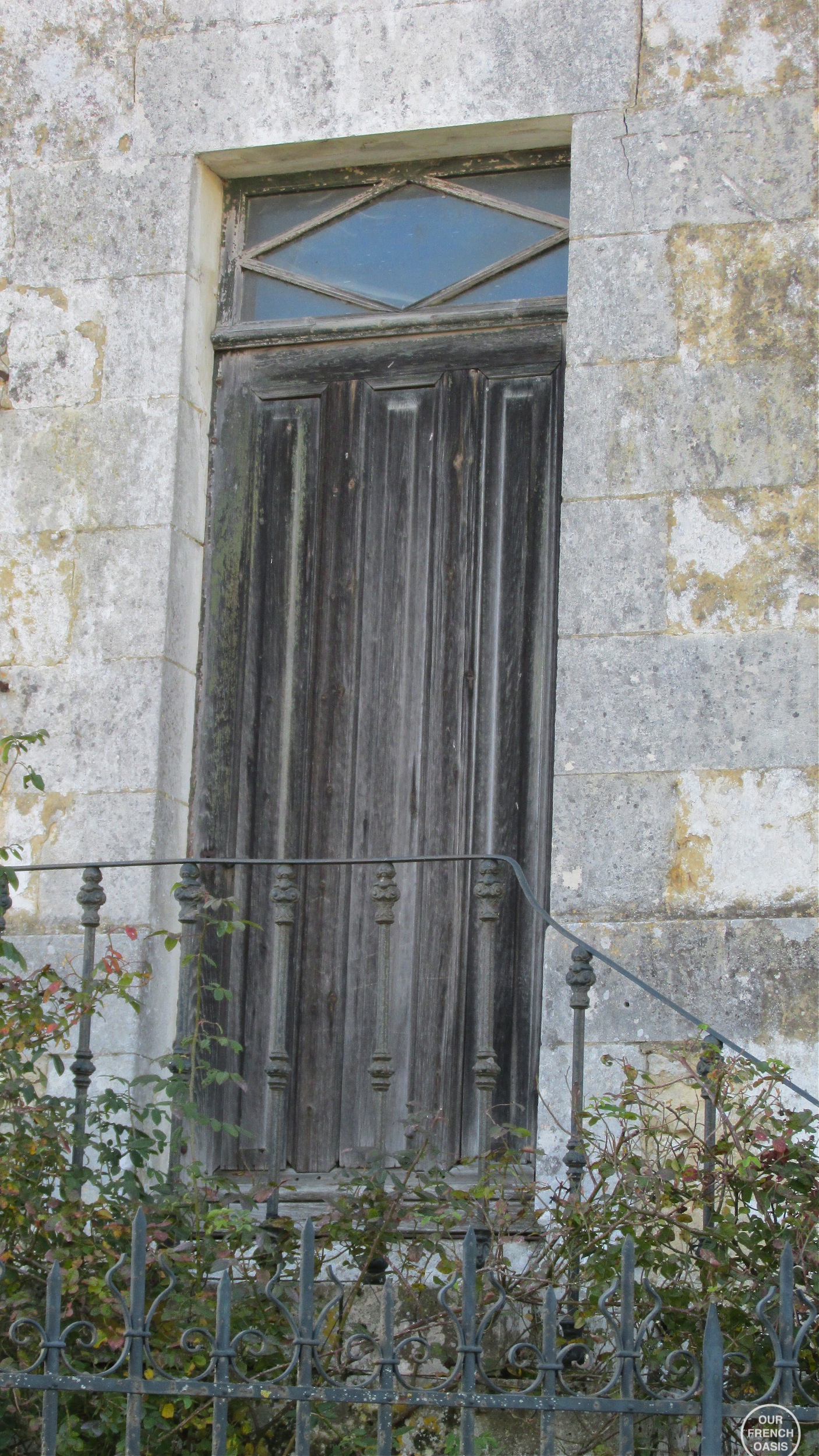
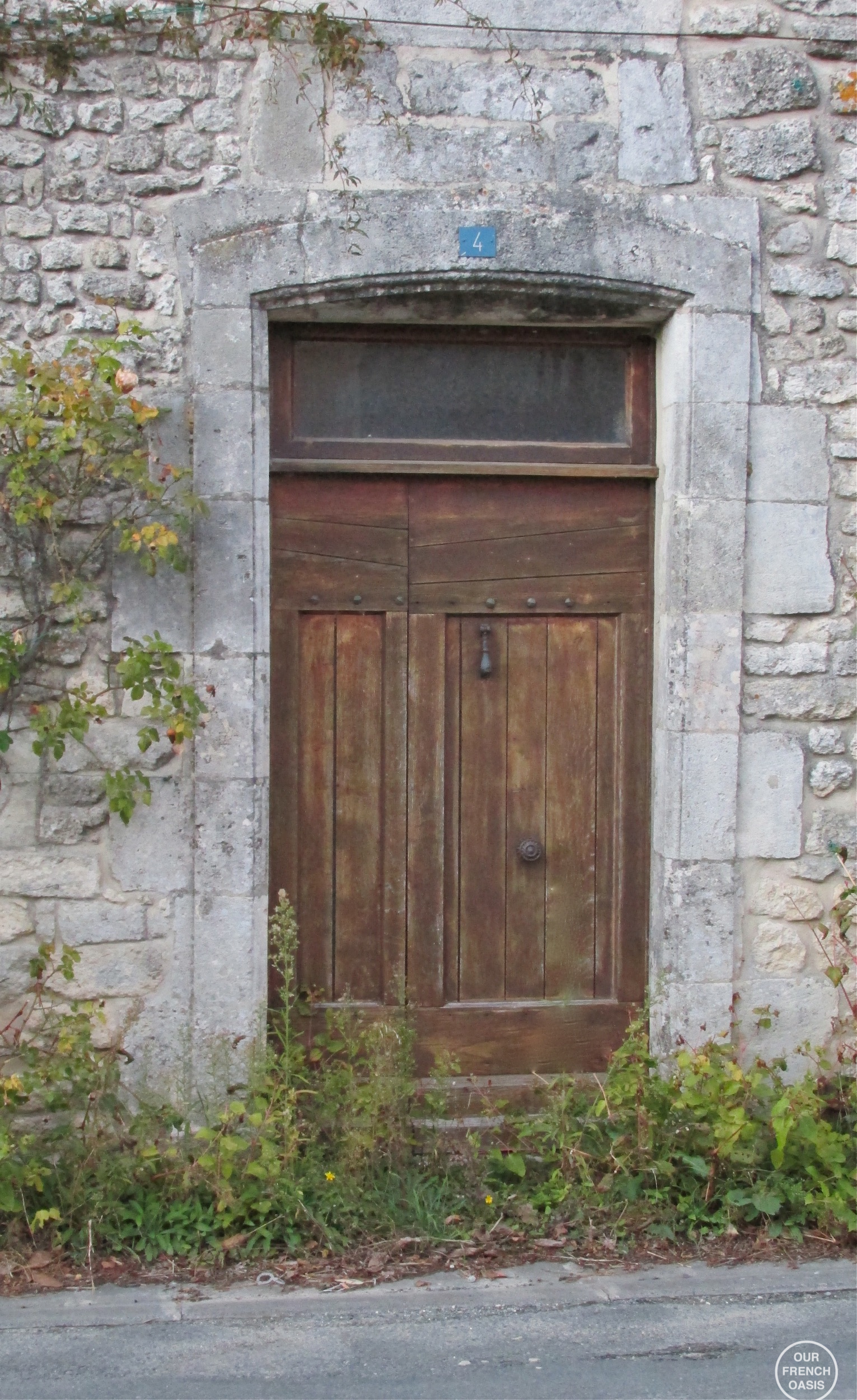
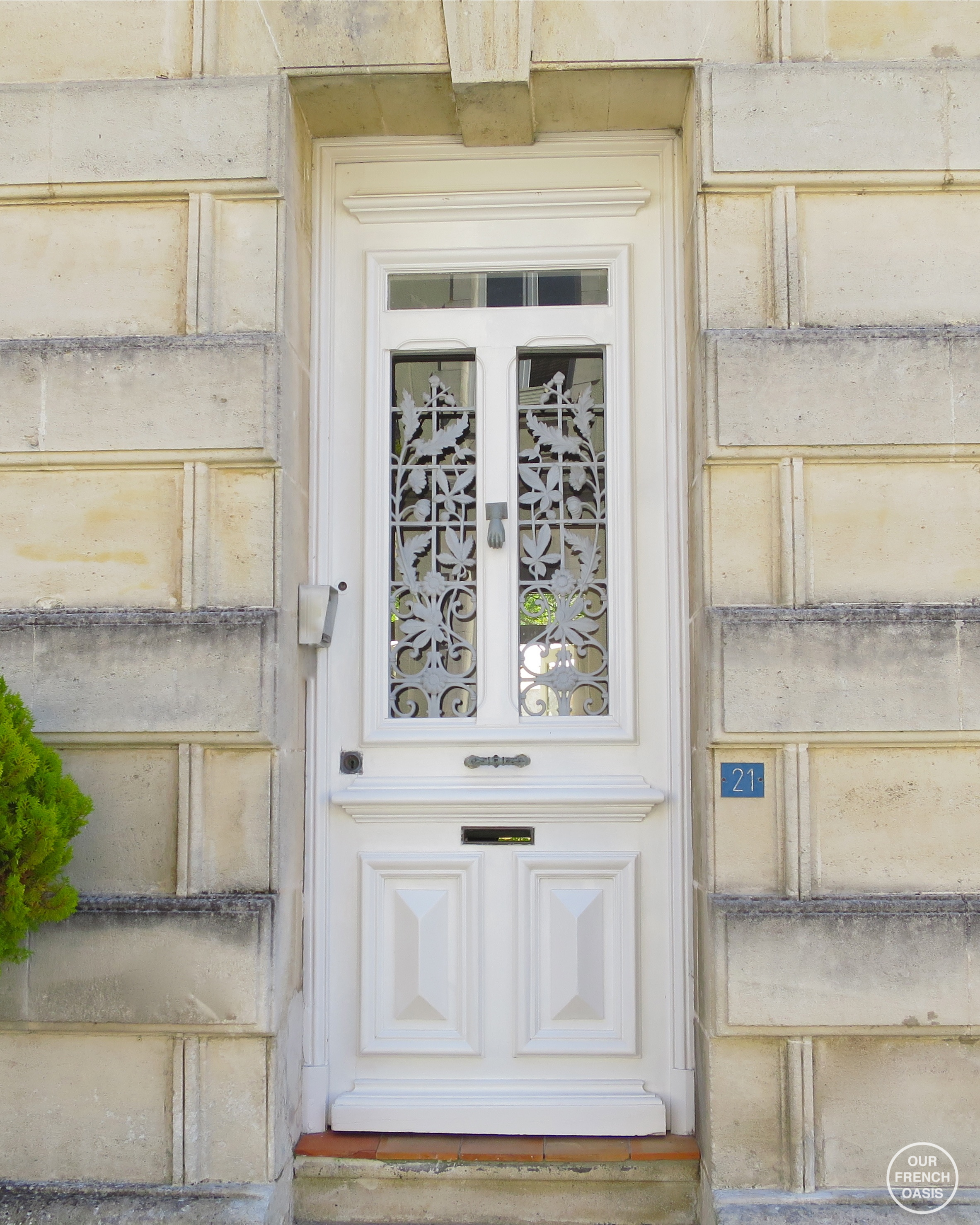
I have blogged about (and photographed) gates, secret gardens, many houses and also châteaux, but I’ve never exclusively concentrated on front-doors.  Here in France there are so many styles, colours, choices and different patinas showing wear and tear that it becomes quite a choice when it’s time to find a door – does one go for modern technology and all its advantages or do you choose a very heavy antique door that has lasted for centuries and doubtless will continue to do so for many more to come?  I think my choice becomes apparent fairly quickly……

IMG_2215

With very old doors come very old keys; huge, heavy keys, which are antiques in their own right. They don’t fit very neatly in a pocket but on the other hand they are much harder to lose and they always add a certain je ne sais quoi.

IMG_2252

First and foremost one has to remember that the front door has normally been built as the main entrance to a house, even if many of us actually use a back door, a side door, perhaps the garage or the boot-room instead!  Usually the very first thing we see when arriving at someone’s home is the front door, and it creates that all important first impression, giving us a hint as to what the rest of the house may be like.

IMG_2231

But the front door has to play many other roles too – it must deter uninvited guests, it must keep out the cold and quite often it needs to let in some light to the entrance hall itself.

IMG_9122

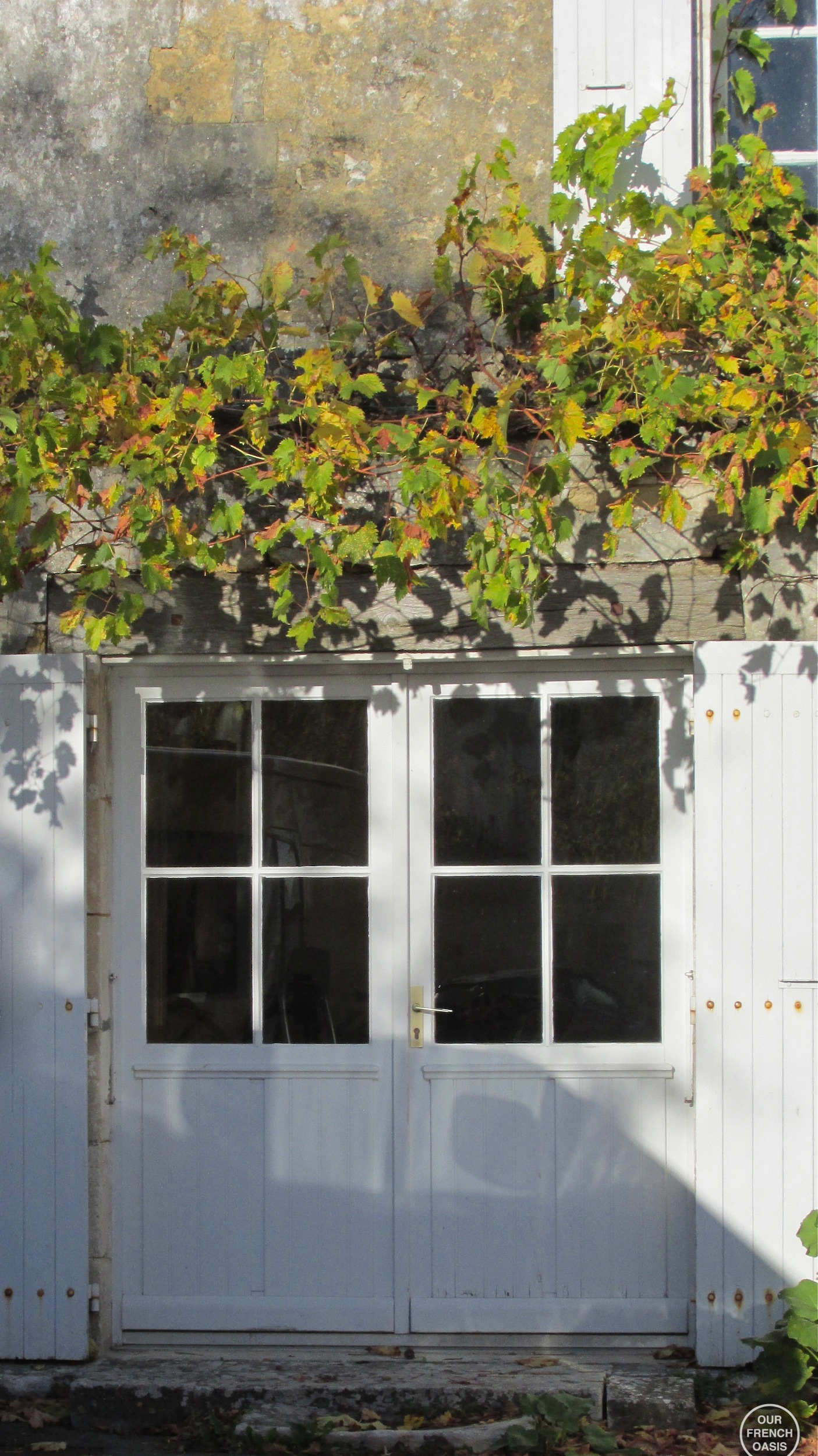
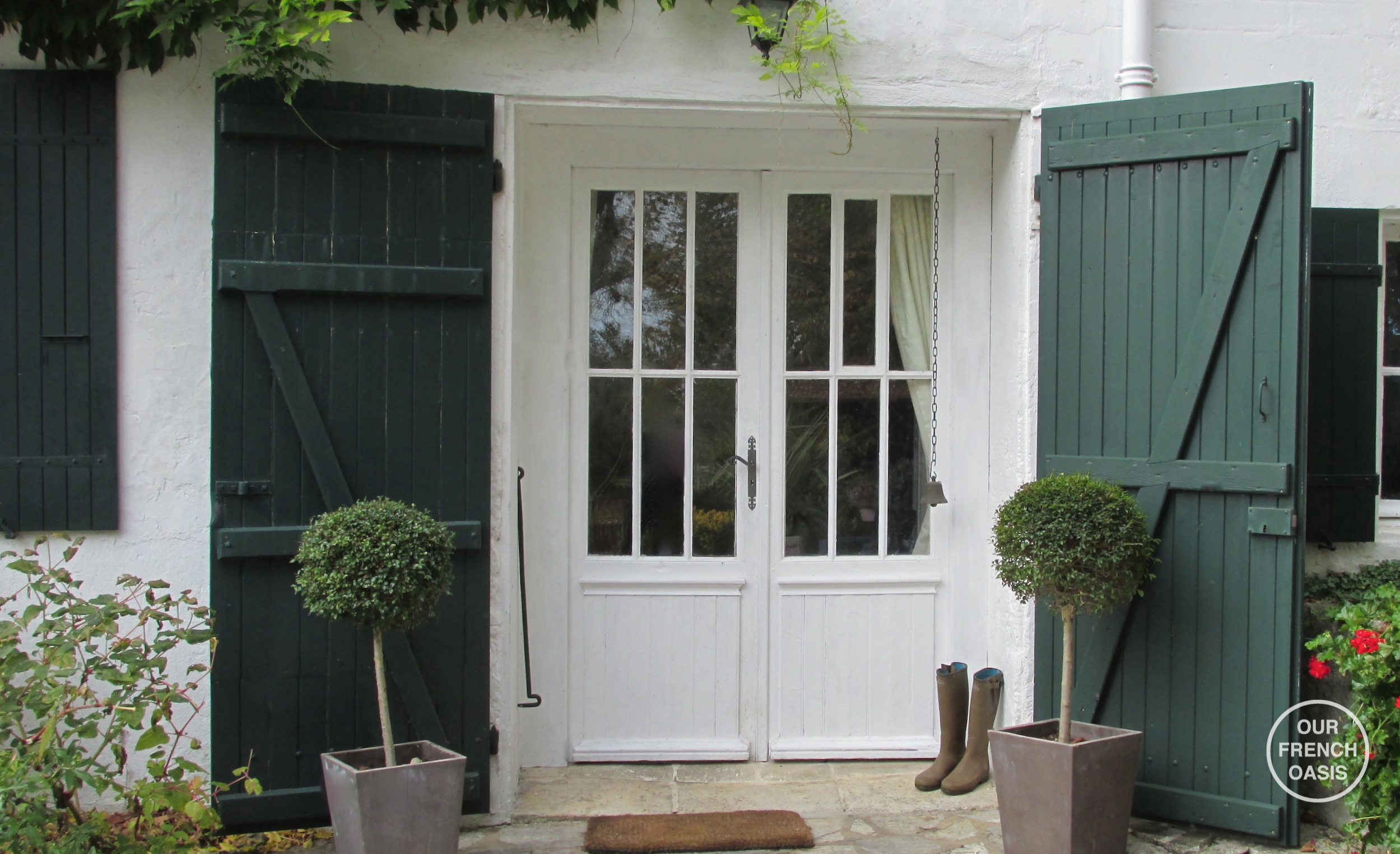
Everyone knows what our front door looks like, it’s  a door that is delightful but not immediately practical for it can be a little drafty. Fortunately we have shutters, typical of French houses and so for added security and to keep out the very cold nights we can shut the shutters and keep what is outside, out!


IMG_2244

I wonder what would be your choice, if you were able to choose?  Would you stick with a very old plain door that has been a part of the house for decades?

IMG_2233

Even better if they have a small leaded window above

IMG_2220


IMG_2234

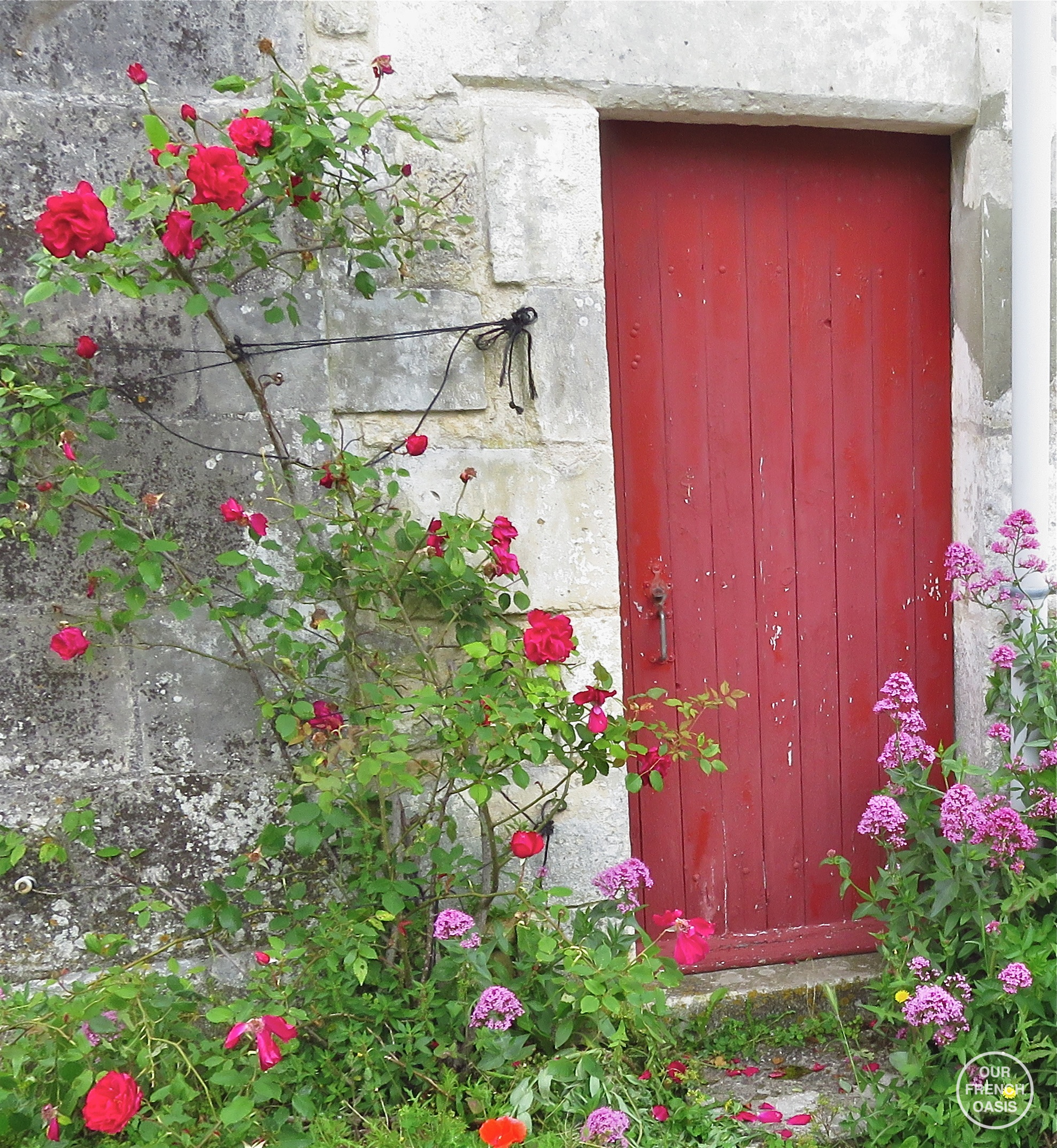
Or would you paint it a bright colour?

IMG_3593

IMG_3579

Perhaps a little bit of cottage style?

IMG_2240

IMG_2238

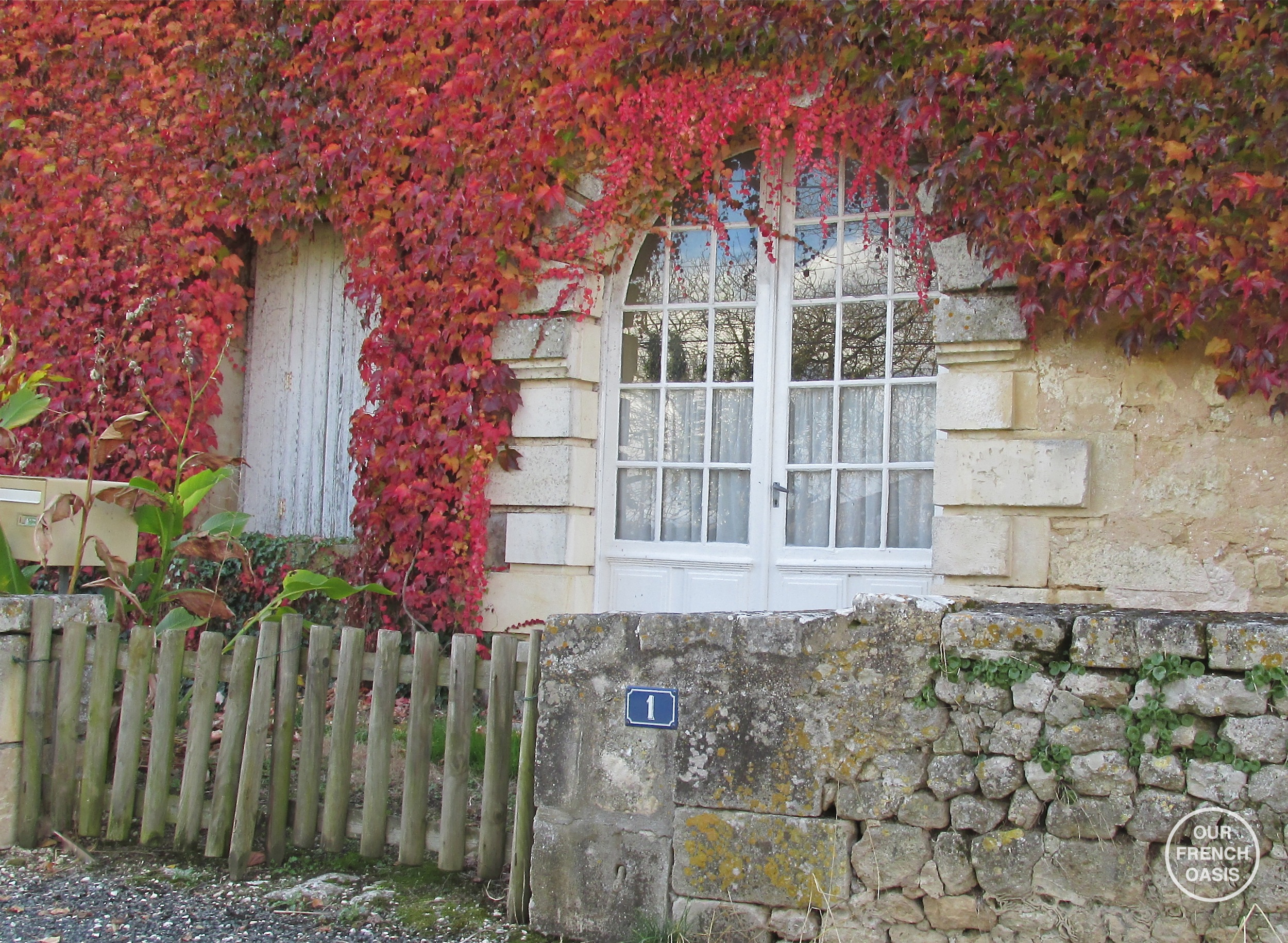
And what about plants, do you like them around the door or would you cut them back?

IMG_2224

IMG_2236

IMG_2219

So many choices, so many decisions.  I think unless a door is very ugly I would do just as we have done and live with it as part of the history of the house. It sets the character of the home right from the start and defines a style quite perfectly.

AUTUMN IN THE GARDEN

IMG_2099

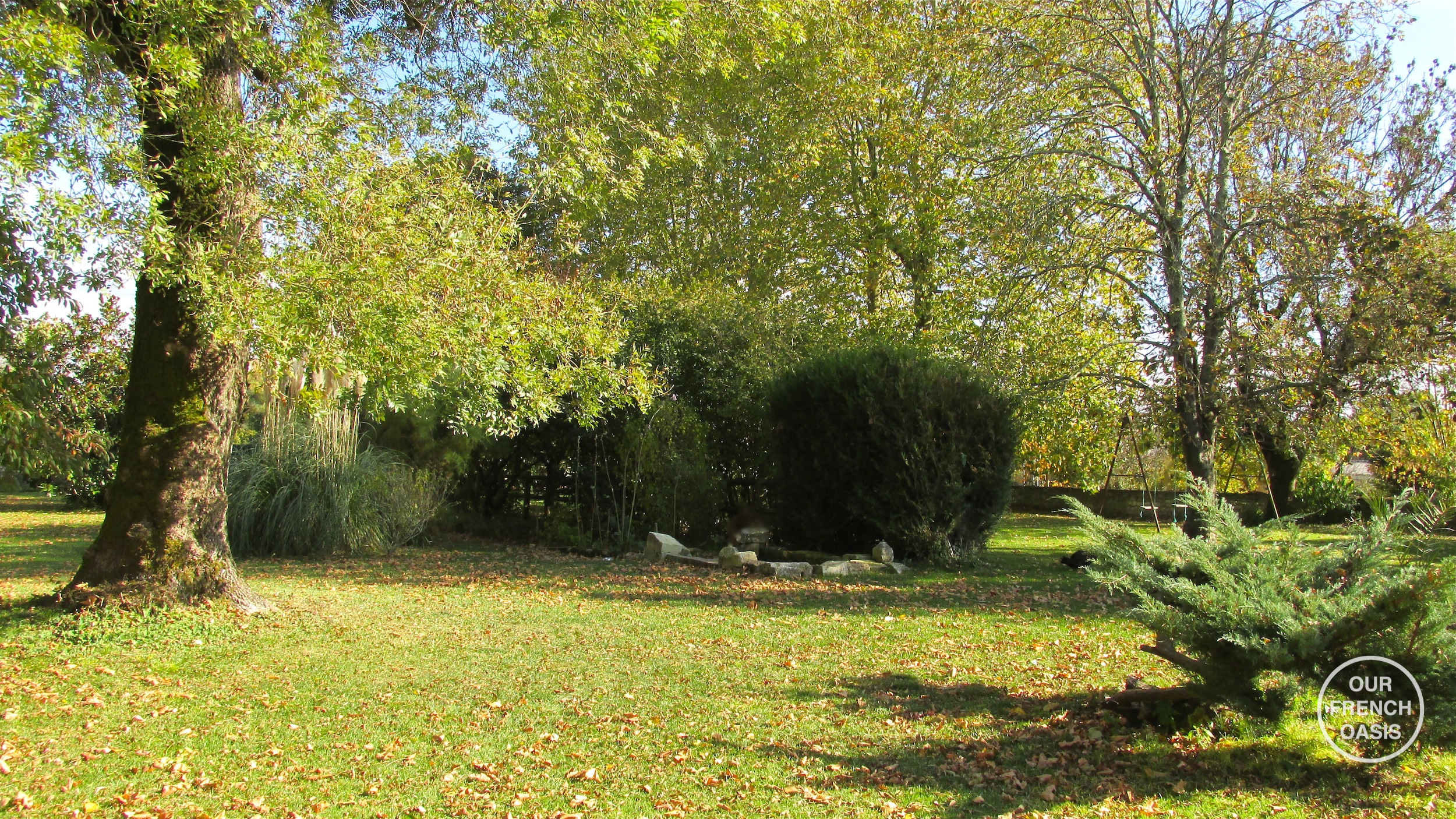
Across France it’s now the two-week autumn school-holiday known as “Vacances de la Toussaint”. So far we have enjoyed fantastic weather with warmish sunny days; ok, not exactly swimming weather, but perfect walking weather, perfect playing-in-the-garden weather and perfect weather for exploring near and far.

The children take a huge interest in this little blog of mine; indeed frequently they are my inspiration and so as we were kicking about in the falling leaves, they asked what I was going to write about this week and that’s when it came to me. “This”, I replied, pointing to our autumnal shrubbery and falling leaves,”a tour of our garden in autumn”,

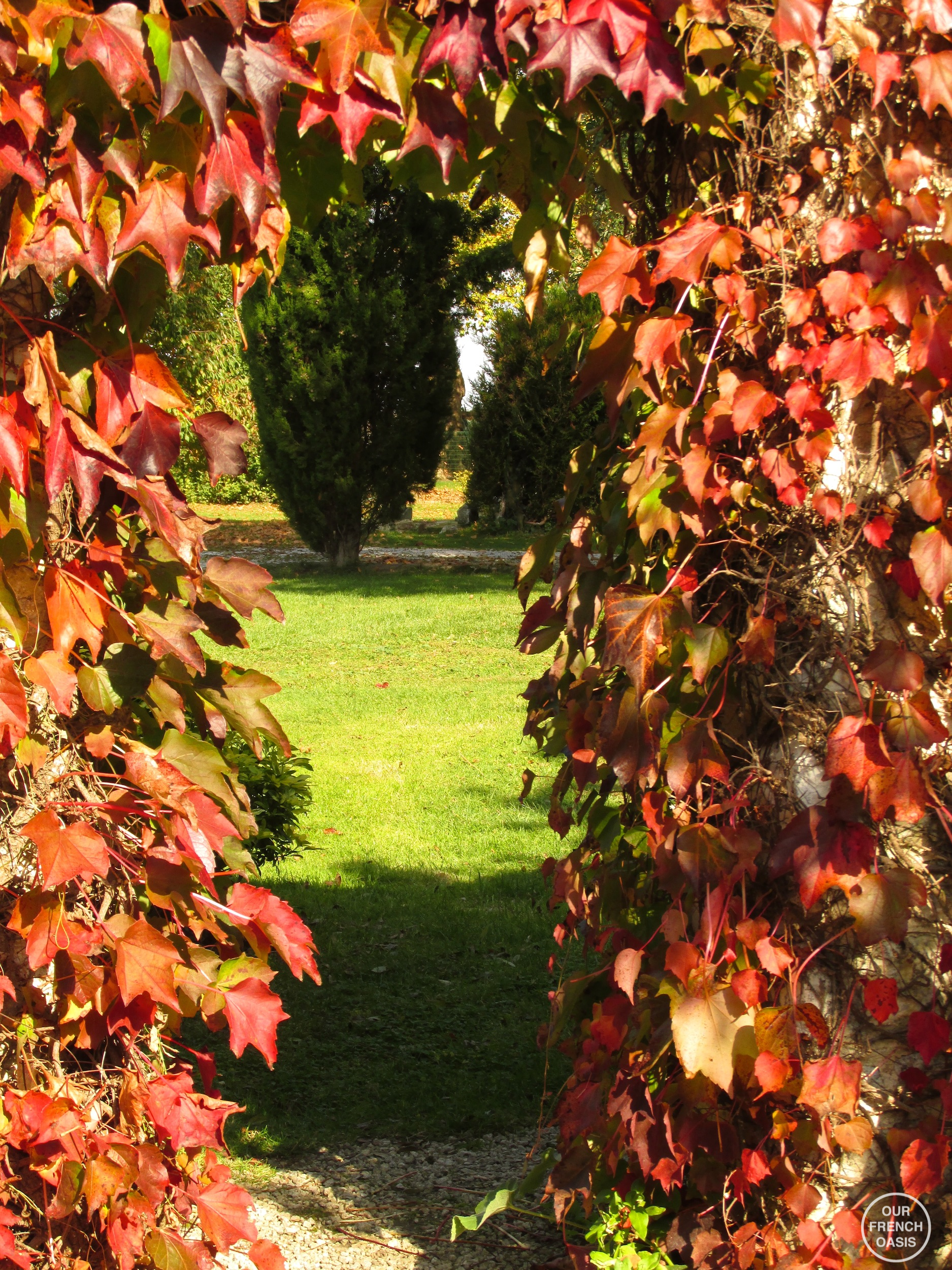
“But it looks a mess!” they chorused, adding “and it’s not exactly pretty at the moment,” but  that’s when the fun started. I fetched my camera and we wandered around, stopping to take photos, and suddenly what they had taken for granted as red leaves clinging to an old stone wall, took on a new form as they turned russet orange in the afternoon sun.

IMG_1990

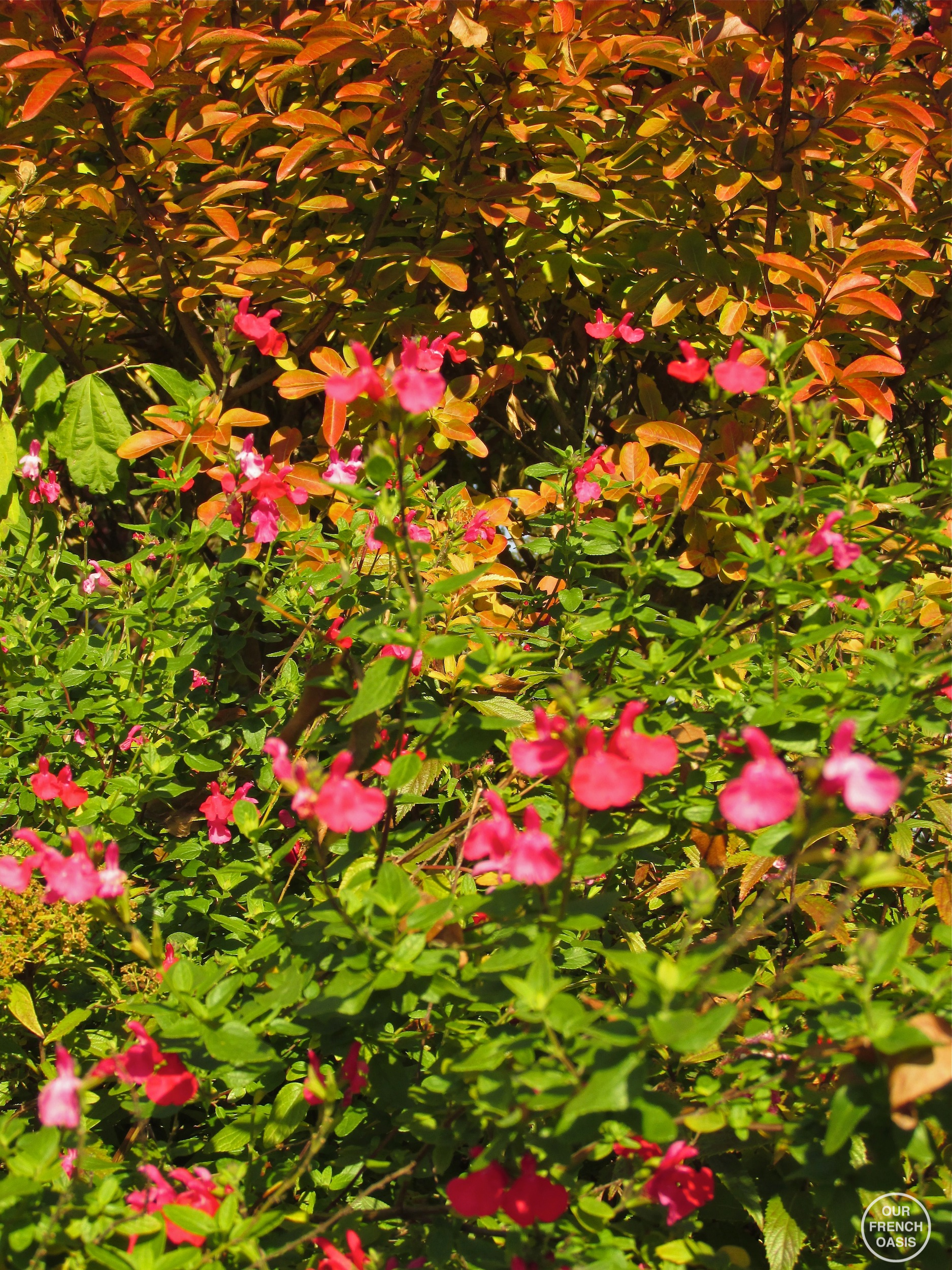
The Japanese Anemones are still flowering, self-seeded in places, and with the protection of a north-facing wall they are still  in abundance in many corners of the garden; and the Salvia Grahamii have been in bloom all through the summer and continue to provide colour.

IMG_2067

IMG_2070

IMG_2000

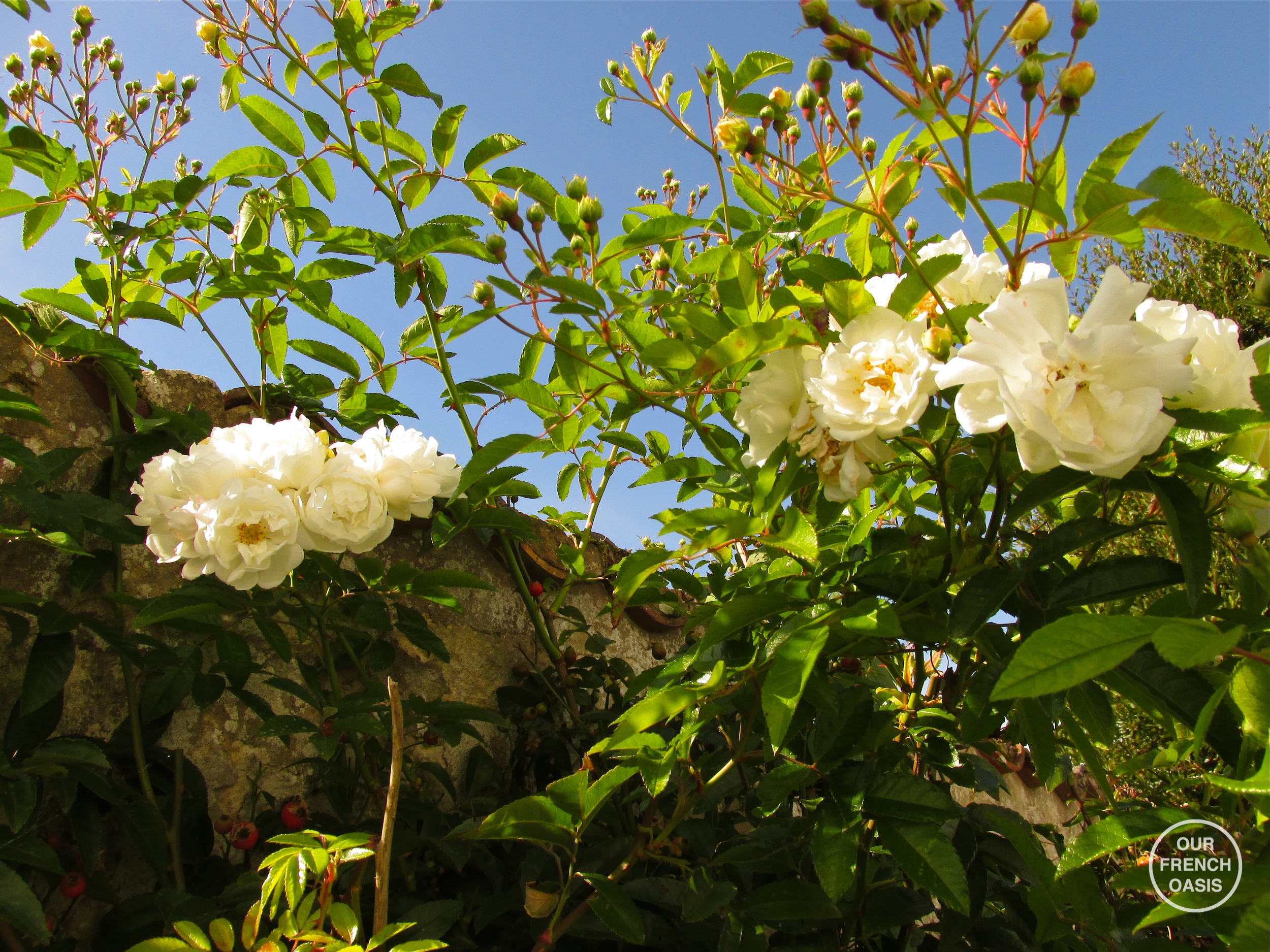
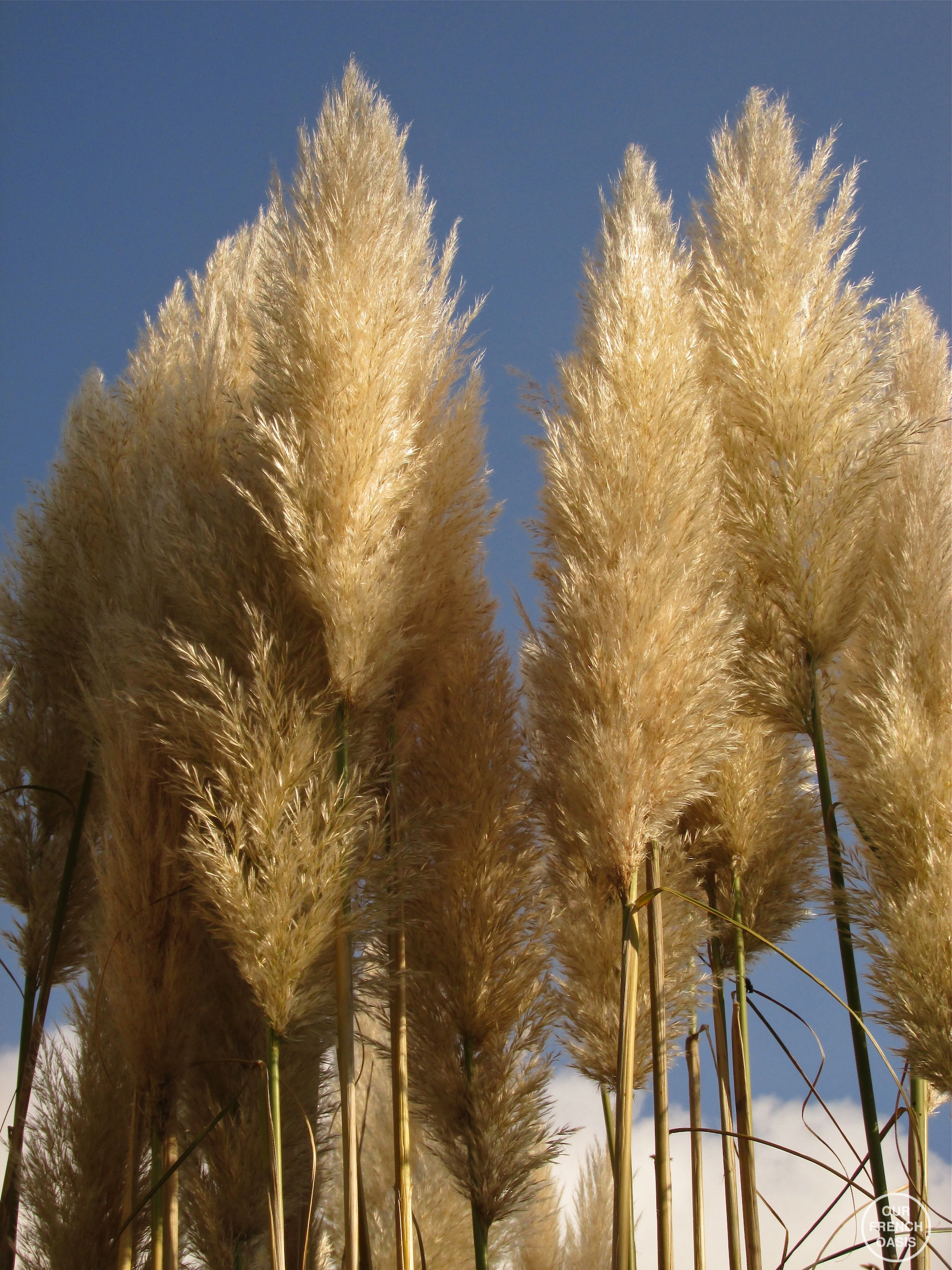
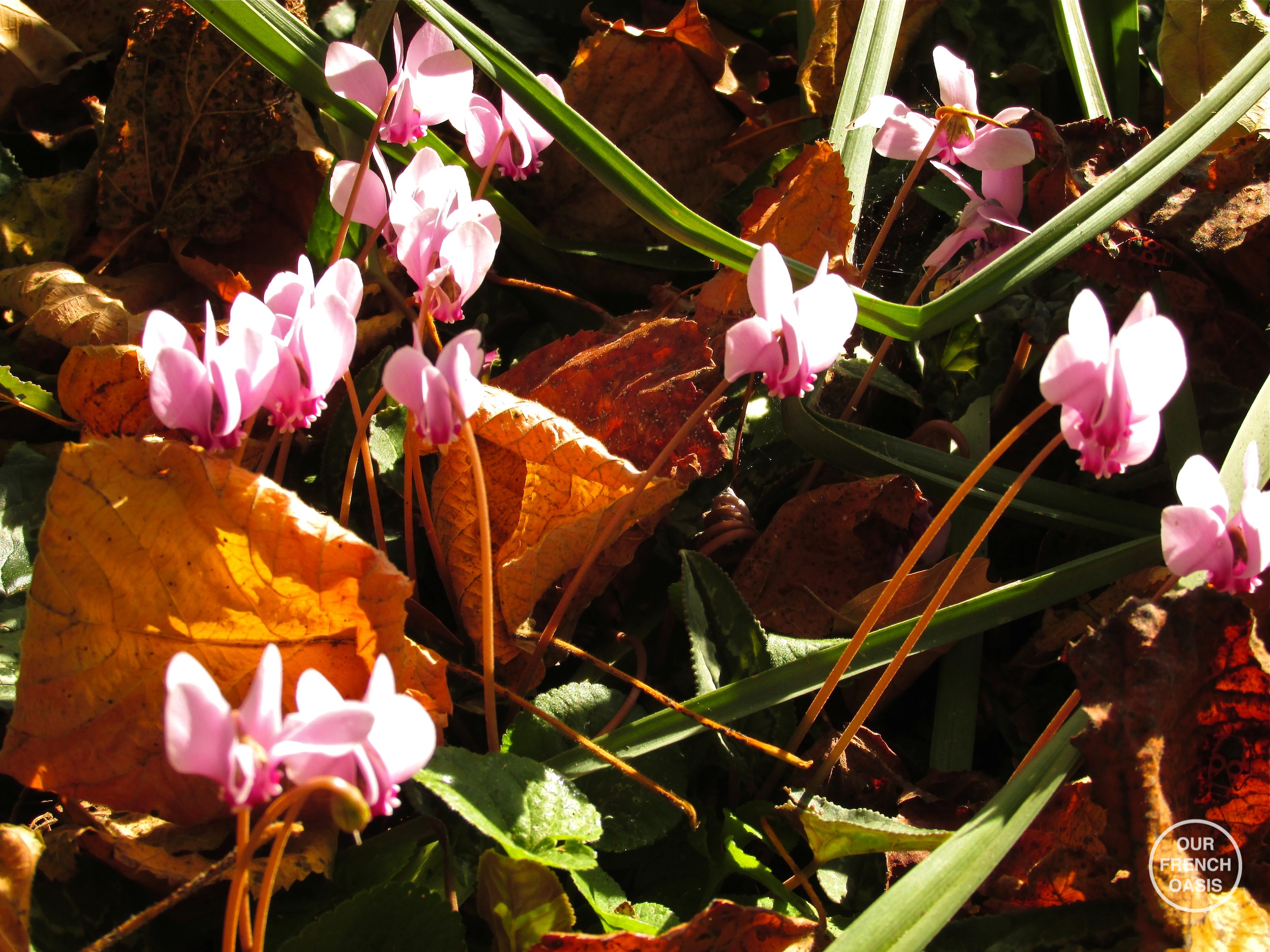
Roses are once again flowering as they have their last flurry before winter takes its toll, and  the Pampas Grass is looking fabulous. There are tiny hardy Cyclamen all over the place in shady spots, poking their heads up between the fallen leaves.

IMG_2011

IMG_2020

IMG_2007

The vegetable garden has been dug over and the autumn kale has been planted. The roses down there are a stark contrast to the plainness of the bare earth.  However, the aubergines, peppers and chillies are still going strong and producing as fast as we can eat them.

IMG_2034

IMG_2036

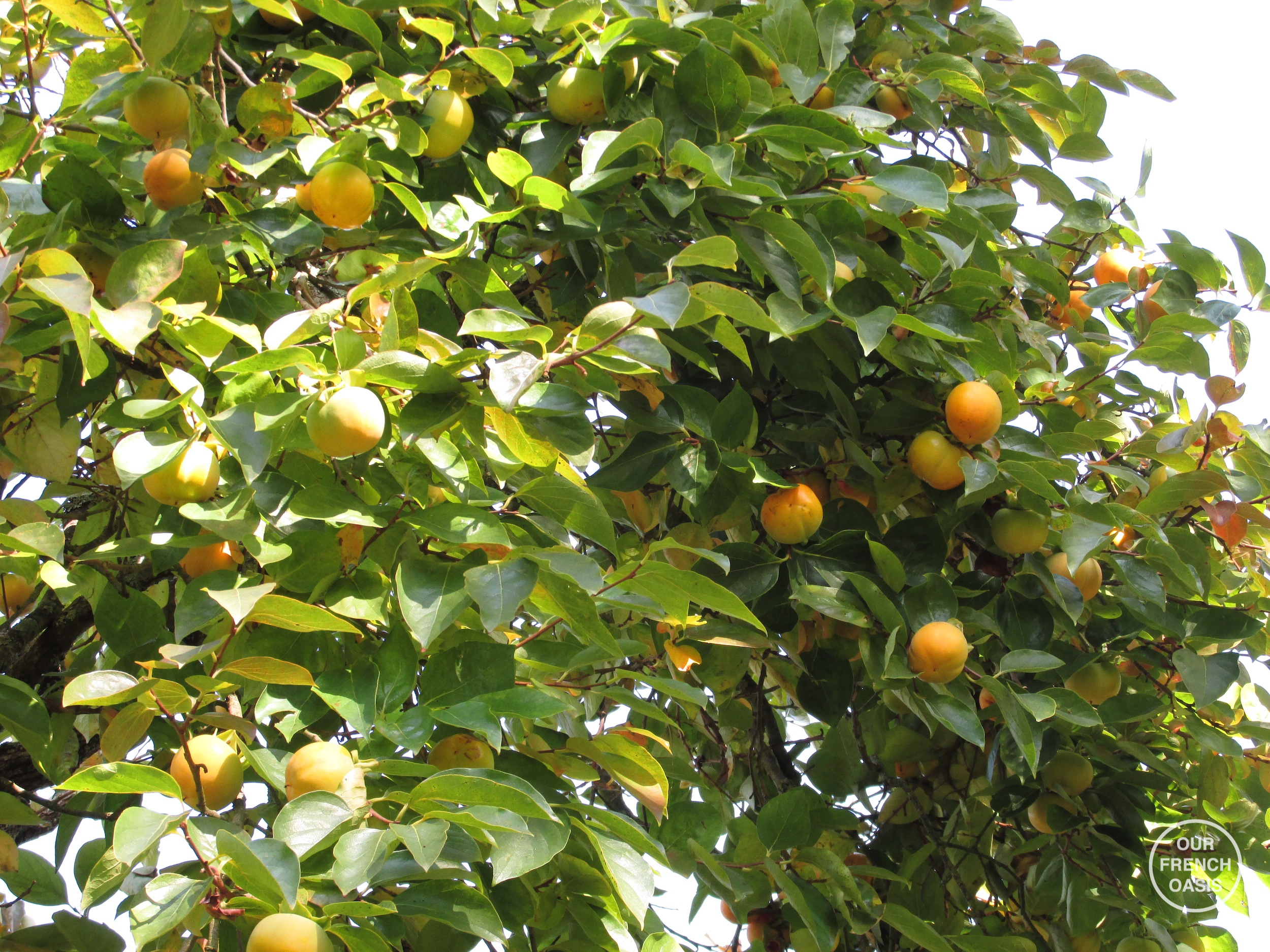
Our Persimmon tree is quite literally groaning under the weight of so much fruit, so much so that a huge branch broke off one afternoon with a quite frightening crack and a subsequent thud. This has made us look at seriously pruning it back this winter to a more manageable level. In the meantime we have yet to see if we can get the fruit to ripen enough before it gets too cold, I am told they sell for a pound each in England so we must have at least £200 of fruit! Last year winter came far too quickly for the fruits, and I fear it will be the same again this year.

IMG_2058

We don’t have any apple trees but a friend has plenty and she is constantly providing us with box loads of fruit. Sweet and crunchy they are perfect in cakes, tarts, compotes or just eaten straight from the box.

IMG_1940

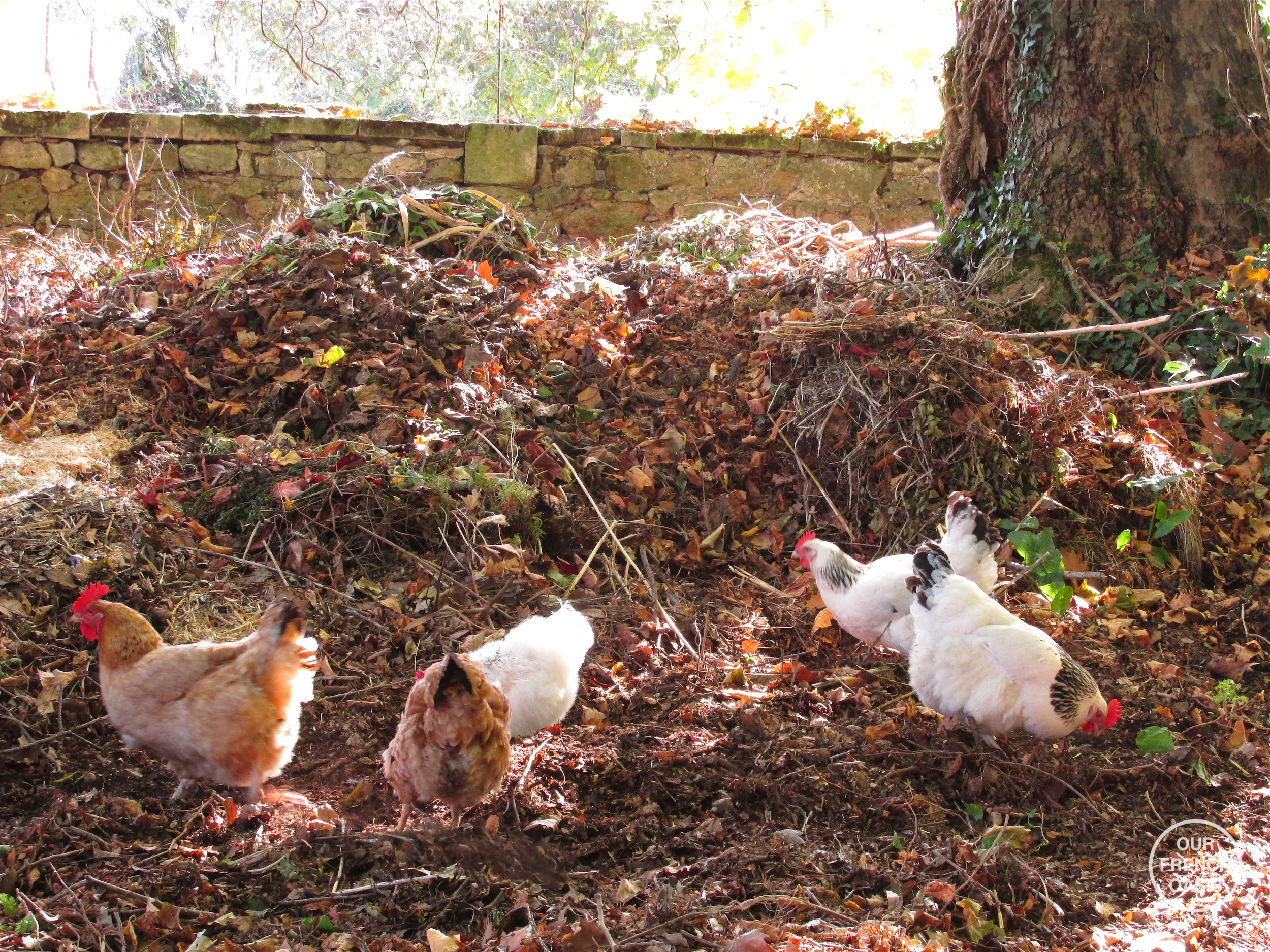
The chickens are hard at work enjoying the cooler weather. I was digging up some of last years well rotted leaves as mulch for a new shrub I had planted and they are never far away from my feet, searching for grubs and worms. In turn they are rewarding us with more eggs than we can eat and it’s been a very long time since we saw a tick on the dogs. After a summer fraught with chicken problems we are back to a healthy flock, so our fingers are crossed that Roddy can take off his veterinarian’s coat for a while.

IMG_2046

Fritz the bantam cock has turned very dark, quite suddenly, and Constance, our only Silkie, is quite a madam earning herself any number of nicknames from visitors this summer! Gone are the long lazy days when our flock rested in the shade of a tree for hours on end; now they are on the move from dawn until dusk, constantly scrounging tidbits from anywhere they can get their feet and beaks into. They are very opportunist feeders and we have seen some surprising items disappear into frenzied craws, including half-consumed cat leftovers….. no more details needed..

IMG_9894

IMG_9890

IMG_9880

It seems as if we have been clearing leaves forever, but in truth we have barely started, many are still green and there are plenty more to come down !

IMG_2104

So it’s just as well we bought ourselves a new leaf collector that is towed along behind the mower, it is certainly making life much easier this year, I won’t have the arm muscles of last autumn but it will be done in a quarter of the time instead and anyway I always have my little helpers!

IMG_1982

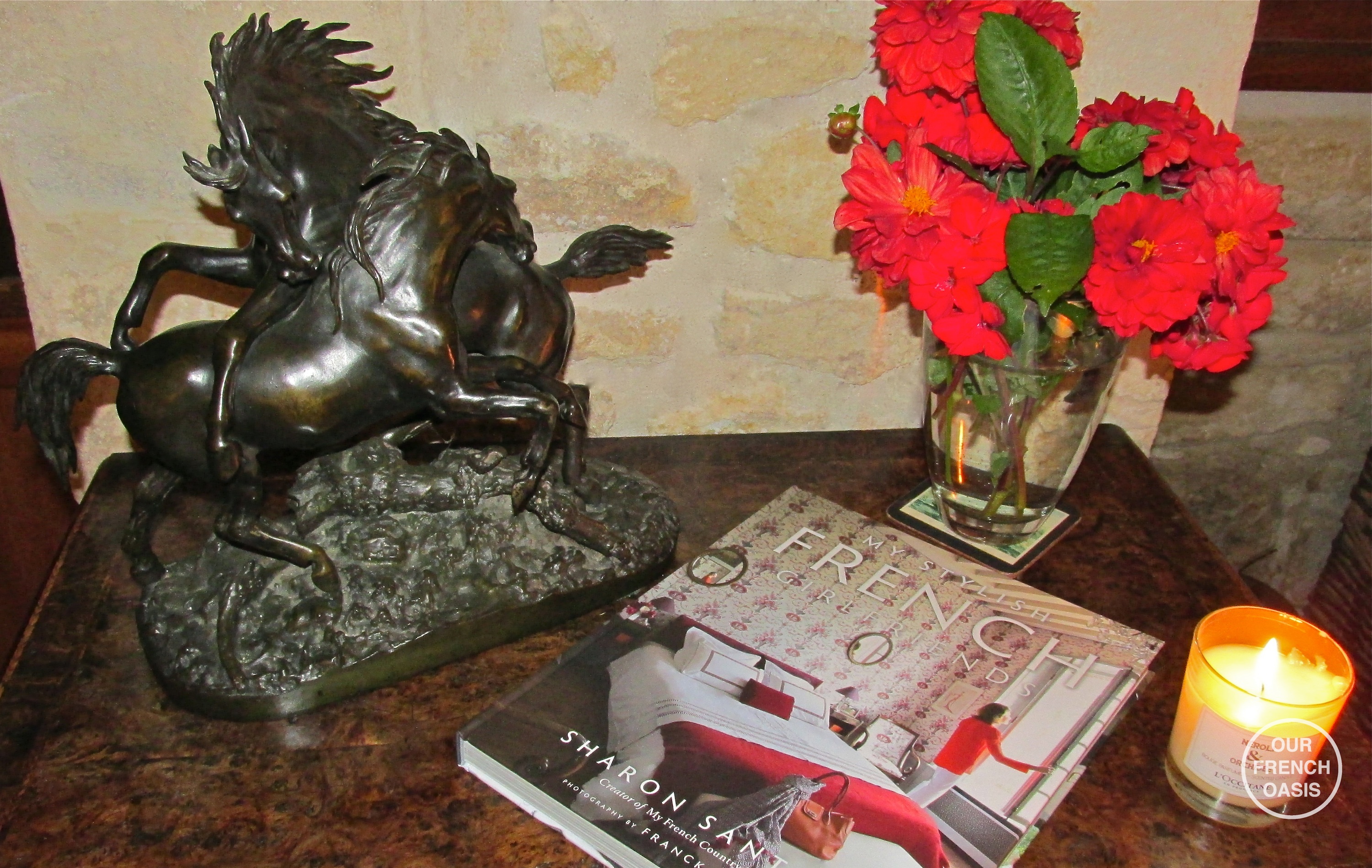
MY STYLISH FRENCH GIRLFRIENDS by Sharon Santoni

IMG_1976

I don’t normally blog on a Sunday.  Today however, is an exception!  This past week has been chilly, autumn has most definitely arrived and with it the delicious warmth of a fire in the evenings, and what better way to enjoy cosying up by the fire than with a fantastic new book.  I am of course talking about Sharon Santoni’s “My Stylish French Girlfriends”.

This is an absolute must for anyone who loves France and all things French.  Sharon, who writes the enormously popular blog My French Country Home, has toured some of her friends houses from Normandy to Provence and in turn her friends have invited her inside to photograph them at work and play, it is unposed and very natural with stunning photography and offers a wonderful glimpse into the lives of some very inspirational French ladies.

When I first started writing this blog Sharon helped me with a lot of great advice.  We were total strangers and yet she was incredibly kind, chatting to me on the phone and offering all sorts of words of wisdom.  She is such a lovely lady and I encourage anyone who loves France to go out and buy this, if you haven’t already done so!  But be warned, jobs will lay unfinished as it is just impossible to put down and you may end up wanting to redecorate your entire house, re-landscape your entire garden or move, lock stock and barrel, to France!

AMERICANS IN FRANCE


IMG_9609

Some very good friends came to visit us recently from Florida with their ten year-old son, and as for two of them it was a first time visit to Europe, I wanted the trip to be perfect. Excitement built on both sides of the pond and I planned all the things we should do and all the places we should take them. I checked the long-range forecast on Meteo France more often than I checked Facebook the preceding weeks and everything looked perfect, even the weather. We met them in some brilliant early evening sunshine at the architecturally stunning train station in La Rochelle, almost 24 hours after they’d started traveling, but the next morning it all changed. The perfect round sun over the Charente Maritime slowly turned to grey and a slight sprinkling of rain began to fall – and then, horror of horrors, it started to pour, with some thunder and a few bolts of lightning thrown in for good measure. So what did we do? Well, with true British stiff upper lip, or in this case American and British stiff upper lips, we donned raincoats, grabbed umbrellas and did pretty much everything just as we had planned, and it didn’t deter our spirits one little bit!

IMG_9332

One small hitch arose on day one when we decided kayaking in the rain was a little too much to bear, even for our cavalier spirits. Instead we all bundled into a fabulous small crêperie, typically French (perfect for their first day) and ate far too much! We returned home, lit the fire for the first time since last winter, made a big chocolate cake and ate some more! it was a good excuse to hunker down and catch up on a year’s news.

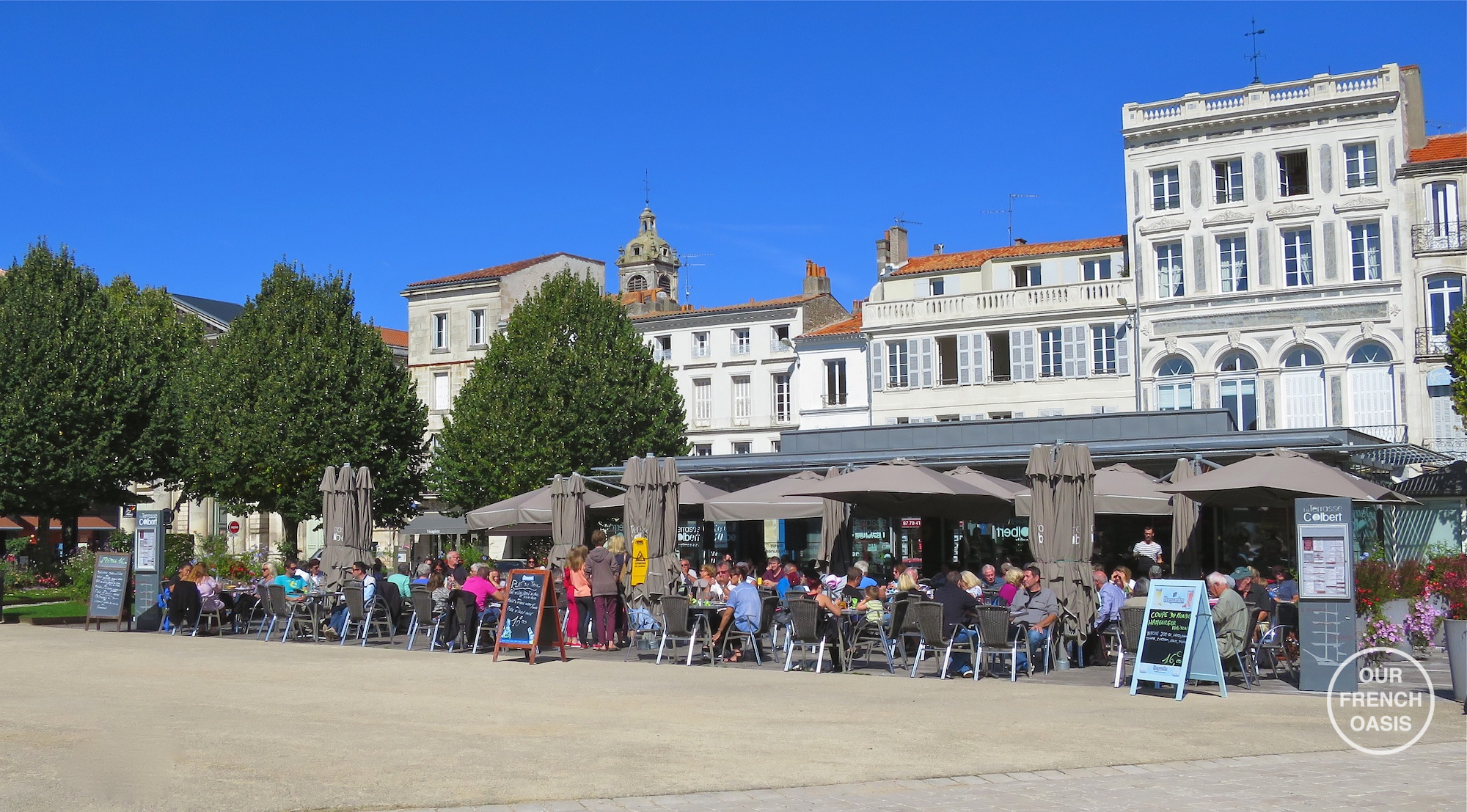
Day Two was a Monday, and it dawned with leaden grey skies and steady rain, again. We headed out to the Château de la Roche Courbon and unsurprisingly we were the only people there; thus proving that rain does have some plus points because it felt as if we really were the owners of this magnificent property and we had the place to ourselves. We explored the acres of grounds which included rivers and waterfalls, an apple and pear orchard and gardens that were utter perfection, even in the drizzle. I am surprised I didn’t suffer from neck-ache after the number of times I looked to the sky to watch the clouds as they scurried past. Then, just before lunch I spied the first break in the weather, a glimpse of blue which grew and grew into a beautiful autumn sky, and as we left the Château and drove into Rochefort for lunch, it developed into a miraculously warmer day and we were able to eat outside at our favourite restaurant in the Place Colbert.

IMG_9345

IMG_9336

IMG_9352

IMG_9350

IMG_9339

A visit to the stone sculptures just outside Crazannes (which I wrote about recently) then followed before we hurried home to put a blanket on the bed in the downstairs guest room as another friend was spending the night with us on her way south – we really were a full house that night!

IMG_9461

We woke on Tuesday to more autumnal skies and a steady downpour as we made breakfast. We sat around the kitchen-table, our American friends loving the choice of croissants and pain au chocolat from our bakery in the village. They had bravely confronted the rain to pick up our fresh supplies for breakfast, and our friend heading south was in no hurry to leave in such weather. Huddled under umbrellas we picked some of our last figs to enjoy with the patisserie; hardly sun-warmed but fresh and sweet none the less, and we drank coffee, told tall tales, laughed a lot and put the world to rights from all three of our perspectives. However, our happy mind-fest was rudely interrupted mid-morning by a text from Millie which pinged onto my phone during her break at school; “Is it true WW3 has been declared ?”. I unintentionally read it out loud and within a nanosecond a small army of iPads and iphones feverishly sprang to life as five adults checked their various favourite news sources; BBC for the British and CNN for the American contingent. Two minutes later our international collective drew a sigh of relief and I am very happy to report that it seemed there was something of a misunderstanding at school.

The rain let up temporarily just before lunch and we were able to take the dogs out for a walk and blow away the cobwebs for an hour before we sat down to another meal that Roddy conjured up out of a fridge full of leftovers, he is an absolute master at this and as normal we ate, if not likes kings, then certainly like princes. A huge frittata seemed to fit the bill for most. In the afternoon we visited the Hermione on her dock in Rochfort, and then the fascinating citadelle de Brouage, a Catholic town that was fortified between 1630 and 1640 to counter the protestant stronghold of La Rochelle.  A break in the ominous big black clouds gave the light a surreal dramatism at one stage, and as flights of dark crows circled the battlements, they contrasted vividly with the flecks of white that the egrets showed off as they settled down into the reeds for the night.

IMG_9521

IMG_9540

Wednesday morning and it was still raining. Somewhat downhearted I resumed my staring at the sky in despair or clicking onto Meteofrance, just in case something had changed in the last ten minutes, or that someone had made a mistake and everything would be suddenly sunny. We really wanted to head to the Île de Ré and spend the afternoon cycling around the Island. Much muttering ensued and a decision was made – an Anglo-Amercian collective decision, I hasten to add. As I collected the children from school (half-day school on Wednesdays) the wipers were still going firmly back and forth and so they all looked somewhat surprised when I told them we were still going to the Island. “The meteo says it is going to be a lovely afternoon.” I told them, “and we simply have to believe them.”.

Rather dubiously we bundled up the two families into two cars, complete with Roddy’s beloved Brompton, and we firmly headed north. As we crossed the bridge from La Rochelle, the first hint of blue appeared, and by the time we had driven further onto the Island, parked and then rented bikes, the sun was actually shining. Of course now I am totally beholden to MeteoFrance; they have become my new weather gods – they were 100% accurate, how could we ever have had any doubt!!!

IMG_1914

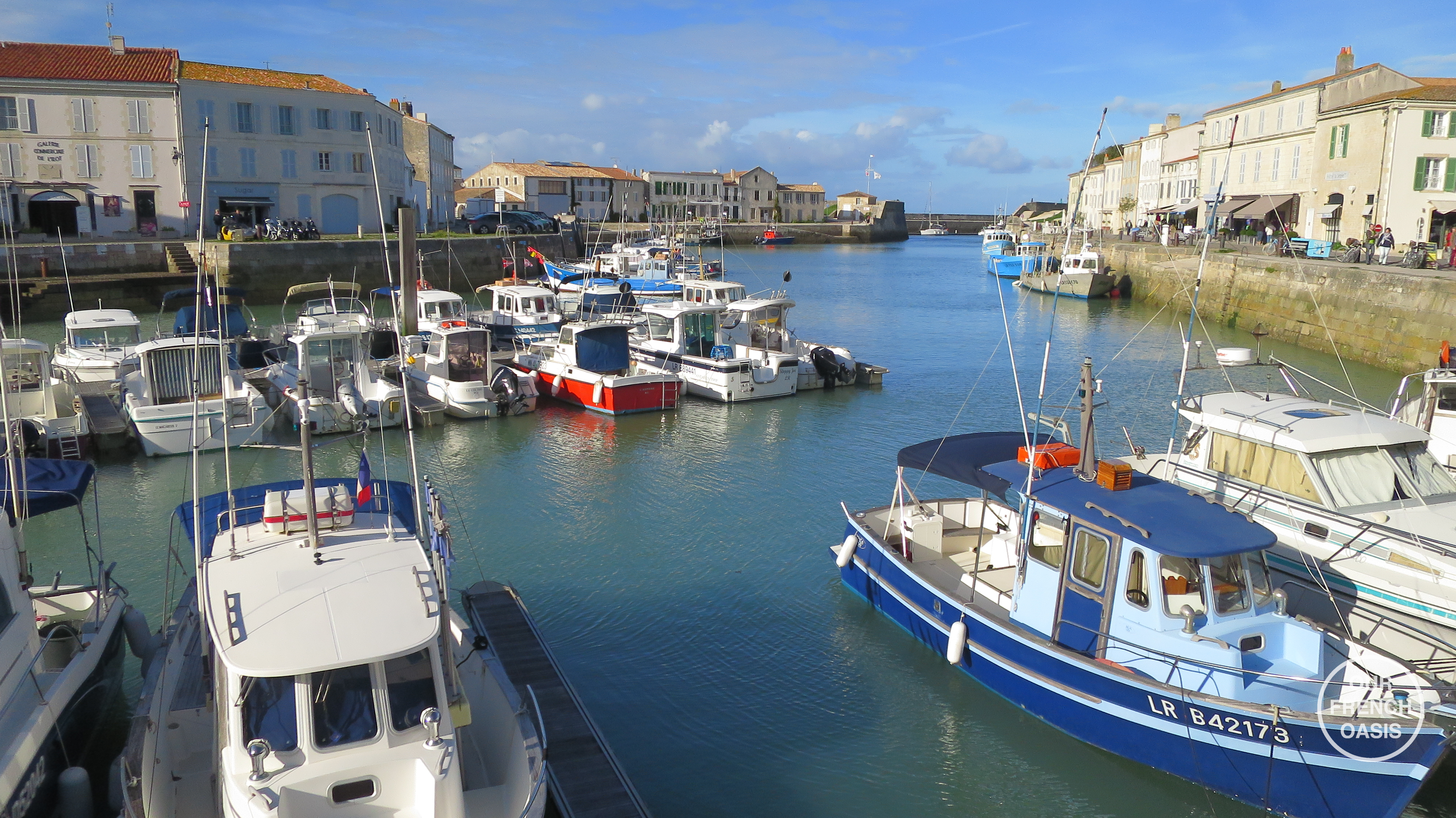
We cycled for four hours, travelling about 20kms, and our friends fell totally in love with the beautiful Île de Ré. Almost all the summer visitors had long since gone home and the pace of life had returned to that slower, more gentle speed that island-life is so well known for. Of course we got lost a few times; we always get lost cycling on the Island, but in turn it meant we found some new tiny narrow cobbled streets winding their way in between white-washed houses, all with the obligatory green shutters. As always, I fell into my favourite daydream of owning the cutest of them, living island life with ease, surrounded by sunshine and tables of freshly grilled fish and platters of ripe melons. In the Island capital of St Martin en Ré we stopped for a break, and leaving our bikes by the quay, headed to my favourite bakery where we bought gôuter; we ate our goodies sitting outside on benches overlooking the boats, the warmth of the sun reminiscent of summer. Rows of boats still lined the pontoons and there was just enough traffic and people to keep us amused. It’s one of my favourite places in the region.
IMG_0417

IMG_9551

Time slipped by and we lingered a little too long enjoying the views which meant we faced a furious 40 minute mad cycle back to the bike-shop to return the bikes before we incurred wrath and financial retribution. Legs burnt as the tiny road signs told us we still had another four kilometers to go, and we pedalled on, harder and faster. We arrived breathless and redfaced 15 minutes late, but as is the way with so many people in this area the owner of the shop was not at all perturbed, and waved off our gushing apologies. He told us he had visited Florida before and had many English clients in the summer months; he wanted to talk for hours and couldn’t have been friendlier.

IMG_0263

Once we had de-biked and got back in the cars, we headed back into St Martin en Ré for some much needed supper and as darkness drew a veil over the westerly sunset we stumbled surreptitiously over the harbour’s cobbled quayside onto some of the best pizzas we have ever eaten. By the time we had finished and left, night had turned stoney black and the harbour no longer bustled with activity; instead it lay gently dozing in a subtle seascape of soft lights and salty shadows where crabs scurried and scraped. We headed home across the bridge in our respective mechanised chariots, small people’s small-talk slowly slipping away into silence as our headlights burnt a route home.

IMG_1930

As is always the way the weather finally turned the morning our friends left for a few days in Paris before they headed back over the Pond. The beautiful train-station at La Rochelle was once again bathed in sunshine as we said our very sad goodbyes, but no one can say we had not made the most of everything despite the rain. We are already planning all the things to do on their return visit next summer!

IMG_9604

FINE COGNAC AT DOMAINE DE BIRIUS

IMG_9243

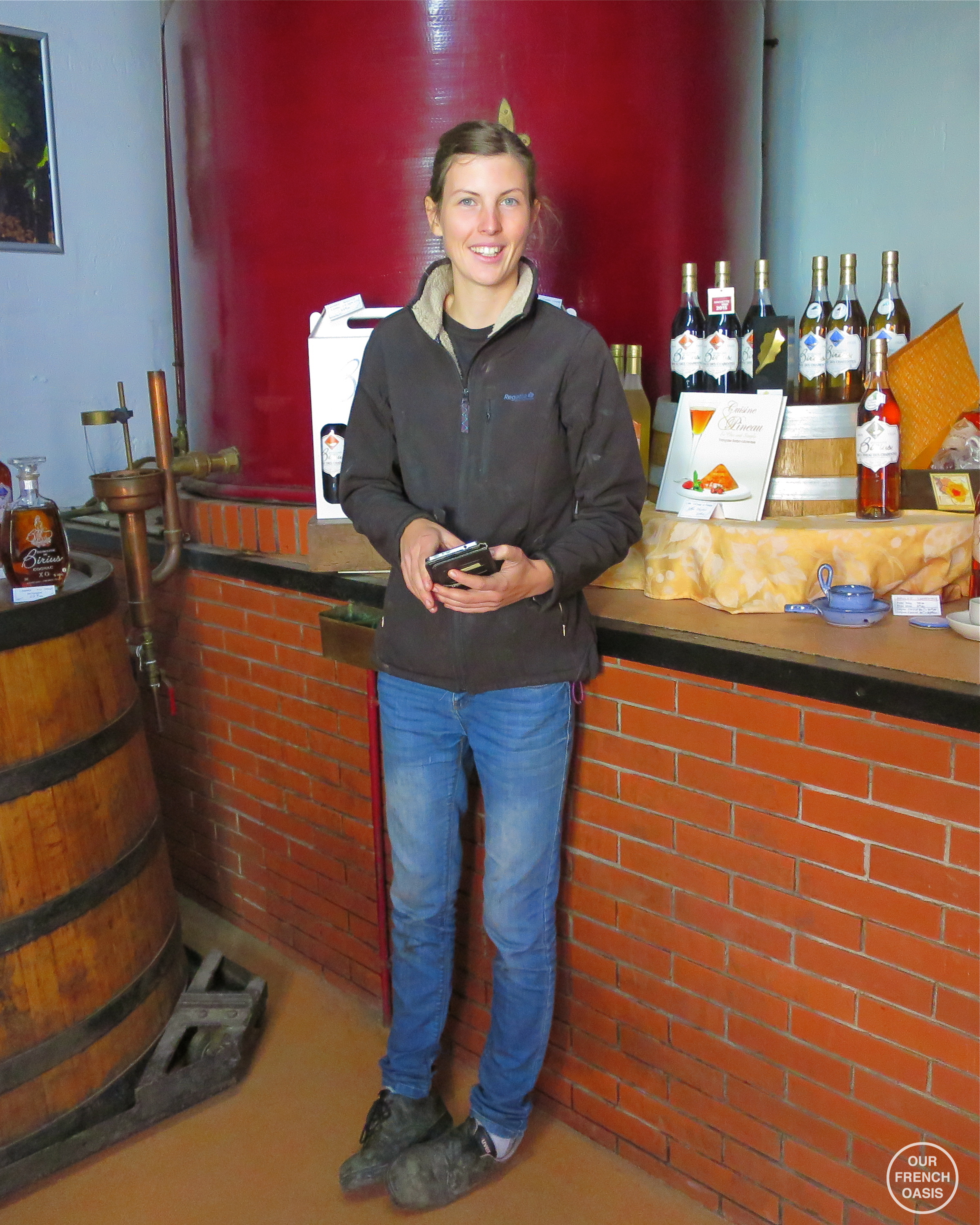
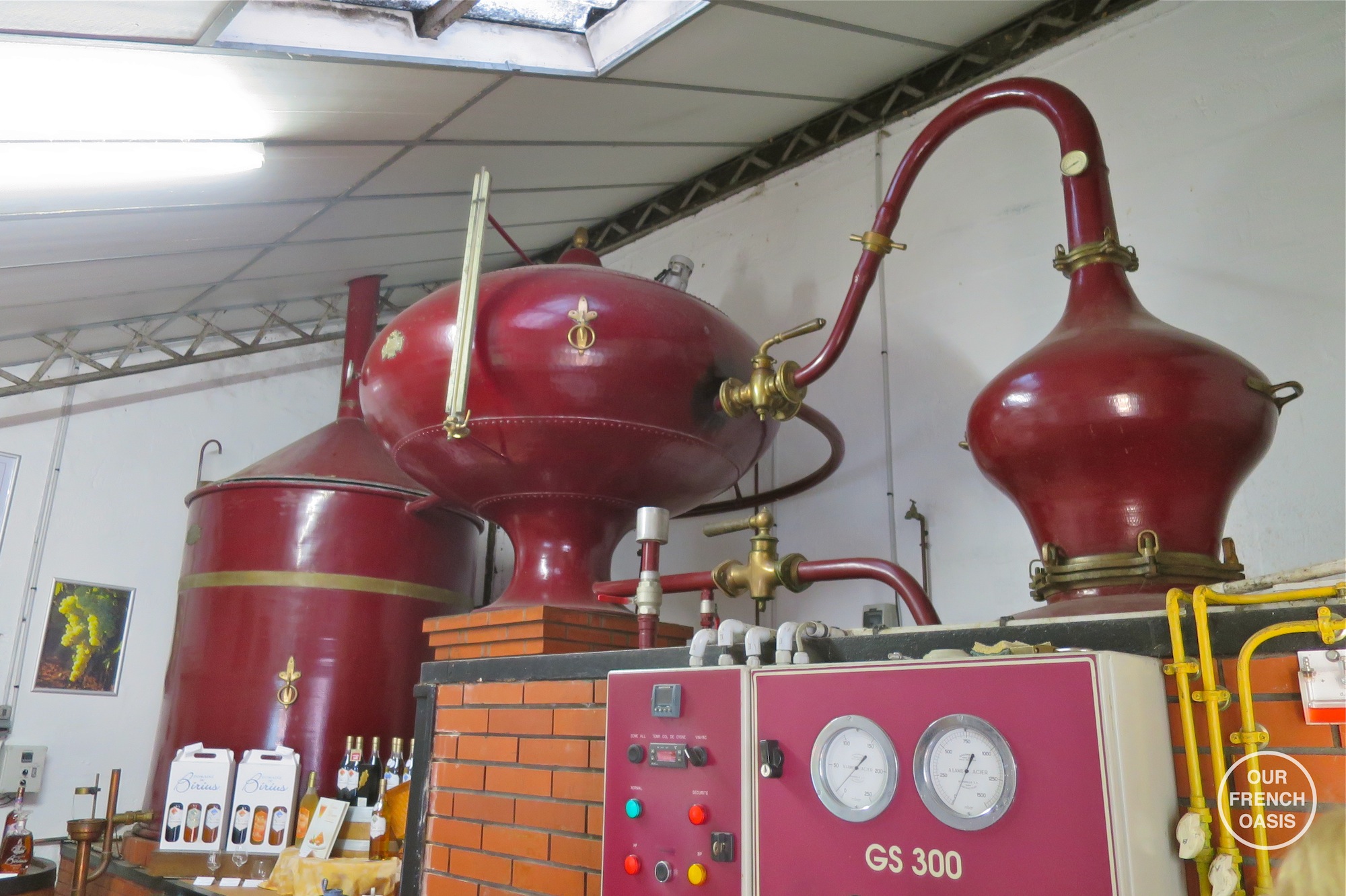
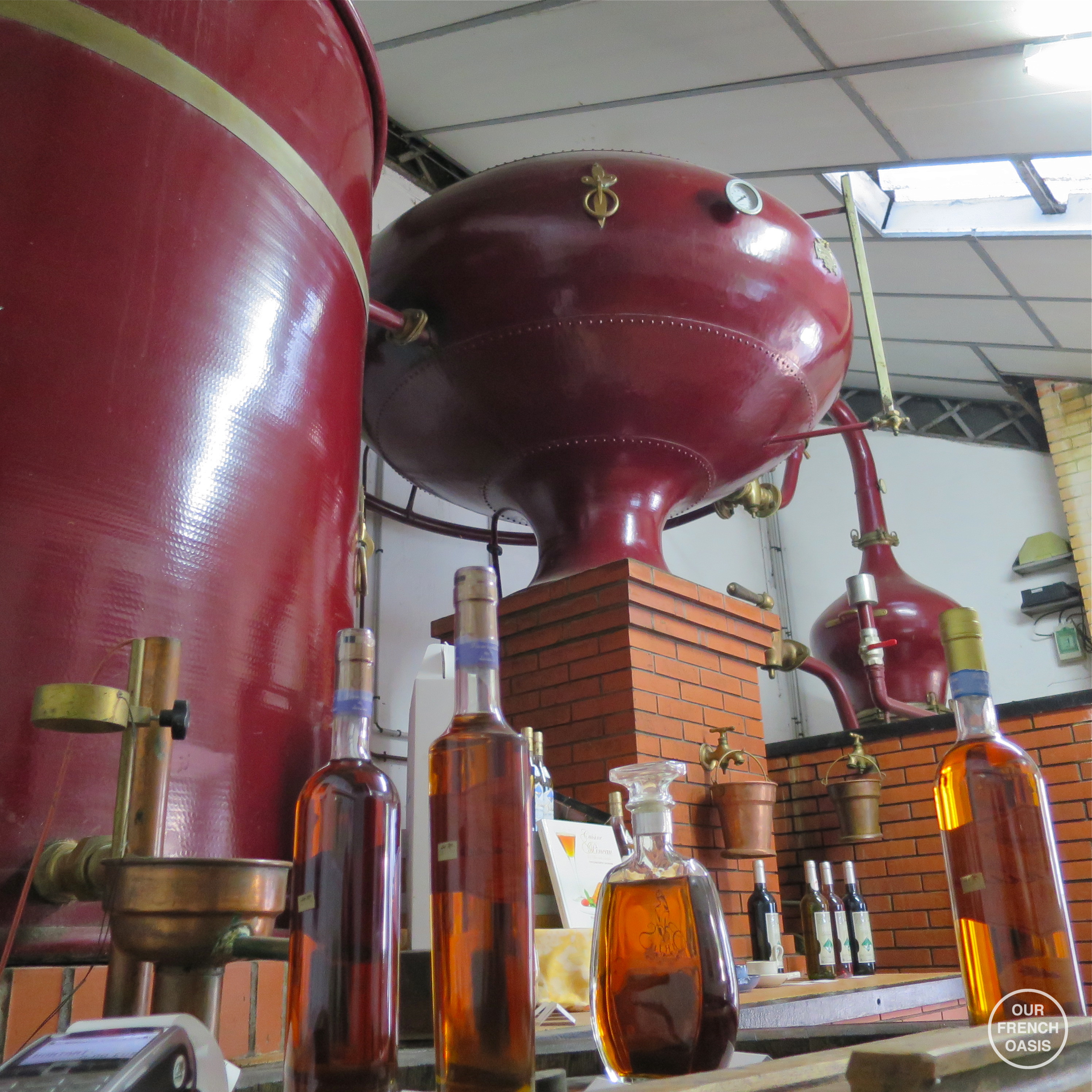
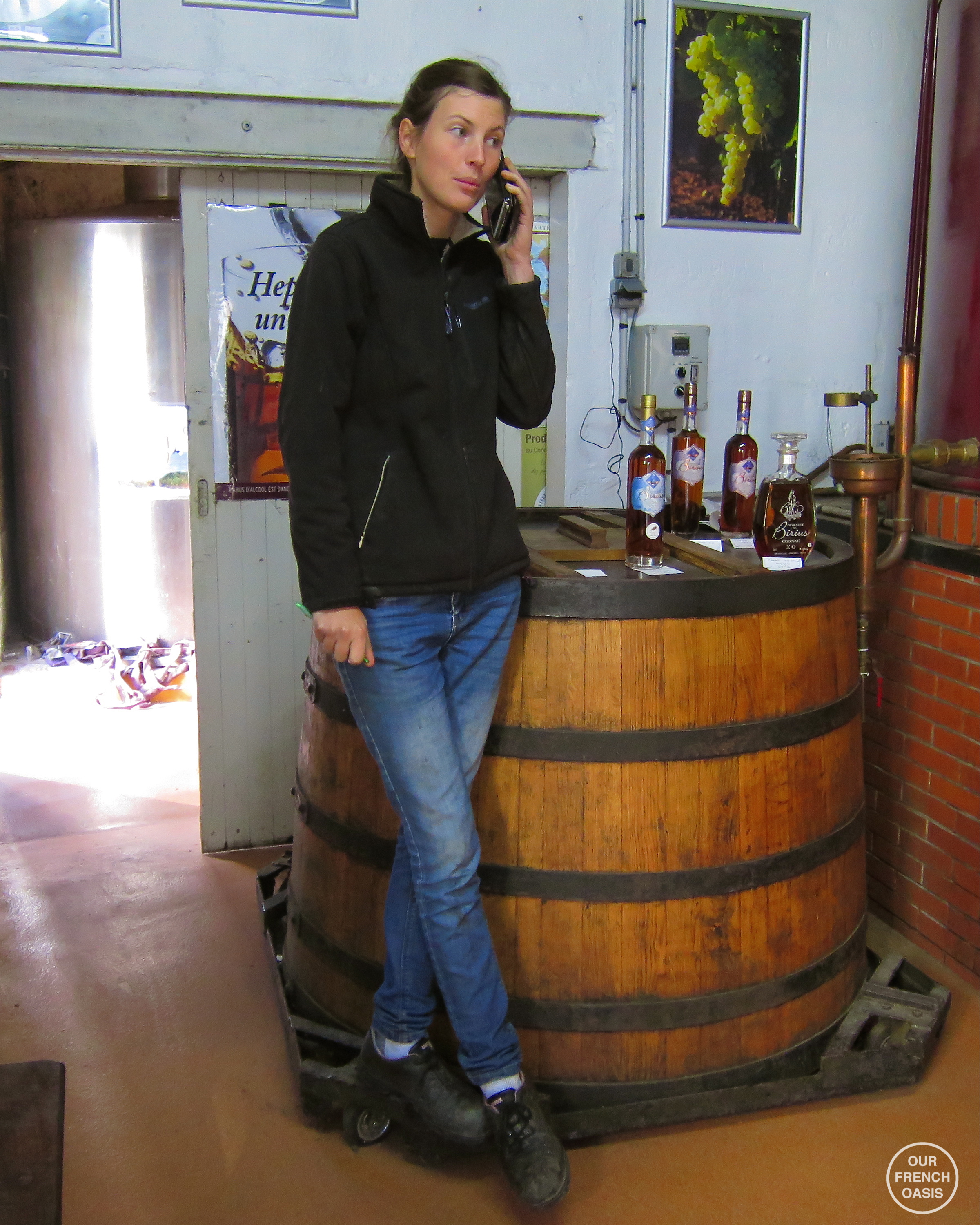
Living here in the Charente Maritime, we are but a couple of vineyards away from the world-famous Cognac region of France. Bottles of the golden nectar sit on most shops’ shelves in the region, and it seemed unbelievable to us recently that we had not yet been to a domaine and seen a little of the cognac world for ourselves as it does seem to be a popular topic of inquiry for many of our friends and relatives. Thinking this would make a wonderful addition to my series of interviews with local artisans, Roddy and I finally set off last week for an ancient vineyard close to us where we had an invitation to visit from a Charentaise family that has been producing France’s favourite spirit for over 11 generations; we were eager to learn as much as we could about a drink that everybody knows about, but perhaps has no real idea of.

IMG_9245

Cognac is only made in one part of France; this is in an area inland of us, centred around the town of Cognac, from which the drink takes its name. The region is divided into several smaller areas or “crus”, each of which is defined by the cognac it is authorised to produce, with each cru differing according to climate, terrain and terroir, all of which affect what grape is grown, and what it will end up producing. The domaine we were going to visit is in the western part of the region, in the Petite Champagne zone, an area of approximately 15,250 hectares where longer ageing eaux-de-vie (the base liquid for cognac) is produced. Much of this product is sold to the ‘grand’ houses for blending into the most well known brands. Our target for the day was the Domaine de Birius, which while traditionally a source of blending eaux-de-vies, has recently started to sell to the public some of the cognac they have always produced. This type of cognac is called a single-vineyard cognac, and is often made by blending a variety of different age eaux-de-vies; the taste of the final product can thus vary from year to year, according to harvest and the senses of the master-taster, or maître-de-chai.
IMG_9250
With this in mind we set off on an impossibly beautiful morning after dropping the children off at school, and 40 minutes later bumbled down a lane between serried ranks of gnarled vines, our destination a collection of buildings deep in a sun-dappled corner amongst the fields. Tall machines scurried to and fro on the slopes, and distant figures stooped and pointed. It seemed a little busy for a domaine that was not harvesting, but we were not duly concerned as we turned the corner amongst some low buildings and pulled to a stop by the accueil, or ‘welcome’ sign. Down the side of a huge chai, we could see a very pretty tall young lady awaiting us, and we knew we had met our hostess for the visit, Elodie, the daughter of the house. We closed the car doors and went down to say hello, only to discover to our consternation that things had changed due to weather and the day had been designated a harvest day after all, and we were in the midst of one of the busiest days of the year! We felt successively worse as the visit progressed and we came to realise that Elodie was an integral cog in the operation, not just a pretty face for visitors. How she managed to make time for us is still a wonder, but in between tapping a myriad of computer screens, shutting some valves, opening others, and overseeing the arrival of several tons of grapes for pressing, she still managed to give us a 5-star personal tour!

IMG_9223

We started in the end of the chai, the distillery room. This small sparse room was dominated by the traditional alambic, a traditionally shaped copper ‘still’, unique to the Charentais area and the cognac tradition. It was here that we learnt the basics of a millennia’s worth of distilling process. It goes something like this: as the grapes arrive, they are crushed and the juice is then left to ferment in huge storage containers for two to three weeks. As the liquid ferments, natural yeasts convert the sugar into alcohol and the juice reaches a typical alcohol content of about 10˚. At this point the juice is then distilled, twice, and the resulting liquid is put into casks made from Limousin oak where it ages for several years, initially with a high alcoholic content of about 70˚. The eaux-de-vie at this stage is relatively colourless, and it must be aged for at least 2 years before it can be sold as cognac. As the cognac ages, it loses about 3% of its mass by evaporation, a deliberate interaction with the wood and air. The alcohol evaporates faster than the water obviously.  Two notable bits of information Elodie let slip were that no sulphur is added to the product at any stage, and the distilling process has to be achieved over an open flame or else it is illegal!

IMG_9170

IMG_9175

The final blending after several years of the various different ages of the eaux-de-vies into a finished cognac is undertaken by the master-blender, a process of which a portion is undertaken by Elodie, as she has been to Scotland and learnt blending skills there to go hand in hand with what she has learnt from her father in-house. It was at this point that Roddy and I started to look at Elodie in a very different light, as we realised we were talking to someone who would, in the fullness of time, be the 12th generation of family to distill and produce the cognac which quite obviously runs in her family’s veins.

IMG_9230

The domaine has 32 hectares of grapes, and when we left the chai and stepped outside to the storage containers for the pressed grape-juice, we realised that the amount of grapes those hectares produce means there is a LOT of liquid to be dealt with! We were both quite shocked to be faced with what seemed to be a small refinery, and as we climbed the aluminium ladder to the catwalk above the huge stainless vats, we began to grasp the enormity of the industry before us. Below our feet, tractors rolled in with grapes to crush, and Elodie surreptitiously pushed buttons on panels, appraised thermometers and tapped sight-tubes as we talked. She mentioned how many litres of liquid each container contained, but I confess I ran out of zeros to add as we talked numbers. Almost all of the grapes grown at Domaine Birius are Ugni Blanc, one of a few varieties legally allowed to be used for cognac production. The juice from these fruits is thin, acidic and dry, and although the Domaine does produce Pineau des Charentes, some wine and some sparkling grape juice, their main product is solely eaux-de-vies and the final product – cognac. The tall vats wobbled in fermentation and lids lay open for escaping gas, and Elodie remarked casually that this is a very trying time for the producers, as too many things can go wrong, the worst of which is an unseen virus that causes an unusual rot, undetectable by anything but a laboratory test. As it takes between 8 to 9 litres of pure grape juice to make a litre of cognac, even I could see that substantial quantities of wine are needed for cognac production.

IMG_9192

IMG_9197

Descending the catwalk, Elodie ducked into a shed, and we watched as several trailer-loads of grapes were shuttled into position to be unloaded into the macerating process, each trailer unleashing a dirty sludge of fruity effluent that seemed very much at odds with the amber liquids we knew it produced. As we talked, Elodie was still busy tapping panels on walls, changing red lights into green, and green into red, all the while divulging information to us as she changed temperatures in vats containing thousands of litres of livelihood. It seemed so strange that someone so young and fresh should be so directly involved in the production of what is commonly thought of as a true adult’s drink. Of course in France, cognac is just another product of the countryside, to be enjoyed by all.

IMG_9200

IMG_9206

From the pressing process, Elodie took us deep into the heart of the chai, where the effects of sun and frost cannot be felt, and led us into one of the cellars. Dominated by a succession of huge oak barrels, the smell of the ‘angels’ share’ was overpowering, heady and musty, but intoxicatingly exciting. The ‘angels’ share’ is the name given to the amount lost by evaporation during ageing, and as we gazed down the room at rank after rank of old and new oak barrels, we knew the angels must have a good time of it, for sure. Tucked away into a corner was some 1906 cognac, the Domaine’s legitimate oldest liquid, though Elodie did mutter there were other, unmarked consignments tucked away that could have been even older. It is from these cellars and their barrels that Elodie and her father blend their final products; some of it fine cognac, and some of it going into the pinneau that the domaine is also very well known for. We walked down amongst the barrels, gaping at dates and other information, and I had to physically drag Roddy out the room, very aware that Elodie was very likely needed elsewhere in the domaine where we could hear machines clanking as others worked.
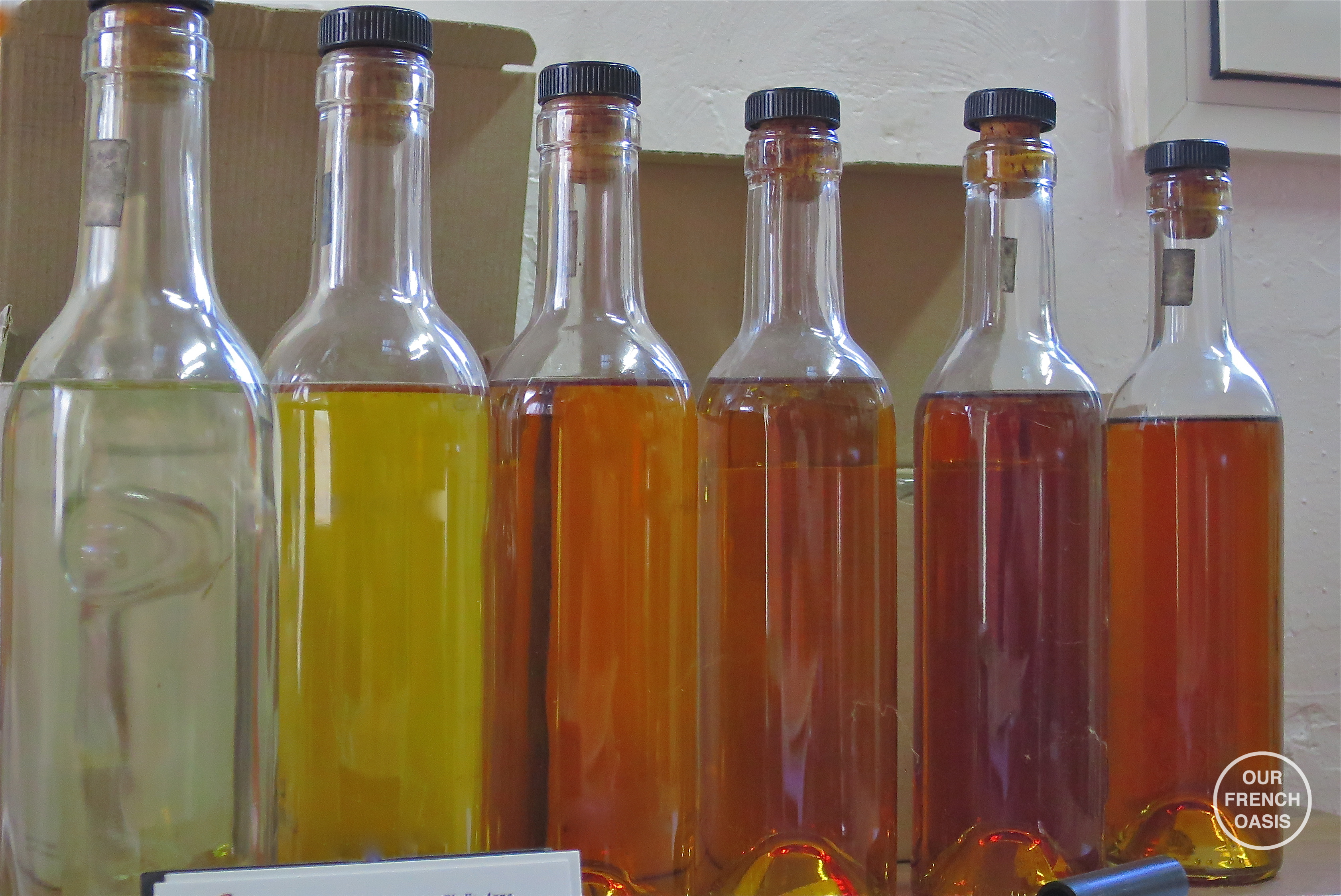
IMG_9208

IMG_9214

Our last port of call was the distillery room again, where Elodie explained the blending process – a mystical time when years of experience and knowledge combine with the senses of taste and smell, a process that Elodie shares with her father as they seek to produce something very special from their distilled and aged eaux-des-vies.

Finally, Elodie showed us the table where samples of the eaux-de-vies from different ages and barrels stood in serried ranks, and where she gracefully let us sample them as a part of understanding the great tradition of cognac. It was at this stage that we also finally fully understood how things worked – seeing the eaux-de-vies in this format, with different colours, and smelling the different bouquets, all combined to demonstrate how the finished product could be achieved. Elodie than gave us a small glass of several different cognacs to taste and we savoured the liquids to a notably higher degree than we would ever have done if we had not seen the small, personal touches that a family of true artisans could deliver to a small humble fruit and its juice. I had never felt more appreciative of a spirit perhaps than I did then.

IMG_9190

As we left Elodie to go back to her harvest of Ugni Blanc, we set off for home, clutching a bottle of VSOP we had bought. There had been no let-up in the work-rate outside; machines still scurried to and fro in the vines, but somehow as we now understood so much more it seemed so much more artisinal, more countryside than science-lab.

IMG_9246

So once again, in meeting and writing about local artisans, we had learnt a huge amount ourselves. Indeed, we marveled at the very ‘frenchness’ of the whole process, our cognac glowing in sunlight as it streamed through the windscreen of the car, while a faint waft of ‘angels share’ accompanied us all the way home.

IMG_9219

If you would like to find out more about Domaine de Birius, Elodie and her family, visit their website which is in both French and English.  www.cognac-birius.com

ONE OF FRANCE’S MOST BEAUTIFUL VILLAGES

IMG_9019

Take a beautiful warm sunny day, an extremely pretty French village, and a pottery market; mix it all together and you get a great recipe for a perfect Sunday morning in late September; this is just how we spent last Sunday in the village of Mornac-sur-Seudre.

IMG_9011

We have passed the signs to the village numerous times on our way to Royan; I had even at some stage over the summer looked it up and discovered that it is listed as one of France’s most beautiful villages in the guide Les plus beaux villages de France.  Yet, as is so often the way, we had never taken the detour and never visited.  However throughout September I had seen big signs locally advertising a Marché de Potiers (pottery market) in Mornac over the weekend of September 26th and 27th.  Now, all markets, whether they be food-orientated, crafts, wine or antiques, are like a red rag to a bull for me, and I made a mental note that we had to visit! Fortunately Roddy and the children all share my enthusiasm for adventure and so last Sunday after our usual struggle to get everyone plus two dogs out of the door in a timely fashion we drove our well-travelled route in the direction of Royan and for the first time ever we took a strange right-hand turn half way there and headed to the little village of Mornac-sur-Seudre.

IMG_9043

IMG_9075

The village is an old fishing and commercial port which today focuses more on oyster farming and the salt produced by its marshes and it made the most perfect setting for the Marché de Potiers. Many stalls had all been set up along the river with potters from throughout the south-west of France.

IMG_9065

IMG_9071

IMG_9061

The atmosphere was almost like a giant party; a long table had been set up in the middle of the market for people to sit and eat their picnics of local produce, all washed down with many bottles of local wine. To be truthful, this is something the French excel at, and there is little quite as convivial as a French gathering en-masse at lunchtime in the open air. Elsewhere restaurants were starting to fill up as the lunchtime hours got under way, and it was hard to choose exactly where to eat and what to eat; local savory crêpes seemed like a good light lunch but then it’s hard to turn down the local tradition of Moules Frites !
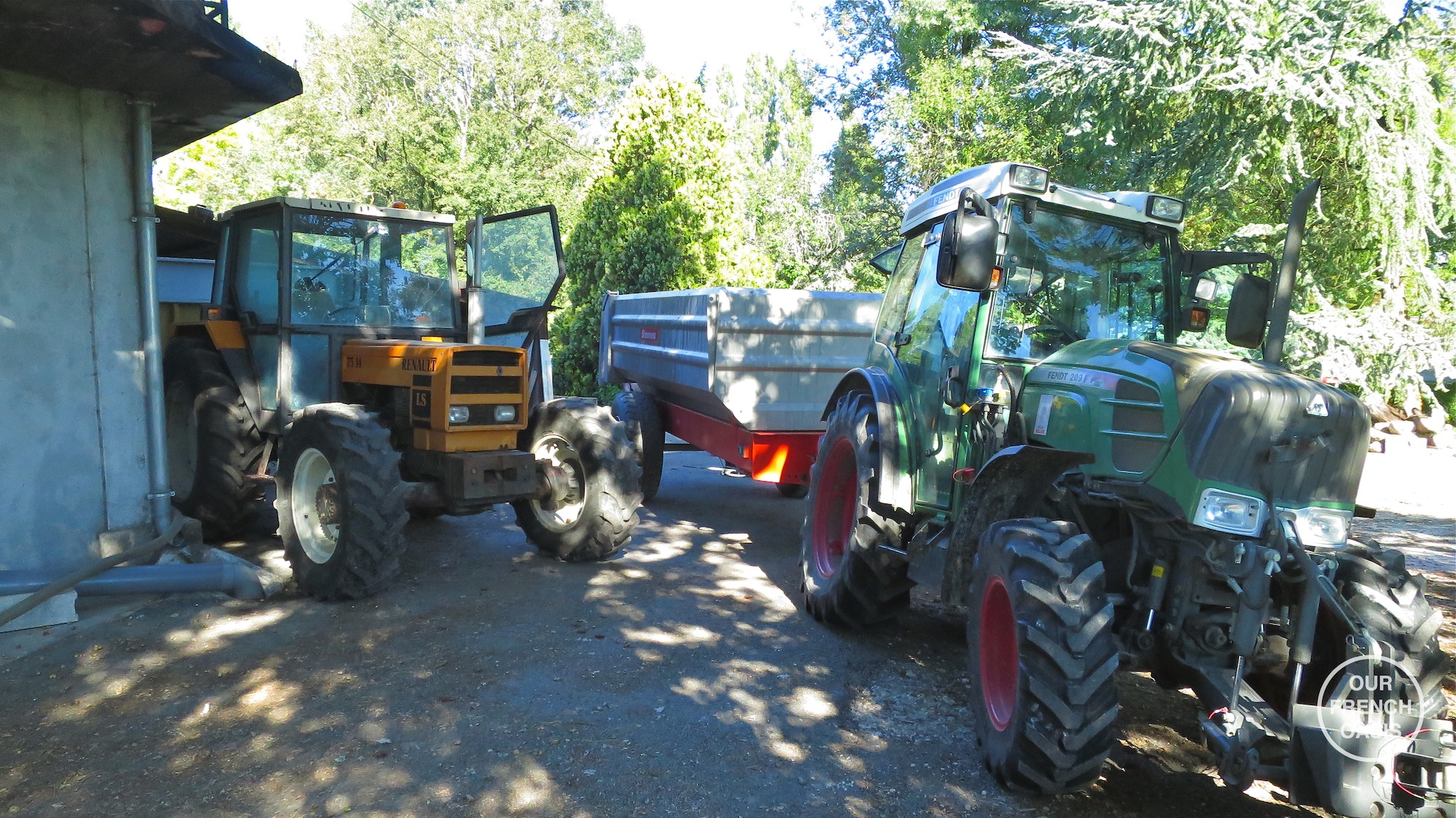
IMG_9083

IMG_9037

IMG_9060

Away from the market we wandered through the narrow streets which were a classic example of a Charente Maritime coastal village; hidden away here and there amongst the white painted houses with their green or blue shutters were several little artisan shops. There was a jeweler or two, a leather-smith, painters, a glass-blower, a fine porcelain artist and a wonderful house of curiosities that we lost Roddy to for half an hour. We had no idea where he had gone but when he re-emerged into the sunshine he was gabbling about shrunken heads, golden cowries and stuffed hippos. I think we will have to go back to check on that one !
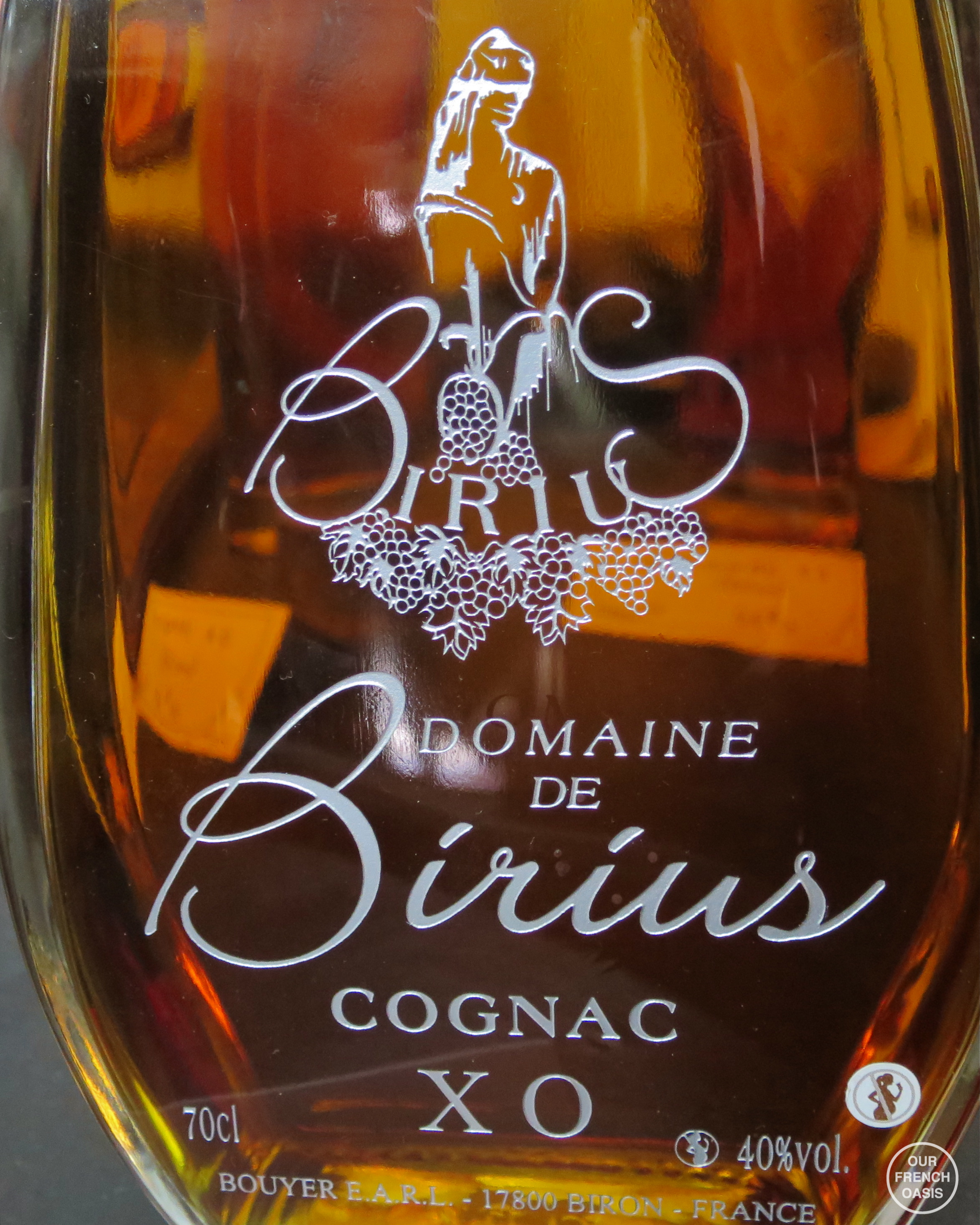
IMG_9102

IMG_9031

IMG_9020

I love the atmosphere in all the villages here; there is nothing threatening, everywhere feels very safe, and time passes at an unhurried and leisurely pace.

IMG_9032

IMG_9094

It was very low tide but we promised ourselves we would return when the water was higher; it’s possible to rent kayaks and explore the local marais so we have tentatively put aside one weekend and will return before winter sets in.  We left with a brace of new china pieces, and a bevy of very contented smiles.  It was a very self-satisfied drive home….

IMG_9059

TOURIST FOR A DAY IN ROCHEFORT SUR MER

IMG_8947

Last week we had friends staying who had never visited this area of France before and they quite literally toured the Charente Maritime from north to south, and from east to west. They marveled at our incredible beaches which stretch for miles along the Atlantic coast, backed by sand dunes and pine forests; they loved the Île d’Oléron perhaps even more than the Île de Ré; they had great fun in Cognac, Royan and La Rochelle; they even found time to visit local châteaux and some street markets.  But every evening I would ask them, “Have you been to Rochefort yet?”, and the answer was always an apologetic “No”.

Every day they meant to, and on their last day it really was their plan to go and have lunch there and idle away a few hours. Alas for Rochefort, the sky was the clearest blue we had seen for a week and a last day at the beach won hands down. It was unfortunate that they left without having set foot in our lovely old town, just a mere ten minutes away. So yesterday, without them knowing but on their behalf, we decided to become tourists for a few hours and see Rochefort afresh through the eyes of a visitor. As it was a Wednesday the children had no school in the afternoon and so we headed to our favourite restaurant for lunch armed with my camera and discussed where to go.

Yvonne and Neil, this photo tour of Rochefort is for you and hopefully next time you will see it for real!

To start with, we parked opposite the grand imposing Baroque post-office,

IMG_8944

and wandered down the Rue Audry-de-Puyravault past the Eglise St Louis. The church was originally built in the Neo-classical style in 1662 on the site of the old Capuchin Chapel but was rebuilt as it stands today in 1835.

IMG_8948

IMG_8955

From here we walked across into the Place Colbert

IMG_8959

and stopped for some lunch at our favourite haunt, La Terrasse Colbert

IMG_8960

IMG_8973

The Place Colbert features a beautiful fountain built in 1750

IMG_5942

IMG_2669

and there are numerous places to sit and watch the world go by, to drink a tea or coffee or sip an apéritif

IMG_8957

Rochefort is a 17th Century town chosen by Jean-Baptiste Colbert as a place of “refuge, defense and supply” for the French Navy. It was Louis XIV who was especially keen to get a shipyard built in Rochefort – he was worried about the power of the English navy and instructed Colbert to “Make it big, make it beautiful – and make it fast.”

The result of all this military planning is that Rochefort today has a rather grand feel with its wide boulevards and straight streets. The town is often overshadowed by its seaside neighbours of La Rochelle to the north and Royan to the south, and as a result is often neglected by visitors to the area which is a great shame as it is both stylish and enchanting.

The town Hall, known as an Hotel de Ville in France and not to be confused with a real Hotel, is an imposing building on the western side of the Place Colbert.

IMG_8966

After a delicious lunch we took a stroll past some of the many shops lining the square

IMG_5961

and then headed down the Rue de la République

IMG_1474

IMG_5945

past the beautifully restored Théâtre de la Coupe d’Or

IMG_5948

and the imposing Centre des Finances Publiques

IMG_5952

past offices and private houses

IMG_5956

and down to the Corderie Royal, which as it’s name suggests used to be where ropes were made for the navy.  At the time the building (which was started in 1666 and completed in 1669) was the longest building in Europe at 473 metres in length.  The navy needed to be supplied with ropes of 200 metres long, hence the great length of the building. Today it is a naval heritage museum.

IMG_1481

IMG_1484

We passed tourists taking a more leisurely view of the town

IMG_1490

and continued to the formal French gardens

7

overlooking the River Charente and the surrounding farmland, which borders the town in many places

IMG_1487

Then we walked down to the Musée National de la Marine which is one of the main naval museums in France

IMG_8982

where the girls pretended to be Napoléon and Joséphine

IMG_8980

Finally we stopped by the Hermione, a replica of the ship which became famous when she ferried the French military officer the Marquis de Lafayette to the United States in 1780 for support to the rebels in the American Revolutionary War. She was grounded and wrecked in 1793. In 1997 her replica was started in Rochefort. She was completed last year and in April 2015 she began her return voyage to the USA arriving safely on the American coast in June.  In August she returned to Rochefort amongst many celebrations.

IMG_8979

There are plenty of places we didn’t have time to visit as the girls had to get to their tennis lessons, but it was great fun being tourists for an afternoon and we will do it again, somewhere else next month.  If there is anywhere in particular someone wants to see let me know, it’s always a fabulous excuse to see somewhere new, or in this case re-explore somewhere we already knew rather well!